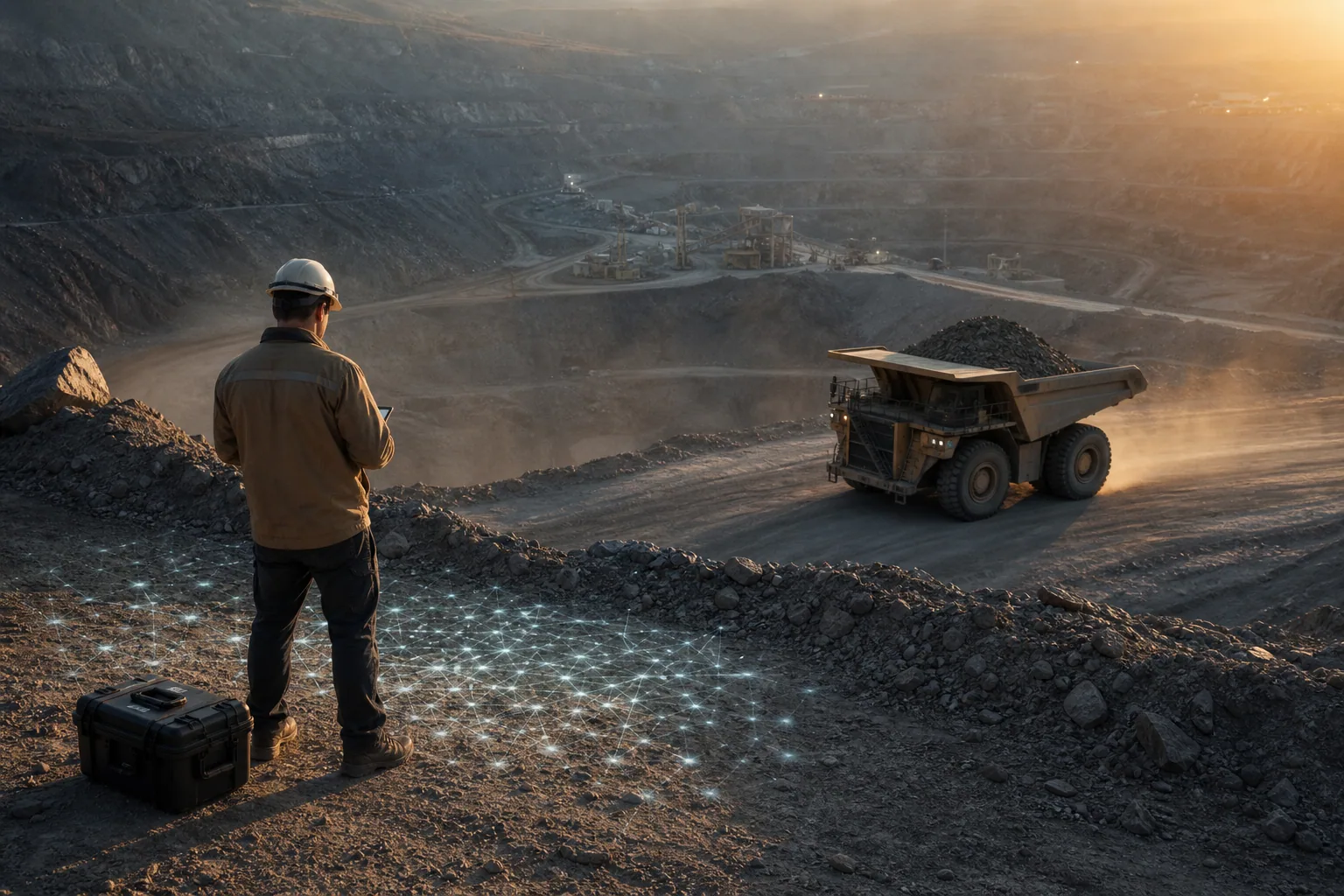
Caterpillar’s next AI advantage may not come from a new model. It may come from knowing how to put complex automation to work in difficult operating environments.
The equipment maker has spent decades deploying autonomous machines at remote mining sites, according to TechCrunch. It is now applying that experience to AI deployment.
That framing matters because the gap between an AI demonstration and an operational system is especially wide in industrial settings. Mining operations are remote, capital-intensive and dependent on equipment that must perform consistently. Caterpillar’s experience has been built around making autonomous machinery work in those conditions rather than simply proving that autonomy is possible.
Deployment is the product
For operators and executives, Caterpillar’s move is a reminder that AI strategy is not limited to selecting models or launching pilots. Deployment includes the operational work around the technology: fitting it into existing equipment and processes, managing reliability, and making it useful in environments where downtime carries real costs.
Caterpillar’s mining history gives it a practical reference point. Autonomous equipment in remote sites is not a consumer feature; it has to operate as part of a larger production system. The company is positioning its AI work around lessons from that kind of implementation.
The implication is that industrial AI may be evaluated differently from software-first AI products. Customers are likely to care less about novelty and more about whether tools can be introduced into established workflows without undermining safety, productivity or operational continuity.
A different path to AI adoption
Many companies approaching AI face a common question: how do they turn promising capabilities into repeatable operational value? Caterpillar’s approach suggests that organizations with deep automation experience may have an advantage when the task is deployment at scale.
That does not mean every autonomous-system lesson transfers directly to AI. But the underlying challenge is similar: technology has to work within real-world constraints, not just in controlled tests. For industrial businesses, those constraints can include physical equipment, remote locations and tightly coordinated operations.
For founders and builders serving industrial customers, the takeaway is clear. A technically capable AI product may still need to fit the customer’s existing operating model. Companies that understand the environment in which a tool will be used can have as much influence on adoption as the underlying AI capability itself.
What to watch next
The key question is how Caterpillar translates its mining automation experience into specific AI deployments. Watch for evidence of where the company applies AI first, how it connects those systems to equipment and customer operations, and whether it treats AI as a standalone capability or as part of a broader automation stack.
The larger signal is that industrial AI competition may increasingly be decided by implementation expertise. Caterpillar is betting that experience running autonomous machines in demanding mining environments can help close the distance between AI ambition and operational use.