
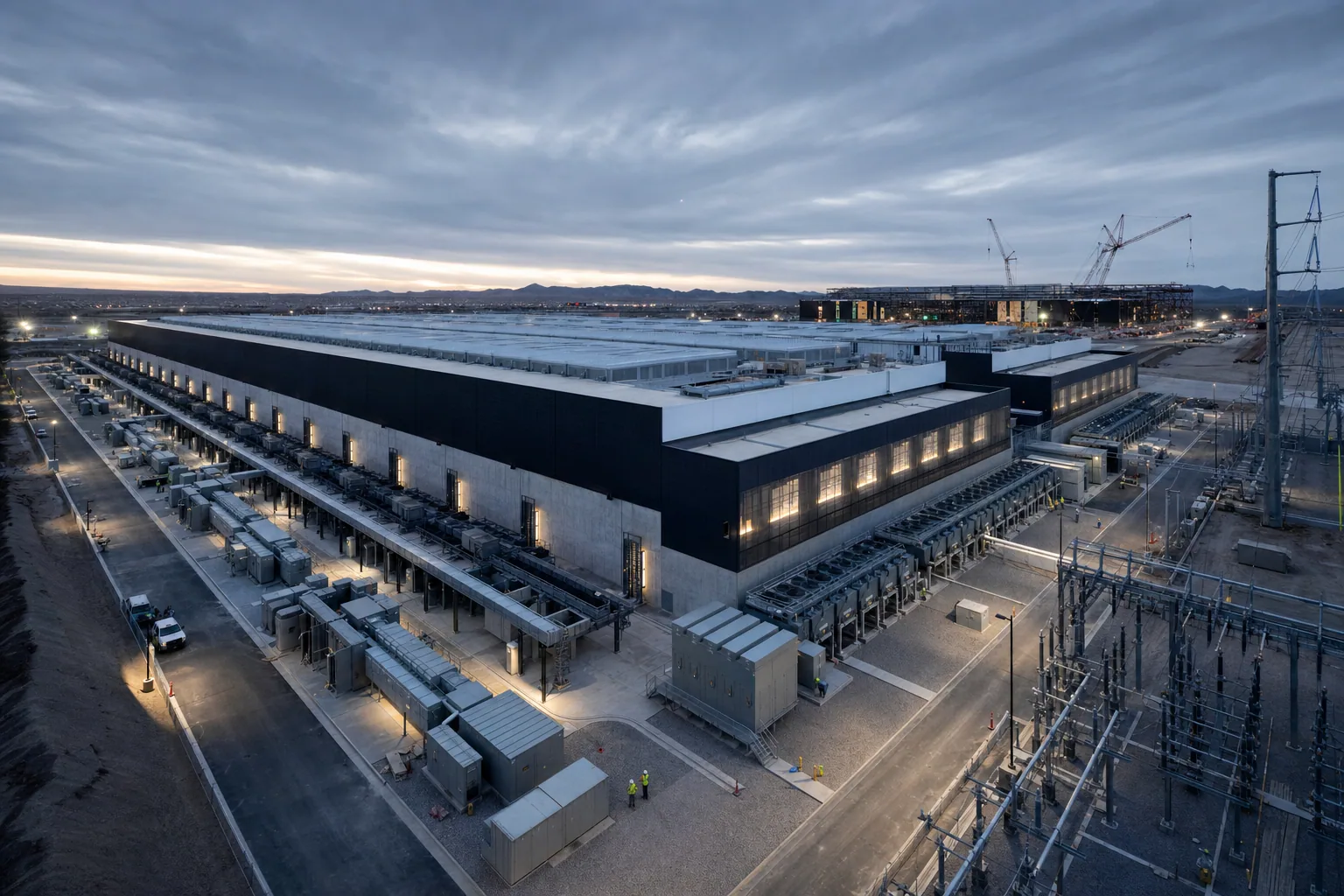
Crusoe has reportedly raised more than $3 billion at a $30 billion valuation, a sharp escalation in the capital flowing to companies that can build and operate infrastructure for AI workloads.
According to Bloomberg, the round is co-led by Atreides Management and Valor Equity Partners, with Mubadala Capital participating. TechCrunch reported the financing on September 3. The company has not publicly confirmed the reported round in the materials cited.
A rapid valuation step-up
The reported $30 billion valuation is three times the $10 billion valuation Crusoe received in an October funding round, when it raised $1.38 billion. The speed of that repricing reflects investor demand for scarce assets in the AI stack: powered sites, data-center construction capacity, GPU access and the ability to win large enterprise contracts.
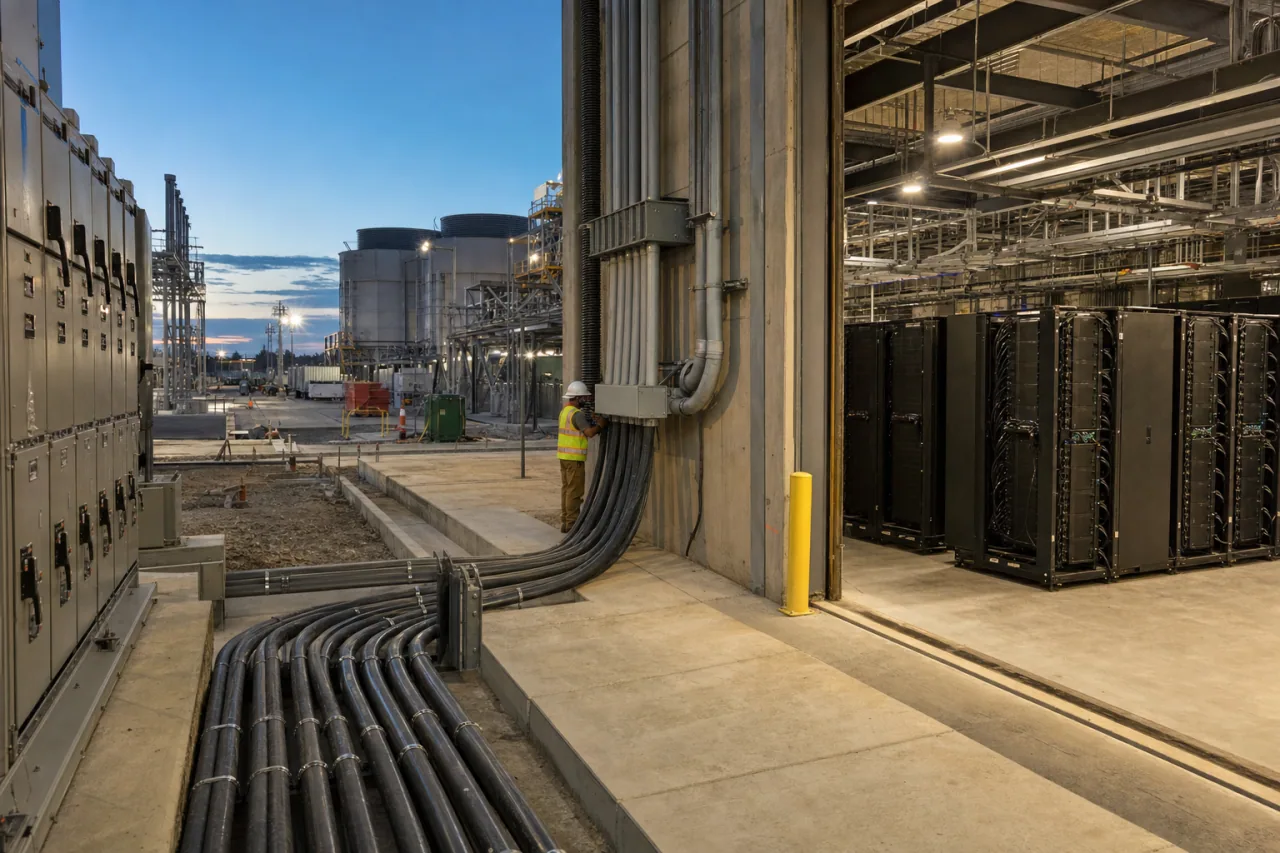
Crusoe began in 2018 as a crypto-mining business using flared natural gas. It has since shifted toward AI cloud services and hyperscale data-center campuses. Its customer roster includes Meta, Microsoft and OpenAI, according to TechCrunch, and it is known for work serving clients including Oracle and OpenAI.
For operators, that evolution is more important than the funding headline. AI infrastructure providers are increasingly being valued not simply as landlords or cloud resellers, but as integrated execution partners that must secure power, finance construction, procure hardware and make capacity available on aggressive timelines.
Contracts provide the commercial backdrop
Bloomberg also reported that Crusoe signed a roughly $13 billion, five-year cloud contract with quantitative trading firm Jane Street to supply GPUs and AI infrastructure. If the reported agreement proceeds as described, it would give Crusoe a major long-term demand commitment while also underscoring the scale of financing needed to serve customers whose compute requirements are rising quickly.
Large commitments can support capacity planning and help justify capital expenditures. They also raise the operational stakes: infrastructure suppliers need dependable electricity, hardware delivery, networking, data-center operations and service performance over multiyear terms. A headline contract is not equivalent to realized revenue, and the economics will depend on deployment schedules, utilization, equipment costs and the contract’s underlying obligations.
Why executives should pay attention
The reported round is another signal that AI capacity constraints remain a strategic issue, not just a procurement inconvenience. Organizations planning to run substantial training, inference or low-latency workloads will face a more concentrated supplier landscape, in which providers with capital and power access can command an outsized role.
That calls for practical preparation:
- **Treat capacity as a long-range planning problem.** Align model roadmaps with realistic availability of GPUs, power and data-center space.
- **Examine contract flexibility.** Multiyear arrangements can reserve supply, but teams should understand ramp commitments, pricing mechanisms, service-level terms and exit provisions.
- **Assess supplier concentration.** The ability to move workloads between cloud and infrastructure partners can be valuable if delivery timelines change.
- **Separate announced capacity from operational capacity.** Financing and land announcements matter, but delivered, energized and networked facilities are the relevant milestones.
What to watch next
Crusoe reportedly met with bankers including Goldman Sachs and Morgan Stanley to discuss a potential near-term initial public offering, Axios reported in August. The immediate questions are whether the reported financing is formally announced, how quickly the company converts contracted demand into live capacity, and whether its funding model can sustain the large capital requirements of AI infrastructure.
More broadly, the company’s trajectory will be a test of the market’s willingness to fund AI infrastructure at software-like growth valuations while holding it to the execution discipline of a capital-intensive industrial business.