
Reliance Jio is widening access to its cloud PC service, JioPC, in a bid to make aging computers usable for modern, AI-oriented workloads without requiring users to buy new devices.
The service, first introduced in July 2025 for Jio broadband subscribers, is now available as a standalone subscription to anyone in India with an internet connection. It streams a virtual desktop from Jio’s cloud to an existing computer, moving compute and storage demands away from the local machine.
The pitch: extend the life of installed PCs
Jio says JioPC can help computers up to eight years old access more current computing resources. Its plans offer configurations with up to eight virtual CPUs, 16GB of RAM and 1TB of storage.
Pricing starts at ₹1,000 (about $11) for two months. Annual plans cost ₹4,000 for 8GB of RAM and 500GB of storage, or ₹5,000 for the 16GB/1TB tier.
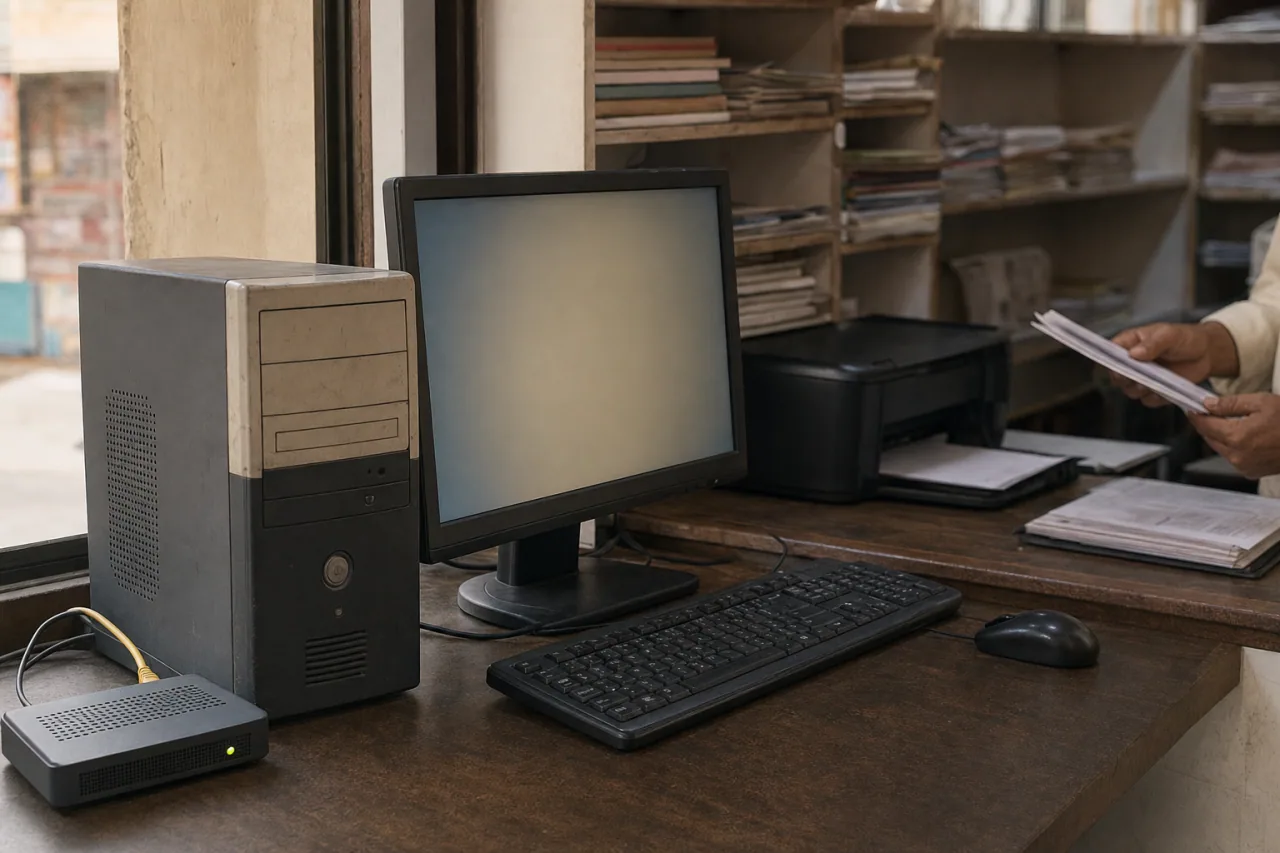
The timing reflects a larger shift in India’s PC market: replacement cycles are lengthening. IDC estimates India had more than 65 million PCs in use in 2025—roughly 34 million consumer devices and 31 million commercial machines—and expects the installed base to near 69 million by the end of 2026. Consumers and small businesses are now typically replacing PCs every five to six years, while enterprise replacement cycles have reached roughly four years.
For Jio, that creates an opportunity to sell computing capacity as a recurring service rather than wait for customers to purchase a new laptop or desktop. For small businesses, schools and households, a cloud desktop could defer capital spending while providing a more standardized software and storage environment.
“AI-ready” is a cloud proposition, not an on-device one
Jio’s framing also broadens the increasingly common definition of an AI PC. Most hardware vendors use the term to describe new machines with dedicated neural-processing hardware for local AI workloads. JioPC instead relies on infrastructure in Jio’s data centers.
That distinction matters to buyers and IT leaders. A streamed desktop may enable access to applications that need more memory, processing power or centralized storage than an old PC can provide. But it does not turn the existing device into an on-device AI machine, and Jio has disclosed limited detail about the underlying cloud hardware or how workloads will perform in practice.
The practical value will depend on application compatibility, latency, reliability and the quality of users’ connections—not simply the virtual machine specifications.
The operating constraints
The model carries clear trade-offs. Conventional PCs continue working when connectivity drops; cloud PCs do not. That is likely to be especially consequential in smaller cities and towns, where the affordability case may be strongest but reliable internet can be less consistent.
Jio also has to overcome a purchasing preference for owning hardware rather than paying an ongoing subscription. Refurbished PCs provide another low-cost alternative, giving price-sensitive buyers a device they own outright without continuous dependence on a network.
Industry analysts cited by TechCrunch see JioPC less as a replacement for conventional computers than as a parallel option for students, households and other users for whom purchasing an AI-capable PC is not realistic.
What to watch next
JioPC’s expansion turns the question from technical possibility into customer behavior: will users treat remote computing as an everyday utility? Adoption will hinge on whether Jio can demonstrate consistent performance, clarify what AI applications the service supports and make the subscription feel cheaper and simpler than buying refurbished or entry-level hardware.
For hardware makers, the service is a reminder that a growing installed base of older PCs may become a market for cloud upgrades rather than physical replacements. For operators and IT buyers, it offers a potential way to extend device life—but only where network resilience is strong enough to support daily work.