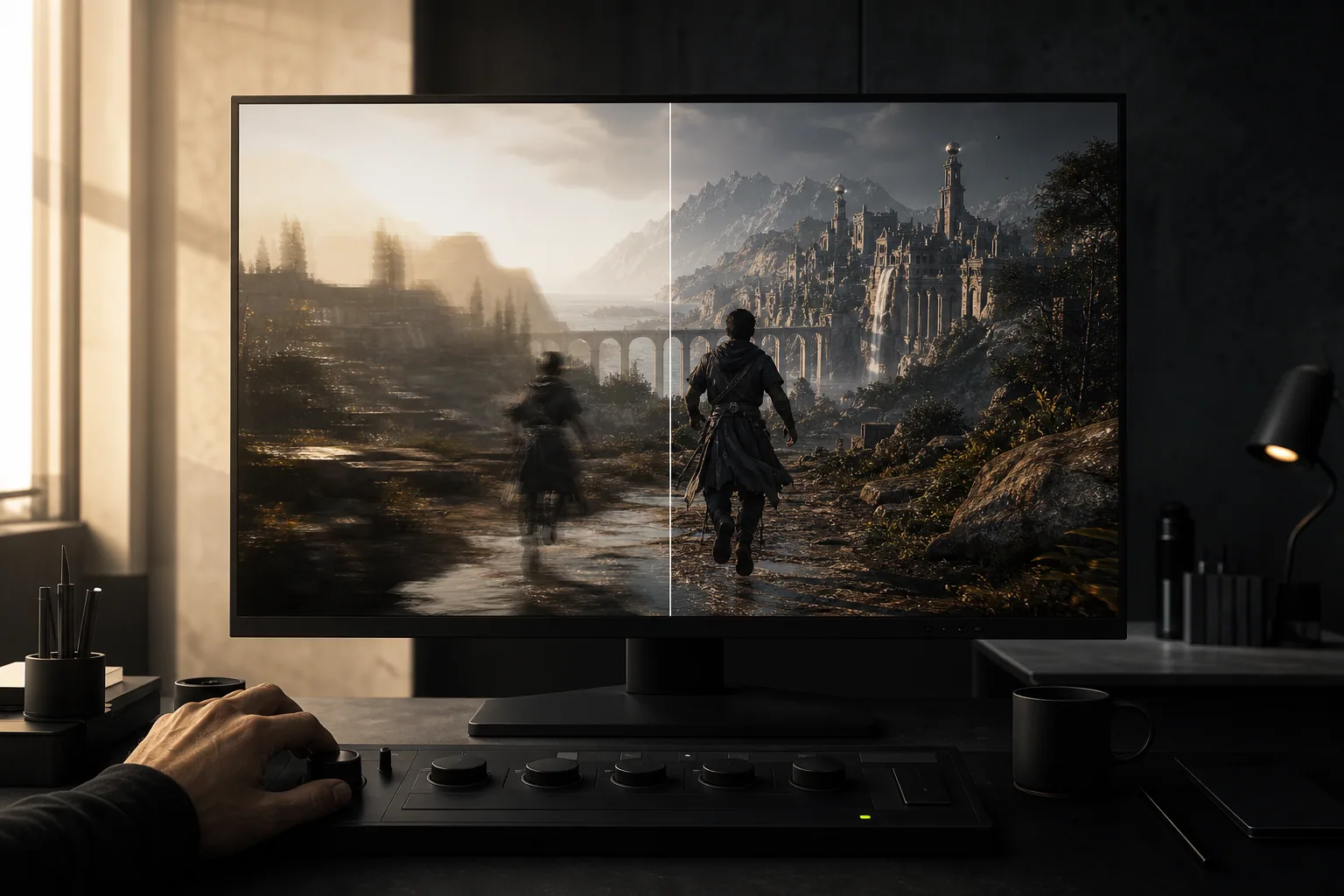
Nvidia is preparing to launch DLSS 5 on September 3 with a clearer explanation of what it calls “neural rendering” — and a more direct response to criticism that the technology can make game imagery look like “AI slop.”
The company’s messaging has shifted toward three assurances: DLSS 5 is intended to preserve artistic intent, respect the rendered frame, and leave game developers in control. That framing matters because the first public impression of the technology, including imagery of *Resident Evil Requiem* protagonist Grace Ashcroft shown in March, led some players to object to the way AI processing appeared to affect a character’s face.
What changed
DLSS has long been Nvidia’s label for AI-assisted graphics techniques. The DLSS 5 discussion is centered on neural rendering, a more controversial application because it puts AI processing closer to the visible final image rather than simply being understood as a behind-the-scenes performance tool.
According to Nvidia’s new positioning, the technology should not be interpreted as an uncontrolled system replacing a game’s visual direction. The company is explicitly presenting developers as the decision-makers over how the approach is used.

That distinction is central to the rollout. A technical feature can be evaluated through frame rate, latency, and image quality, but a graphics system that appears to modify faces or other authored details also raises a creative-governance question: who determines the final image, and can teams reliably keep the result aligned with the art direction?
Why the backlash matters
For game studios, visual consistency is not a cosmetic detail. Character models, lighting, texture work, and cinematic scenes are expensive creative investments. If an AI-driven rendering layer produces results that players perceive as artificial or inconsistent with the source material, it can become a reputational issue for both the studio and the hardware partner.
The reaction to the early *Resident Evil Requiem* example illustrates the adoption risk. Even when a rendering technique is designed to improve an image or enable new graphical effects, audiences may judge it by its most conspicuous failure mode. A single unconvincing face can overwhelm the broader technical case.
For Nvidia, that means DLSS 5’s success will depend on more than demonstrating that neural rendering works. It must demonstrate that developers can deploy it selectively, maintain authorial control, and avoid visible artifacts that undermine trust.
What operators and builders should watch
The important question after launch is not simply whether DLSS 5 appears in supported games. Watch how studios describe their implementation and whether they offer players meaningful settings or comparisons that make the rendering choices legible.
Developers evaluating the technology will likely focus on practical workflow questions: where neural rendering fits in a production pipeline, what controls are available, and how reliably the output holds up across demanding scenes and close-up character work. Nvidia’s repeated emphasis on respecting the rendered frame suggests it knows these are the areas where skepticism is strongest.
The Verge reports that it received an Nvidia briefing and hands-on time with a version that had leaked online, indicating that more detailed assessments should emerge around the September 3 release. Those evaluations will matter more than Nvidia’s revised language alone.
DLSS 5 is therefore a useful test case for a broader shift in graphics: AI features are increasingly being judged not only as performance technology, but as part of the creative product itself. The vendors that win adoption will need to make their systems powerful without making the underlying artistic choices feel automated or opaque.