

A reported leak involving more than 153 million U.S. and Canadian driver’s-license scans is raising fresh questions about the security model behind identity and age-verification services.
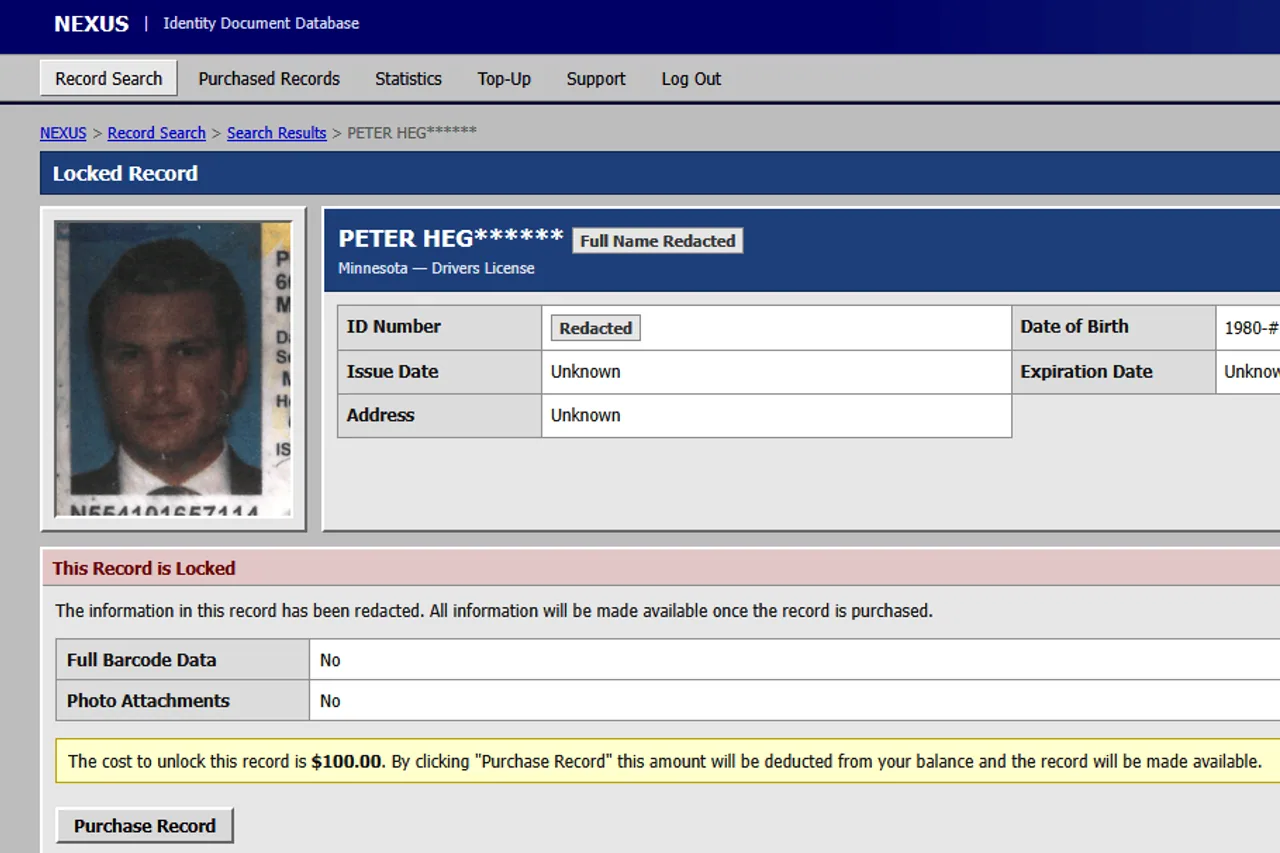
According to [KrebsOnSecurity](https://krebsonsecurity.com/2026/09/fbi-probes-service-selling-153m-drivers-licenses/), a new dark-web identity-theft service, Nexus, claims it has been continuously exfiltrating records for more than a year from a major identity-verification company. The service listed more than 153 million driver’s-license records and reportedly added nearly 400,000 records in a 24-hour period. Krebs reported that the FBI’s New Orleans field office opened an inquiry into the source of the images.
The reporting points to Louisiana-based IDScan.net, whose customers are said to include businesses across retail, logistics, vehicle rentals and regulated industries. The alleged source and scope have not been independently confirmed in the material provided, but the operational lesson does not depend on a final attribution: an ID-verification workflow can become a high-value, central repository of documents that are difficult—often impossible—for consumers to replace.
Why the exposure is unusually consequential
A password can be reset. A government ID image combines a name, address, date of birth, document number and photograph—attributes that can support account takeover, synthetic-identity fraud and social engineering. For people trying to remain hard to locate, such as domestic-violence survivors, the risks can extend beyond financial fraud.
The reported volume is also important. A breach of one merchant’s customer file is damaging; a compromise at a verification provider can create spillover across every company that sends it documents. That changes vendor risk from a procurement checkbox into a dependency-management problem.
For companies using ID verification for onboarding, fraud controls, restricted-product sales or age assurance, the key question is not simply whether a vendor has compliance badges or a trust center. It is whether the company can explain, with evidence, where raw document images go, who can retrieve them, how long they persist, and how abnormal access or exfiltration would be detected.
What operators should review now
Security and privacy leaders should start with their data map. Determine whether the provider receives a full document image, derived fields, biometric data or all three; whether copies flow to subcontractors; and whether logs, support tools, backups and analytics environments retain those records.
Then test contractual and technical controls:
- **Retention:** Require short, enforceable deletion periods for raw images. Keep only the verification result or minimum attributes where feasible.
- **Access and detection:** Ask for evidence of least-privilege access, monitoring of bulk exports, immutable audit logs and tested alerting for unusual collection or egress.
- **Incident terms:** Confirm notification timelines, forensic cooperation, data-return or deletion commitments, and responsibility for customer remediation.
- **Exit options:** Ensure the business can migrate verification providers without leaving dormant document stores behind.
- **Product design:** Consider privacy-preserving alternatives, such as confirming an age threshold without transmitting a reusable full ID scan, where regulation and use case permit.
The policy pressure point
The episode arrives as lawmakers and platforms weigh broader age-assurance requirements. Verification mandates may promise a narrower purpose—such as confirming a user is over a certain age—but implementation commonly relies on the same sensitive identity-data supply chain used in commercial fraud and compliance workflows.
That does not mean every age-check system has identical risk. It does mean policymakers and buyers should demand data minimization, independent security validation, breach transparency and viable non-document-based options rather than treating verification as a neutral API call.
What to watch next: confirmation of the alleged breach’s source, the scope of affected organizations and documents, and whether customers reassess their retention and vendor-governance practices. The bigger business issue is already clear: when a company outsources identity proofing, it does not outsource accountability for the data concentration that follows.