
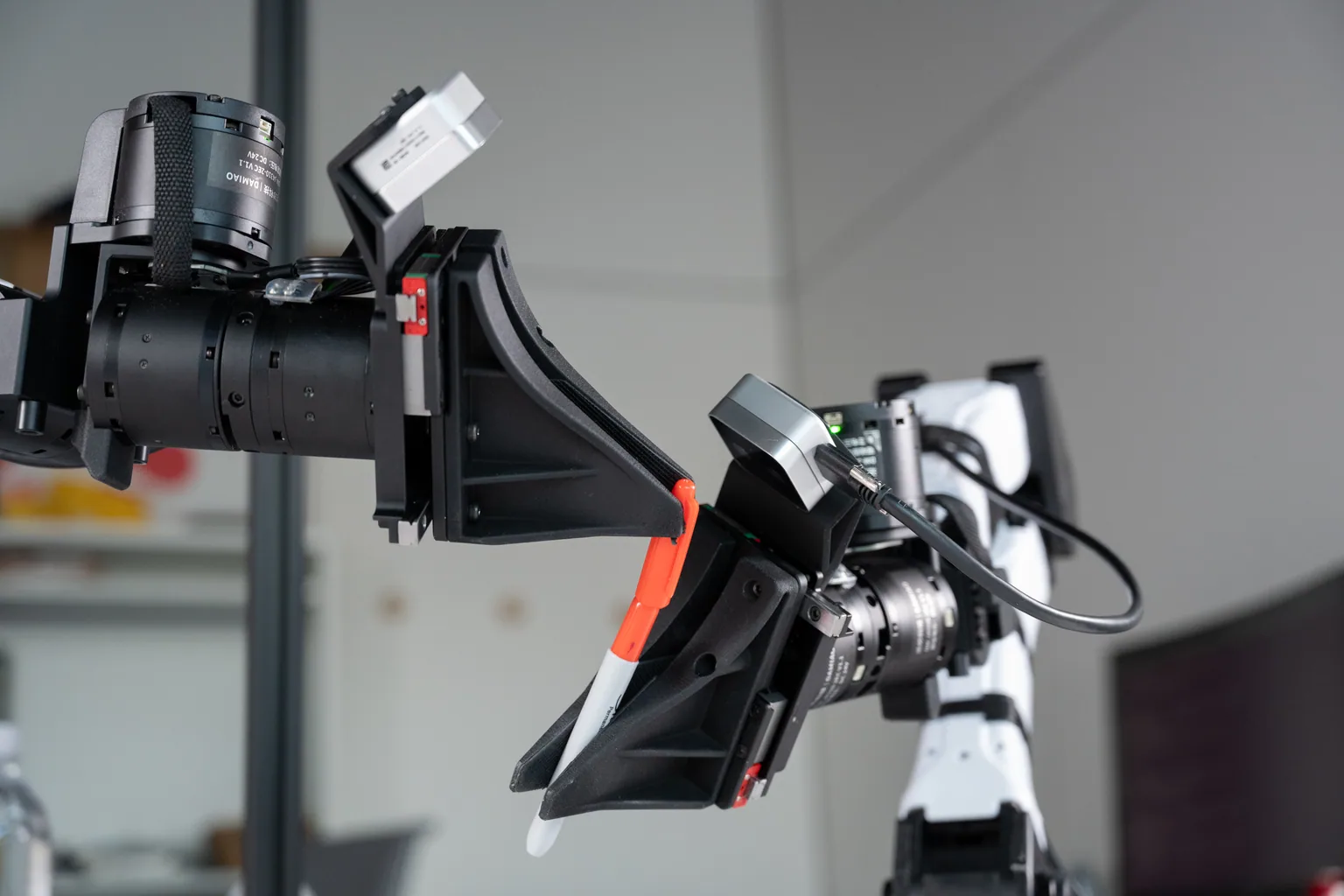
XDOF, a startup building data-collection infrastructure for robotics, is reportedly in late-stage talks to raise a Series B at a valuation of about $1.2 billion, according to TechCrunch. The proposed round would be led by 8VC, though the total amount being raised and whether the figure is pre- or post-money were not known.
The terms are not final, and neither XDOF nor 8VC commented to TechCrunch.
A rapid return to market
The timing is notable. XDOF emerged from stealth less than three months ago and raised a $70 million Series A in June with participation from Thrive Capital, Andreessen Horowitz, Lux and Spark Capital. The company reportedly had not planned to raise again so quickly, but investor interest followed rapid growth: TechCrunch reported that its annualized revenue is approaching $50 million.
For founders and investors, that combination—early revenue, a technically constrained market and large prospective customers—helps explain the valuation discussion. It also raises the bar for execution. A high-priced infrastructure company will need to show that its collection network can scale while maintaining data quality, customer trust and acceptable unit economics.
The missing dataset for robots
XDOF was founded in 2024 by UC Berkeley researchers Philipp Wu, its CEO, and Fred Shentu, its CTO. Its core premise is that robotics has a data problem that differs from language AI.
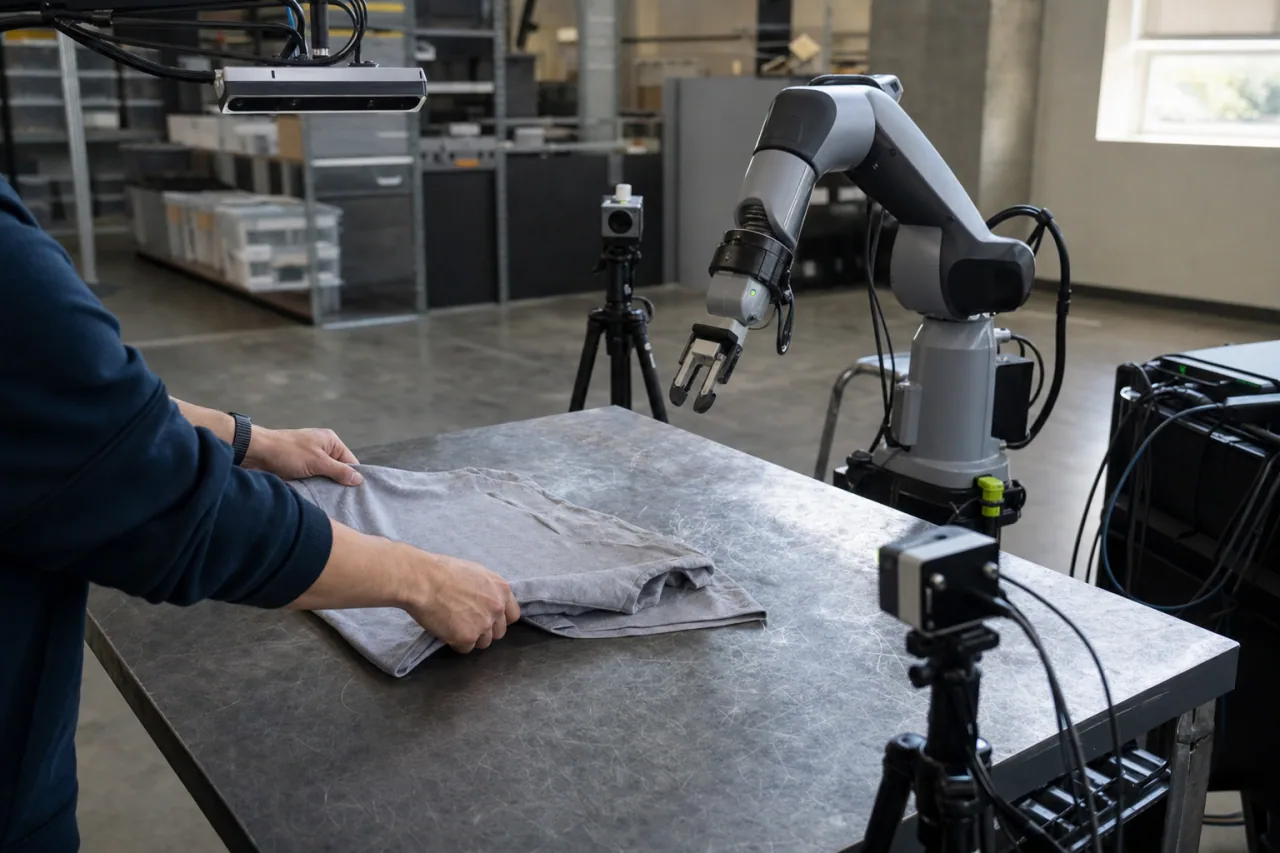
Large language models benefited from vast stores of internet text. General-purpose robots need examples of people and machines interacting with physical environments: grasping objects, folding clothing, manipulating tools and recovering from imperfect actions. Those examples are harder, slower and more expensive to obtain—and their usefulness depends heavily on consistent hardware, task definitions, sensor data and annotation.
XDOF aims to provide that supply chain. It combines remote teleoperation of robotic arms with human collectors who wear sensors while performing everyday tasks. The company plans to build global teams of teleoperators and “egocentric” operators, creating datasets that can be used to train robotics models.
The approach originated in GELLO, a low-cost teleoperation system developed by the founders during their research. XDOF is also working with UC Berkeley’s AI Research lab on ABC, a dataset it describes as the largest high-quality robot-training collection assembled to date.
Why operators should pay attention
For robotics companies, a specialized external data provider could reduce a major non-core burden: recruiting operators, deploying collection hardware, defining workflows, cleaning data and managing annotations. That may let teams spend more of their effort on model architectures, controls, hardware reliability and product integration.
But outsourcing does not eliminate the strategic questions. Buyers will need to assess whether a dataset matches their robot embodiment, sensors, operating environment and safety requirements. Data collected for a household manipulation model may not transfer cleanly to a warehouse, factory or healthcare workflow. Customers should also scrutinize data ownership, exclusivity, provenance and how quickly a supplier can produce examples for new edge cases.
XDOF says it already works with 20 customers, including several frontier AI labs. Its competitive set includes robotics-data startup Mecka AI, alongside broader human-data platforms such as Scale AI and Micro1 that are expanding beyond language-model work.
What to watch next
The financing, if completed, would be another signal that investors see robot data operations as a standalone infrastructure category rather than a service bundled inside robotics labs. The more important evidence will be operational: whether XDOF can turn its collection methods into repeatable global capacity, retain customers and demonstrate that its data improves real-world robot performance.
In robotics, model progress will matter—but the businesses that reliably generate the right physical-world examples may capture an equally important part of the value chain.