
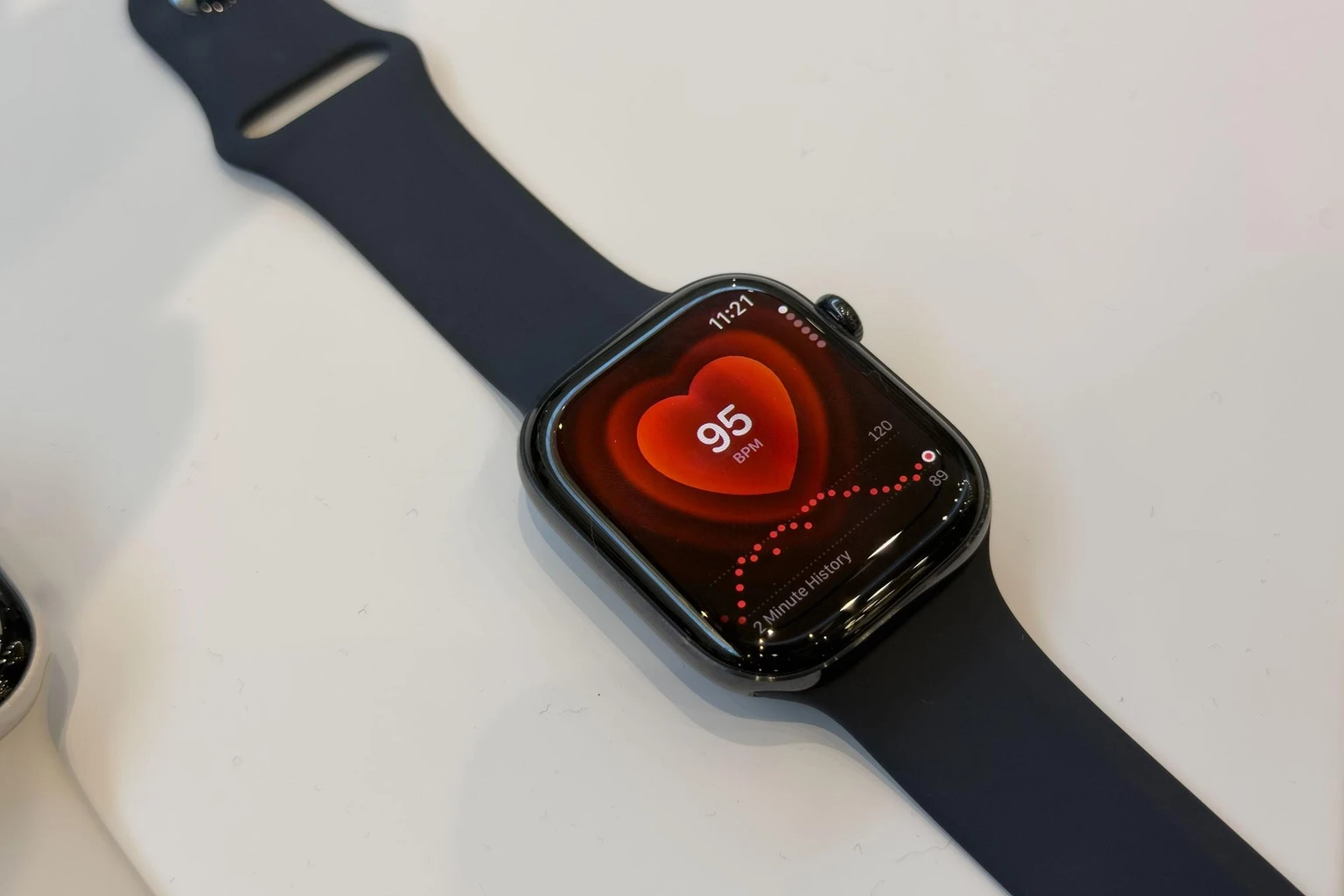
Apple’s Apple Watch Series 12 and Apple Watch Ultra 4 will arrive September 18, with preorders open now. The headline is not a radical redesign: it is a new health-sensing system, Apple’s S11 wearable chip, and a set of audio-focused AI features that turn the watch into a more active interface for ambient information.
The Series 12 starts at $399 in the US, unchanged from prior entry-level pricing. The Ultra 4 starts at $799. For Apple, preserving the $399 threshold while adding sensors and new silicon is a meaningful product-positioning decision: the company is trying to make health intelligence, rather than a premium material or a bigger display, the reason to upgrade.
What changed
Both models use the S11 chip and a redesigned sensor array. Apple says the new system enables heart-rate and heart-rate-variability measurements at higher frequency, including continuous background heart-rate readings every five seconds. The company describes the electrode design as having 32 “petals,” compared with the two-petal arrangement on older watches, while optical sensors sit closer together to reduce light leakage.
That hardware supports two prominent health features:
- **Readiness**, a daily score informed by activity, training load, vitals, and sleep.
- **Health Age**, which compares health metrics with a user’s chronological age. It will appear in a redesigned iPhone Health app later this year, under a new Longevity tab.
Readiness requires the new sensor array, limiting it to the Series 12 and Ultra 4. That creates a clearer hardware boundary than many software-led watch updates and could help Apple drive upgrades among users focused on training or long-term health tracking.
Battery claims have also moved. Apple rates the Series 12 for up to 24 hours of everyday use and up to 10 hours during outdoor workouts. It says 15 minutes of charging can restore up to 12 hours of use. The Ultra 4 is rated for up to 50 hours.
AI moves from prompts to ambient capture
The more consequential software change is Audio Intelligence, a collection of features enabled by the S11, Apple Intelligence models on iPhone, and Private Cloud Compute. Sound Recognition can notify users of sounds such as alarms, doorbells, sirens, or a baby crying. Live Rewind surfaces a text snippet of the prior 15 seconds of a conversation after a double press of the Digital Crown. Siri Recap can generate titles and key points from conversations when enabled.
These features frame the watch as an ambient computing device: one that can detect, retrieve, and summarize events without requiring users to deliberately open an app or start a recording workflow. For builders, that is a useful signal about where wearable interfaces are heading—toward short interactions, contextual retrieval, and data collection constrained by device controls.
It also raises the operational questions that will determine adoption: how explicit the user controls are, what processing occurs on device versus in the cloud, how reliably summaries represent a conversation, and whether the features are acceptable in workplaces and shared settings. Apple emphasizes privacy, security, and user control, but real-world behavior will matter more than positioning.
What to watch next
Apple Intelligence arrives with watchOS 27 on September 14 for supported devices and languages, while Siri AI begins as an English beta, with additional languages planned for October. Feature and regional availability will therefore be uneven at launch.
The key test is whether Apple’s higher-frequency health data produces guidance users find actionable rather than merely informative—and whether Audio Intelligence becomes a trusted utility instead of an intrusive novelty. If both land, Apple will have strengthened the Watch’s role as a health sensor and a personal AI endpoint, not simply a companion display for the iPhone.