A University of Georgia research summary, highlighted in a Hacker News discussion, reports a study finding that blue light impaired the eye’s ability to distinguish fine detail more than other tested light conditions.
The supplied report does not provide the study’s methods, participant details, effect size, comparison conditions or practical thresholds. That limits the conclusions operators and product teams should draw. But the core finding is relevant to any work that depends on sustained visual precision: reading dense interfaces, reviewing designs, inspecting images, monitoring dashboards or performing detail-oriented screen work.
Why the finding matters
Most discussion of blue light in consumer technology has centered on comfort, sleep and display settings. This study points to a different question: whether the spectral characteristics of light can affect fine-detail discrimination itself.
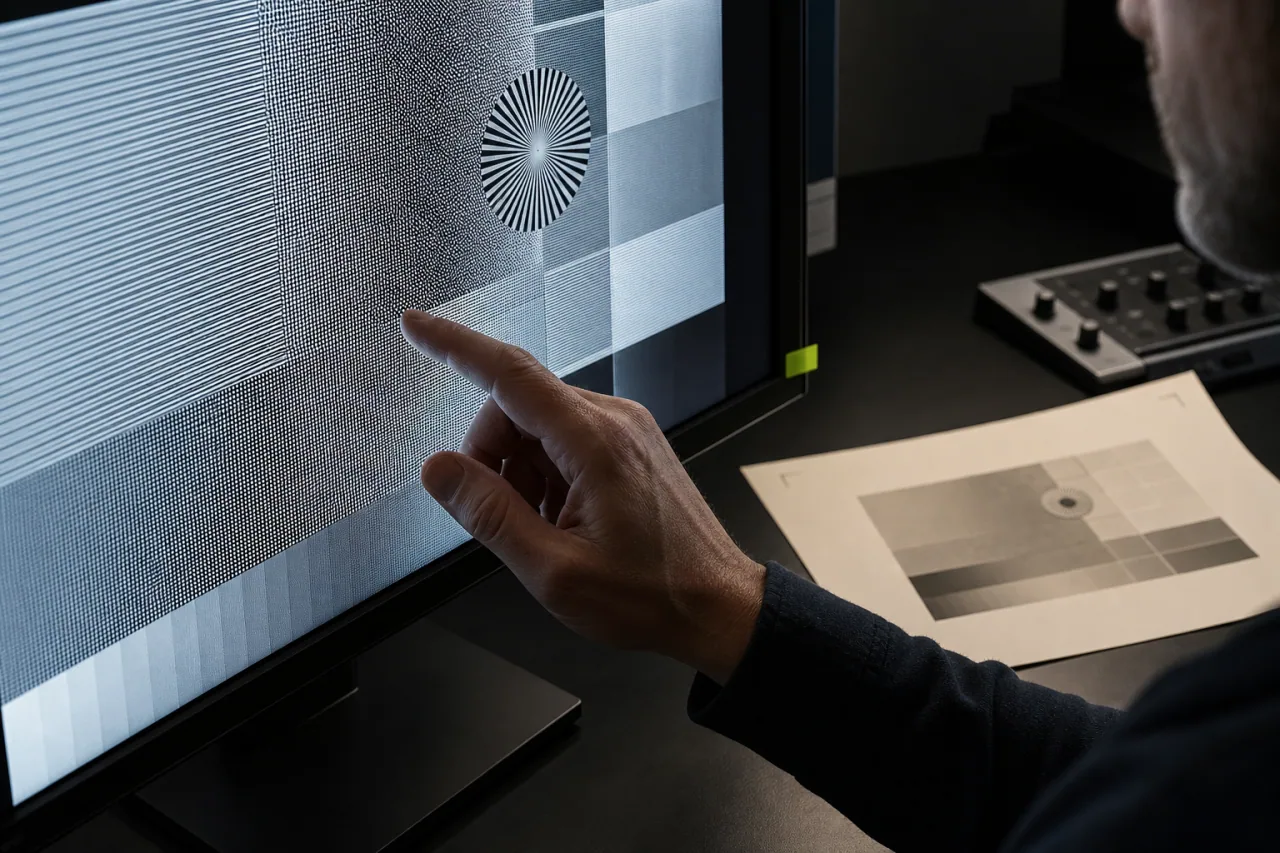
For businesses, that distinction matters. A reduction in the ability to resolve fine detail could affect how people experience visual information, particularly where small text, subtle contrast differences or precise image inspection are central to a task. It could also matter to hardware and software teams making choices about display modes, lighting environments and visual-interface defaults.
The finding should not be read as evidence that every blue-light-emitting screen or every blue-heavy environment creates the same outcome. The available source summary does not establish that. It does, however, identify fine-detail vision as a variable worth testing rather than assuming away.
Practical implications for builders
Teams responsible for visual products can treat this as a research and design prompt.
- **Test critical tasks, not just preference.** If users must identify small elements or inspect visual detail, evaluate task performance across relevant display and lighting settings.
- **Review dense interface patterns.** Small type, low-contrast controls and information-heavy dashboards may deserve particular scrutiny where accurate detail perception is important.
- **Separate comfort from performance.** A display setting that users describe as comfortable is not necessarily the one that best supports fine-detail work, and vice versa.
- **Consider environment alongside the device.** The report concerns blue light’s effect on vision, not a specific product category. Device displays are only one part of a user’s lighting context.
For procurement and workplace teams, the immediate takeaway is not to mandate a particular filter or display mode. It is to identify roles where visual precision is operationally important and ensure that workstation and interface choices are evaluated against those requirements.
What to watch next
The next useful evidence will be the underlying study: its experimental design, the wavelengths and intensities tested, how long effects lasted, and whether the results translate to real-world screen use. It will also be important to know whether the effect varies by viewing conditions or participant characteristics.
Until those details are available, the study is best treated as a targeted signal for design and ergonomics teams. Blue light may be more than a wellness-setting debate if it changes fine-detail perception; the business question is where that change is large enough to affect work quality or product usability.