Danijar Hafner, a longtime Google Brain and Google DeepMind researcher, has left DeepMind to build a stealth startup around a difficult robotics problem: helping AI agents act effectively in situations they have not encountered before.
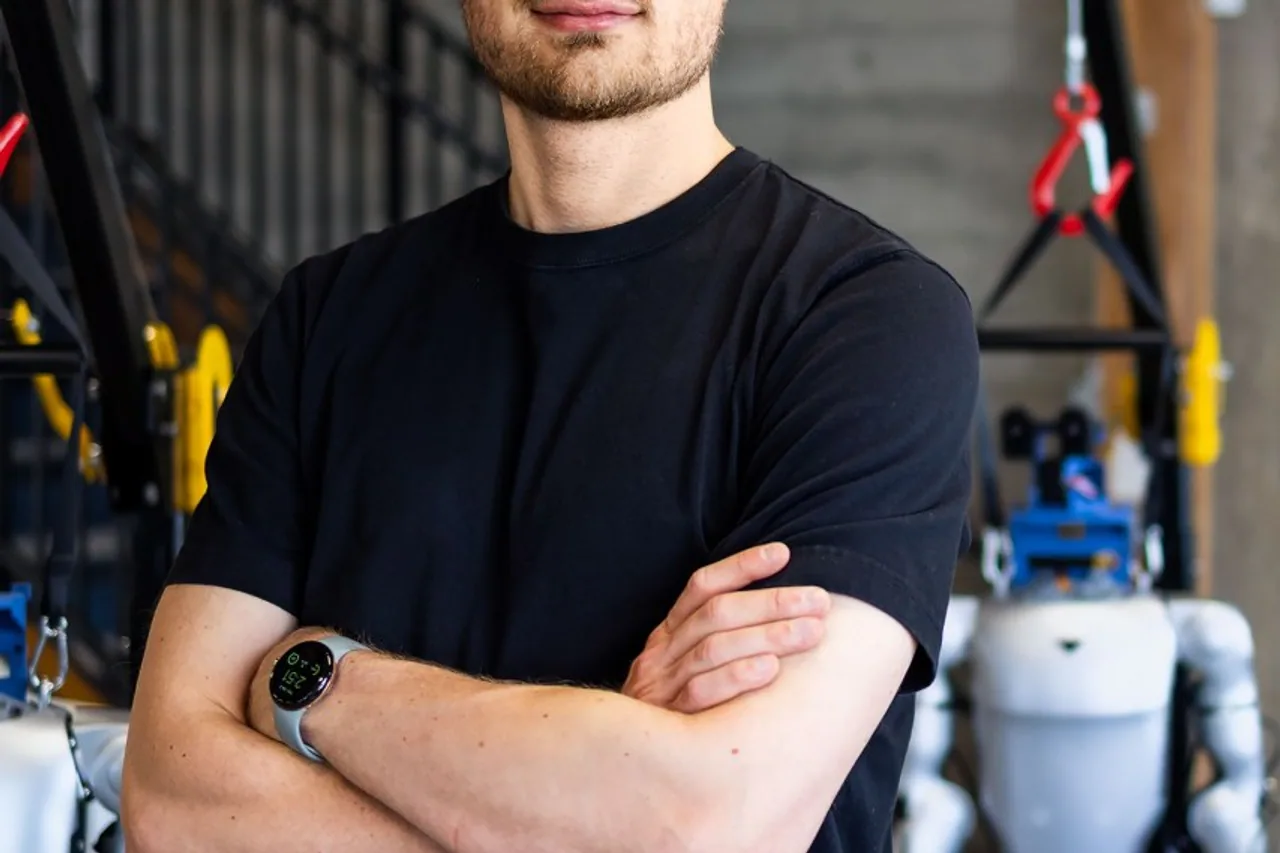
His early San Francisco operation is populated with humanoid robots, according to MIT Technology Review. The venture’s product and commercial plans remain undisclosed, but the technical direction is clearer. Hafner is extending his work on model-based reinforcement learning, in which an AI learns a representation of how an environment works and uses it to plan actions before taking them.
From reacting to imagining
Much of today’s robotics development still depends on extensive real-world data collection, demonstrations, or task-specific tuning. That is expensive, slow and sometimes unsafe—especially where failures mean damaged equipment or danger to people.
Hafner’s approach uses a so-called world model: a learned simulation that attempts to predict what will happen after an agent takes an action. Rather than repeatedly trying actions on a physical machine, an agent can evaluate possibilities in that internal model and select a plan.
The practical promise is generalization. A robot sent into a home, warehouse or other human environment cannot be trained on every floor plan, object layout and interruption it will encounter. A planning system that can forecast plausible outcomes could be more resilient when conditions differ from its training environment.
That distinction matters for operators evaluating physical AI. A robot that works in a tightly controlled demo but needs costly retraining for each site is a very different proposition from one that can adapt within defined safety limits.
A research track record, now moving into hardware
Hafner has spent years testing world-model agents in simulated environments. His PlaNet work focused on planning ahead; subsequent Dreamer systems reached notable results in Atari games and Minecraft. Dreamer 4, MIT Technology Review reports, learned a Minecraft task from recorded gameplay data without directly interacting with the game.
Those results do not automatically translate to reliable real-world robots. Games offer bounded rules, lower stakes and cleaner feedback than homes or industrial settings. But they demonstrate a central capability that robotics companies want: learning useful behavior from less direct interaction.
Hafner has also begun testing the approach in physical systems. His DayDreamer project applied the Dreamer algorithm to robots operating in new environments, including responding to experiences such as being pushed over without dedicated training for that event.
The startup, formed after Hafner left Google DeepMind in fall 2025, is therefore an effort to turn a research agenda into a product company. Its humanoid focus places it in an increasingly crowded field, but its likely differentiation is not the robot body alone. It is whether the control system can build and use predictive models efficiently enough to handle variation in the real world.
What business leaders should watch
For enterprises, the relevant milestones will be operational rather than benchmark-based:
- **Transfer across sites:** Can a system deployed in one environment work in another with limited new data?
- **Recovery from surprises:** Can it recognize when its expectations are wrong, re-plan and fail safely?
- **Data efficiency:** How much teleoperation, simulation, recorded video and real-world testing does deployment require?
- **Latency and cost:** Can planning run quickly and economically on or near a robot?
- **Safety assurance:** Can operators set boundaries, audit decisions and verify behavior in spaces shared with people?
World models are an appealing route toward more adaptable AI agents, but they also introduce a core risk: plans are only as sound as the model’s predictions. In unfamiliar or rare conditions, a system can be confidently wrong. Closing that gap between simulated foresight and physical reliability is likely to determine whether Hafner’s new company becomes a research milestone or a deployable robotics business.
For now, the startup’s details are sparse. The signal worth tracking is the bet itself: that the next step for AI agents may be less about scaling reactions to past examples, and more about giving machines a workable ability to anticipate what comes next.