Microsoft has given its developer-optimized Windows initiative a name: Project Zenith. The program is aimed at a new class of developer-focused PCs with at least 64GB of unified memory, where the company is positioning local AI model execution alongside a more deliberately configured Windows environment.
The first Project Zenith device was announced by AMD at IFA: a compact PC built on Ryzen AI Halo chips. Microsoft says additional Zenith systems, including devices based on other silicon, will follow in the coming months.
What ships differently
Project Zenith is not a separate version of Windows. It is a preconfigured setup that puts commonly used development tools and system preferences in place from the start.
The included tools are Visual Studio Code, GitHub Copilot, PowerToys, WinAppCLI and Windows Dev Skills. File Explorer is set to display file extensions, hidden files and the full path in the title bar. Long-path support is enabled.
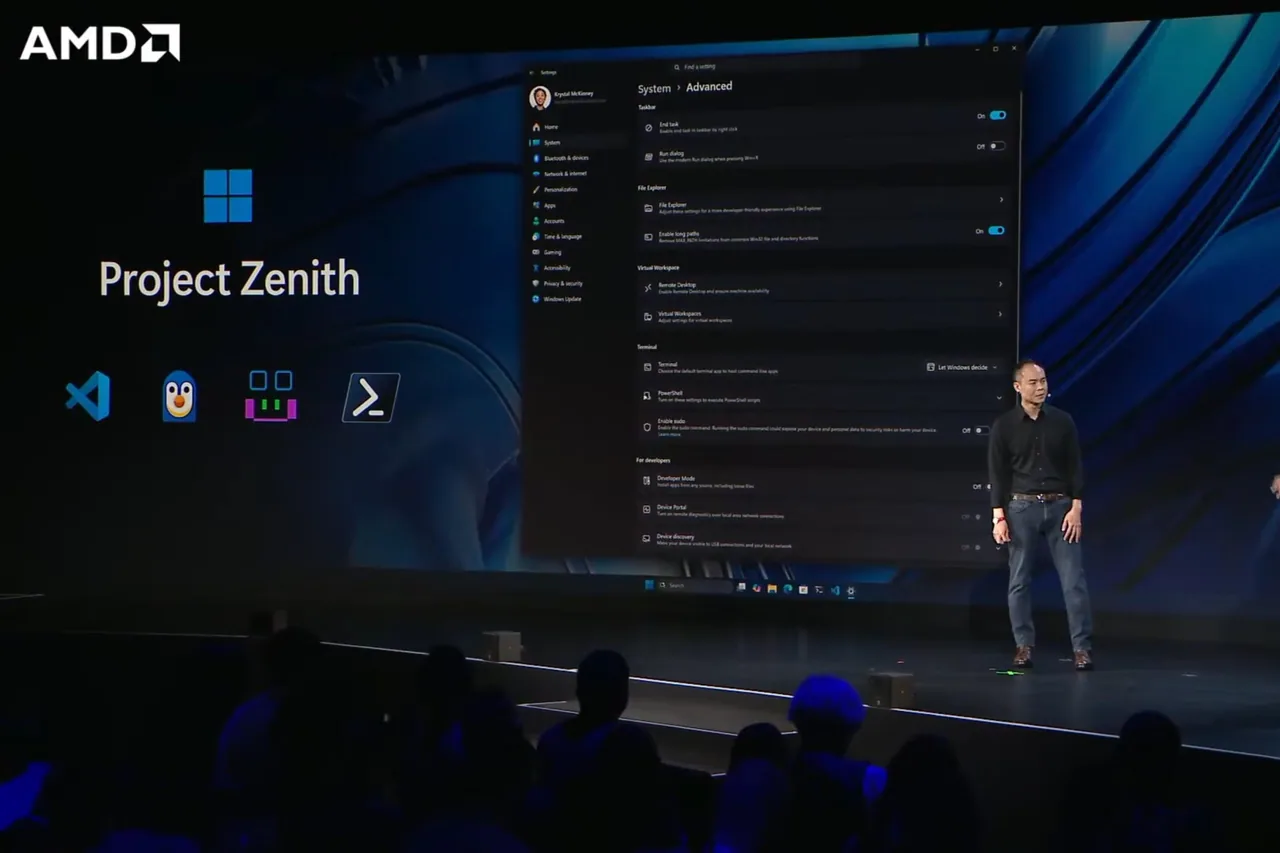
Just as notable are the things Microsoft has turned off: recently used files and folders, sync-provider tips, Start menu tips and account notifications. PowerToys Command Palette is enabled by default.
That combination addresses a familiar source of friction for developers setting up a new Windows machine: the time spent installing baseline utilities and reversing consumer-oriented defaults before writing any code. For IT and engineering leaders standardizing endpoint setups, it could also provide a more consistent starting point—though organizations will still need to account for their own identity, security, device-management and software policies.
The local-model bet
Microsoft’s larger argument for Zenith is hardware, not merely defaults. The company says these systems can run models with more than 30 billion parameters locally and without metered cloud-token usage. That could make iterative experimentation more practical for teams whose workloads fit on-device, while reducing variable inference costs and dependence on remote services.
The qualifier matters. “30B+” describes a hardware capability rather than a blanket claim that every model or workflow will perform the same way. Actual usefulness will depend on model architecture, quantization, context length, developer tools and the performance characteristics of each device. Local execution also does not remove the need for cloud infrastructure for larger models, shared production systems or workloads that require centralized data and governance.
Still, the product direction is clear: Microsoft is trying to make Windows laptops and small desktops more viable as AI-development workstations rather than just clients for cloud-based coding and inference tools.
Why it matters
Project Zenith brings together two Windows priorities that are often discussed separately: improving day-to-day quality and making the platform more relevant to AI-era developers. The configuration’s reduced prompts and recommendations may sound minor, but they signal an acknowledgement that developer machines need different defaults than general-purpose consumer PCs.
For founders and technology buyers, the initial device requirement is the practical constraint. Systems with 64GB or more unified memory are likely to be a targeted purchase for AI-focused developers, not a broad fleet refresh. Teams should evaluate whether local models reduce enough cloud spend, latency or data-handling risk to justify the hardware premium.
What to watch next
The next test is breadth. Microsoft has promised more Zenith hardware across different silicon, and the value of the program will depend on availability, pricing and performance across that lineup. It will also be worth watching whether its developer-friendly Windows settings remain exclusive to these devices or become easier to adopt across standard Windows 11 installations.
For now, Project Zenith is best understood as a curated Windows deployment and a hardware category designed to move more AI experimentation onto the developer’s desk.
*Source: [The Verge](https://www.theverge.com/news/990051/microsoft-project-zenith-windows-developers), reporting on Microsoft’s Project Zenith announcement.*