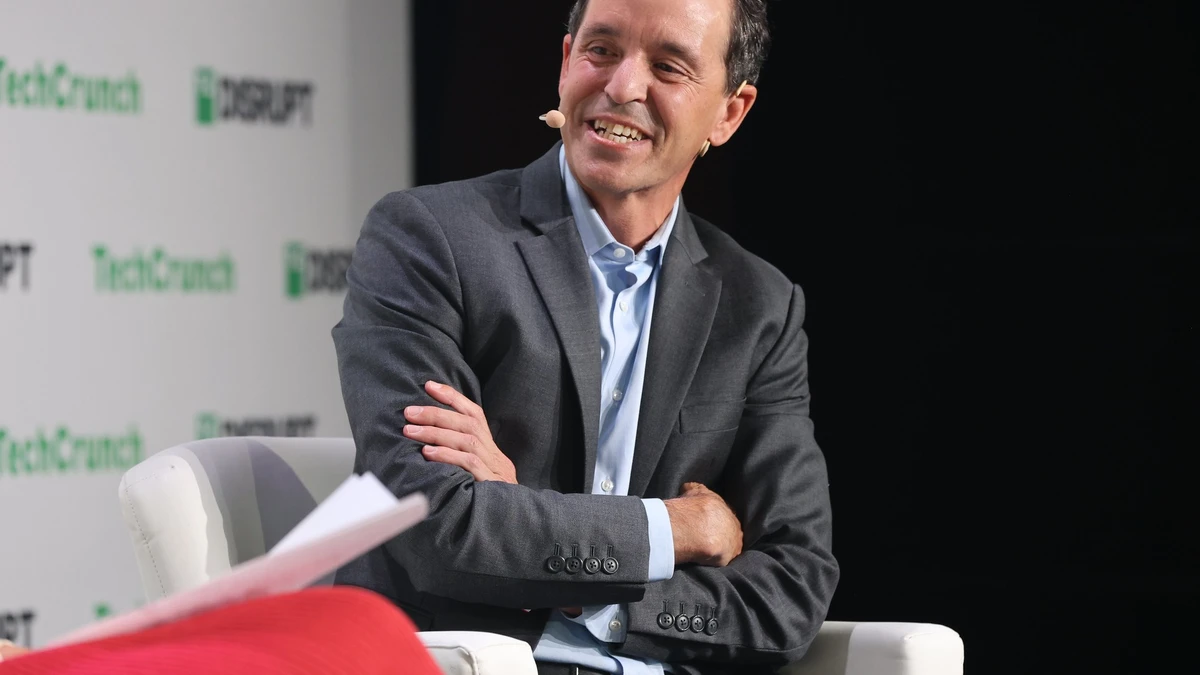
OpenAI has reportedly acquired Glass Imaging, a startup focused on smartphone computational photography, for more than $300 million. The deal was first reported by *The Wall Street Journal* and summarized by TechCrunch; OpenAI did not immediately respond to TechCrunch’s request for comment.
The significance is less the transaction’s reported price than the capability it may bring in-house. Glass Imaging develops software that uses neural networks to account for the specific characteristics of a phone’s camera hardware and improve image capture at the moment a photo is taken. That differs from many consumer AI features that generate or edit an image after capture.
What OpenAI may be buying
Glass Imaging was founded in 2019 by Ziv Attar and Tom Bishop, former Apple engineers associated with the team that developed Portrait Mode. The company had raised about $30 million before the reported deal.
Its technical premise is practical: phone cameras are constrained by small sensors and lenses. Software can compensate for some of those limits, but effective results depend on tuning models to the hardware configuration—the sensor, lens, and multiple-camera setup—in a given device. That creates a blend of imaging science, machine learning, and device-specific integration that is difficult to recreate solely through a general-purpose AI model.
For OpenAI, the acquisition could bring an experienced applied-imaging team and know-how around camera pipelines, an area where responsiveness, power consumption, privacy, and image quality all matter alongside model accuracy.
Why it matters for a hardware strategy
The reported purchase arrives amid broader, still-unconfirmed expectations that OpenAI is pursuing dedicated hardware. In 2025, OpenAI acquired Jony Ive’s device startup io in a $6.5 billion deal, putting Ive in charge of design work for OpenAI. Subsequent reports have pointed to several possible device directions, but OpenAI has not publicly detailed a product roadmap in the supplied reporting.
A camera-company acquisition does not establish that OpenAI is building a smartphone, nor does it reveal a launch timetable. It does, however, make computational photography a more plausible strategic consideration. Cameras are important not only for taking better pictures, but also for systems that interpret a user’s physical environment. Any device intended to act as an AI interface could benefit from high-quality visual input, especially in difficult lighting or compact form factors.
That distinction matters for operators and builders evaluating the next AI platform shift. The competitive question is moving beyond which company has the best conversational model. It is also about who can make AI dependable in the real world, across sensors, on-device software, cloud services, and industrial design.
What to watch next
The first signal to watch is confirmation: neither OpenAI nor Glass Imaging had publicly confirmed the reported transaction in the source reporting. After that, staffing and product clues will matter more than speculation about a specific device category.
Look for whether Glass Imaging’s technology surfaces in a consumer product, becomes part of a broader visual AI stack, or is used internally to develop future hardware. The operating challenge will be integration. A strong imaging model must work reliably across hardware constraints and deliver clear user value without adding latency, battery drain, or confusing results.
For startups in device-adjacent AI, the reported deal is also a reminder that specialized teams with production-grade expertise in a narrow technical layer can be strategically valuable. Foundation models may command attention, but product differentiation often depends on the less visible systems around them.