Robotics has spent decades moving from labs into warehouses, factories and specialized field operations. But it has not had the broad adoption inflection point that ChatGPT created for generative AI.
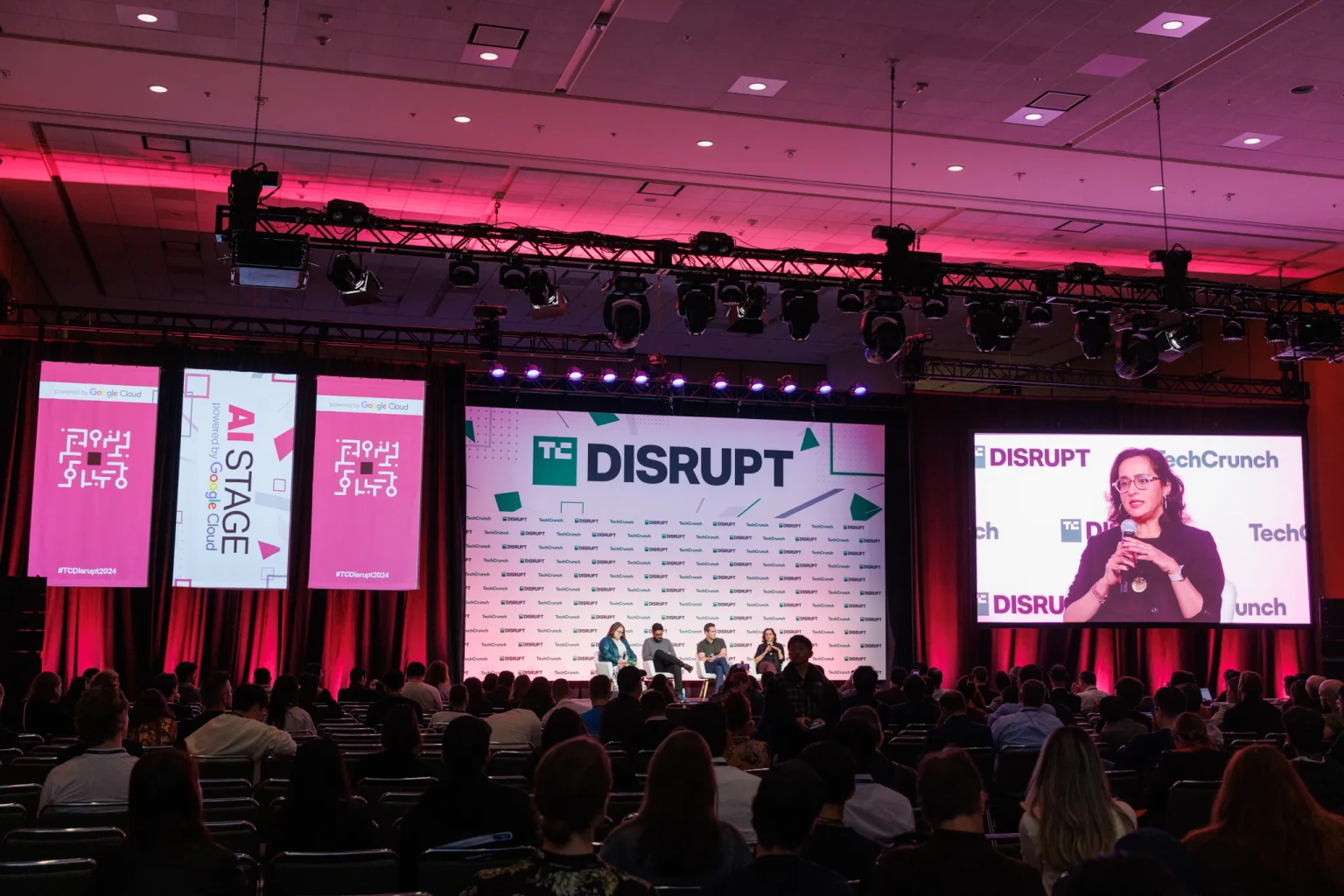
At TechCrunch Disrupt 2026, Nvidia Inception’s global head of physical AI, Les Karpas, is set to frame a central reason: robotics does not have an internet-scale training corpus comparable to the text and code that accelerated large language models.
That distinction matters. A language model can learn patterns from enormous collections of digitized material. A robot must learn how objects look, move, resist, break, and behave amid changing light, layouts and human activity. It also needs to connect perception to action safely and reliably.
The physical-data problem
According to the event preview, there is no broadly available, internet-wide dataset for physical AI. Autonomous-driving developers have built significant data advantages through years of real-world road miles, but those datasets are costly to accumulate and do not automatically translate to other kinds of robots.
A warehouse arm, mobile inspection robot and humanoid system encounter different environments, sensors, controls and failure modes. That makes general-purpose learning unusually difficult: training data must cover not only what a machine sees, but the consequences of what it does.
For operators, this explains why impressive demonstrations can still take time to become dependable production systems. The key test is not whether a robot completes a scripted task once. It is whether it can handle variation, recover from errors and operate within a business’s safety, uptime and integration requirements.
Simulation is becoming core infrastructure
The industry’s response is increasingly centered on simulation, synthetic data and foundation models trained across multiple robot types. These approaches aim to reduce dependence on collecting every useful physical interaction manually.
Simulation can generate more edge cases than a company could practically capture in the field, while synthetic data can expand coverage across environments and object conditions. Multi-robot models could eventually let lessons learned in one setting inform another.
But these tools do not eliminate the deployment challenge. Builders still have to close the gap between simulated behavior and real conditions, validate performance at the task level, and gather feedback from live systems. The value will likely accrue to companies that combine strong data pipelines with a clear operational wedge rather than those pursuing generality without a route to reliable deployment.
Why Nvidia is paying attention
Nvidia has made physical AI a prominent part of its broader computing strategy. Karpas works with startups across robotics, automotive, manufacturing, mobility and smart cities through Nvidia Inception, giving the company visibility into where developers are encountering data and deployment constraints.
That position also reflects a wider infrastructure opportunity. Robotics teams need compute, simulation environments, data-management workflows and deployment tooling—not just models. As more enterprises evaluate automation projects, the suppliers that shorten iteration cycles and make performance auditable could become as important as robot makers themselves.
What to watch next
The next milestone for robotics may not resemble a single consumer launch. More meaningful signals will be repeatable deployments in bounded but economically valuable settings, along with evidence that systems can be adapted to new sites without extensive bespoke data collection.
Executives evaluating robotics should ask practical questions: Which tasks have sufficiently structured environments? What data will be collected during operation? How are exceptions handled? And what is the cost of integrating the robot with existing workflows?
The “ChatGPT moment” for robotics, if it arrives, will depend on answers to those operational questions as much as advances in models. The technology needs a scalable path from digital training to dependable physical work.