Restaurants, cafes, and consumer brands are increasingly using generative AI to make promotional food imagery. The results can be conspicuously wrong: noodles that turn into tendrils, repeating holes and bubbles that spread across a dish, or ice cream and burgers with textures closer to concrete than food.
That pattern is not merely a bad-prompt problem. It exposes a limitation of popular image-generation systems—and a practical risk for businesses that use them in a category where customers are unusually sensitive to visual cues.
The model builds appearance before it gets structure right
Many leading image generators use diffusion, a process that begins with visual noise and progressively refines it into an image. According to Chris Russell, a University of Oxford professor specializing in computer vision, coarse structure emerges before the finer texture details.
When a model gets that early structure wrong, later stages can still add convincing lighting, gloss, and surface detail on top of an impossible object. The result is a familiar generative-AI failure mode: an image that can look polished at a glance but collapses under scrutiny—like an extra-fingered hand, except in this case it is a sandwich with implausible layers.
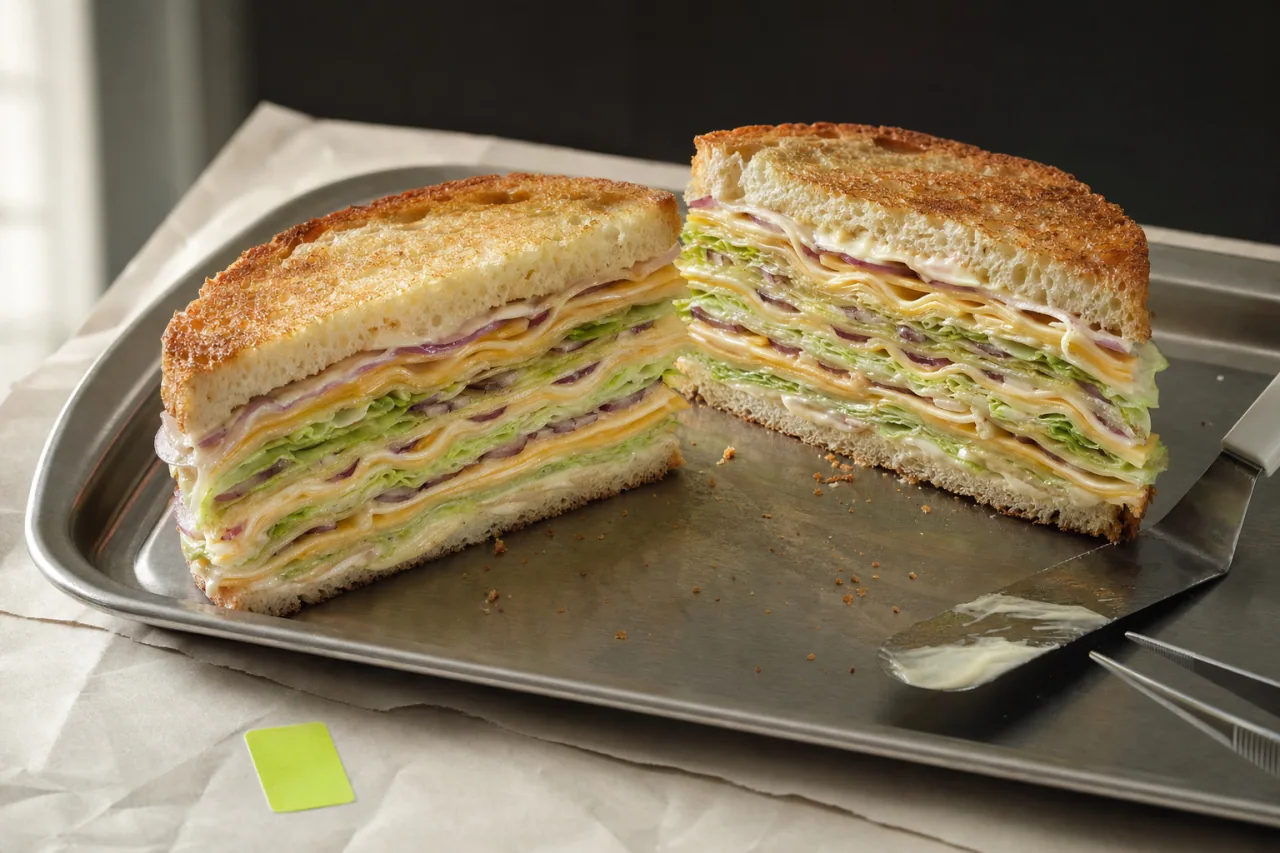
Thin, continuous forms are especially difficult. Giovanbattista Califano, a behavioral scientist at the University of Naples Federico II, notes that diffusion models struggle with structures that must extend, connect, and stop in precise places. Noodles, strands, drizzles, seeds, and bubbling textures are therefore likely to bleed into adjacent areas or continue without culinary logic.
AI imitates food photography, not food
An image model does not understand what a burrito, noodle, or burger is, or the material constraints that make one edible. It learns statistical associations from visual data. Roland Meyer, a professor of digital cultures and arts at the University of Zurich, characterizes this as reproducing looks without knowledge of the world.
That distinction matters in commercial creative work. Food photography itself relies on visual exaggeration: saturated color, sharp contrast, glossy lighting, stylized geometry, and, at times, non-food materials used to create an effect. AI can reproduce those conventions while missing the judgment a food stylist or photographer applies to keep an image appealing rather than alarming.
Training data may introduce further distortion. Models ingest a broad and poorly disclosed mix of internet imagery, where unusual food images, memes, and surreal content can spread more widely than ordinary images. And as AI-generated material becomes part of the training environment, researchers and industry observers have raised concerns that recursively training on model output can lead to visual degradation or sameness.
Why the mistake is costlier in food marketing
People do not judge food imagery as they would a generic product illustration. Strange tendrils can evoke worms or parasites; clustered holes can suggest infestation; odd colors and textures can imply spoilage or contamination. These reactions draw on disgust responses that help people avoid potential food-borne threats.
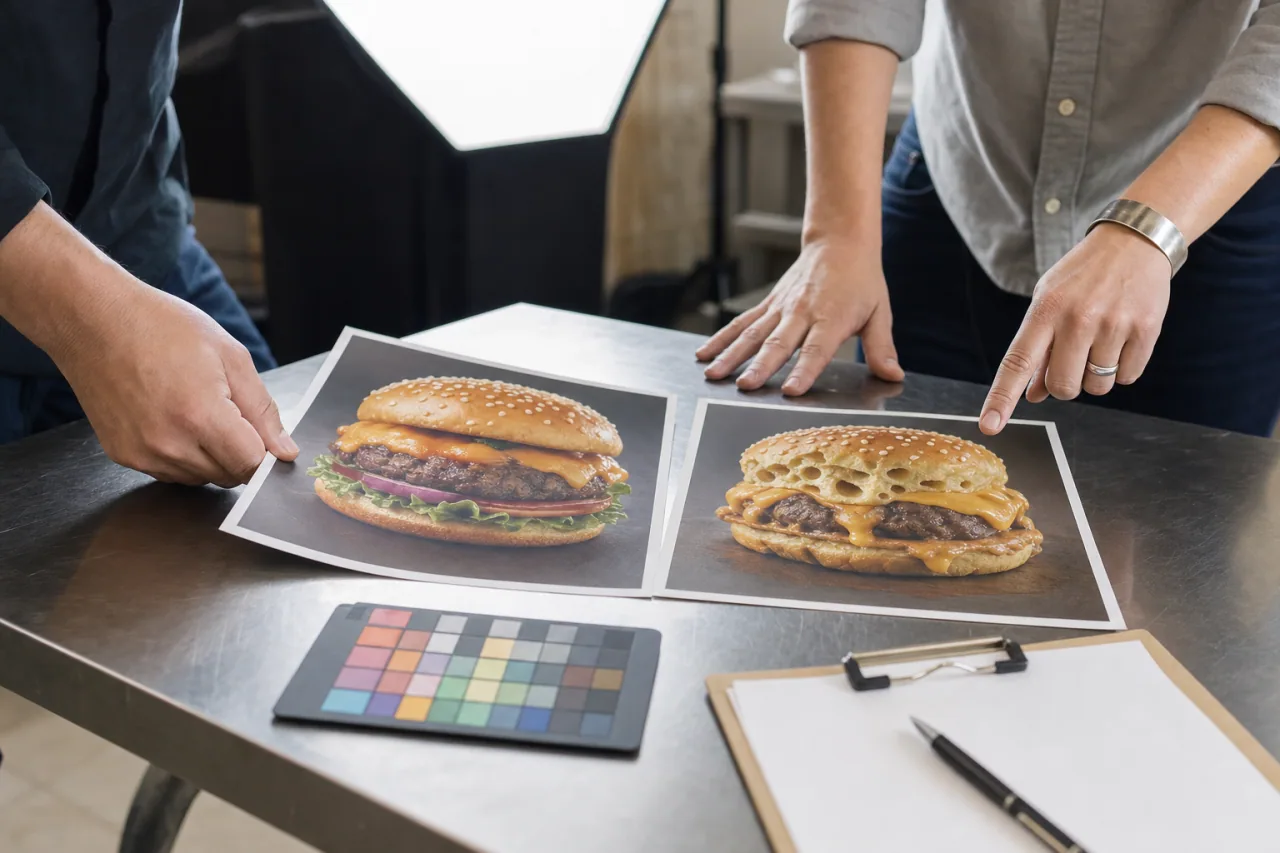
In other words, food has a narrower uncanny valley. An imperfect stock-style office scene may be forgettable. An image that makes a customer question whether a product is safe or appetizing can undermine the campaign’s basic purpose.
For operators, the issue is also a brand-trust problem. If a restaurant has the actual menu item available to photograph, an implausible AI image may signal corner-cutting or create a gap between customer expectation and the delivered product. Enlarging low-resolution generated images can compound the problem by making subtle defects conspicuous.
A practical operating rule: use AI as a draft, not final proof
Teams using generative tools for food marketing should treat outputs as creative exploration rather than approved product representation. A useful review process should include:
- Checking geometry and boundaries at the final published size, not just in a small preview.
- Looking specifically for repeated patterns, detached ingredients, excessive strands, impossible layers, and surface textures that resemble non-food materials.
- Comparing the image against the actual product before using it in menus, delivery marketplaces, packaging, or paid campaigns.
- Keeping human food photographers, stylists, and brand reviewers in the approval loop for customer-facing assets.
The broader lesson applies beyond restaurants. Generative image quality is not measured only by whether an asset looks detailed or cinematic. It must also preserve the physical and emotional logic of the category. For food, that means the image needs to make someone hungry—not make them zoom in.