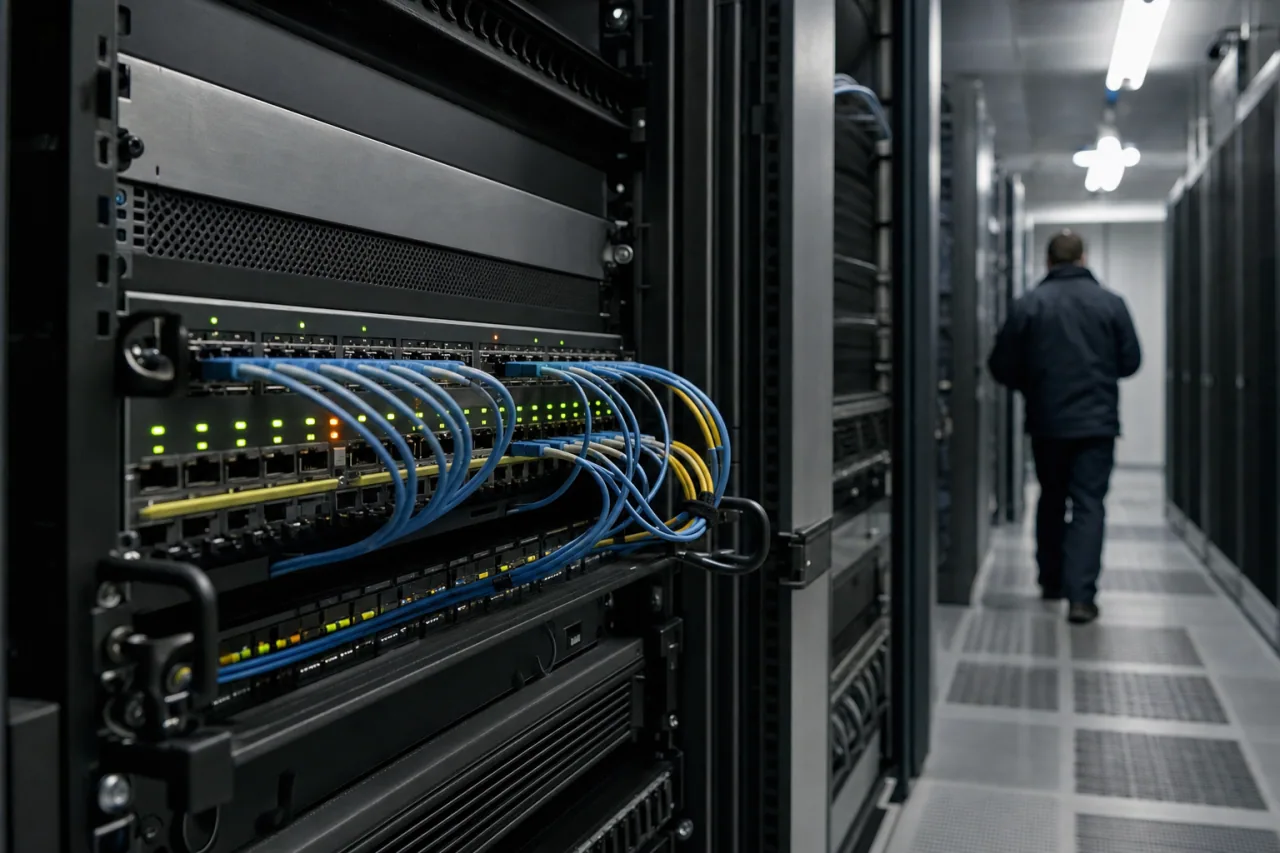
AI infrastructure planning is moving beyond the question of how many accelerators an organization can buy. For inference-heavy systems—especially retrieval-augmented generation (RAG), agentic workflows and real-time customer services—the limiting factor is increasingly the ability to retrieve, cache and move data fast enough.
That changes the role of memory and storage. They are no longer passive capacity behind the compute layer; they help determine response time, operating cost, utilization and ultimately whether an AI service can meet its business promise.
Inference is a systems problem
Training has often centered on completing large, bounded jobs as quickly as possible. Inference has a different operating profile: it is continuous, variable, geographically distributed and often directly exposed to customers or operational processes.
A customer-support assistant may need to serve many requests simultaneously. A healthcare, financial-services or robotics system may have tighter requirements for latency and reliability. RAG systems add further pressure because they repeatedly search and retrieve relevant information before producing a response.
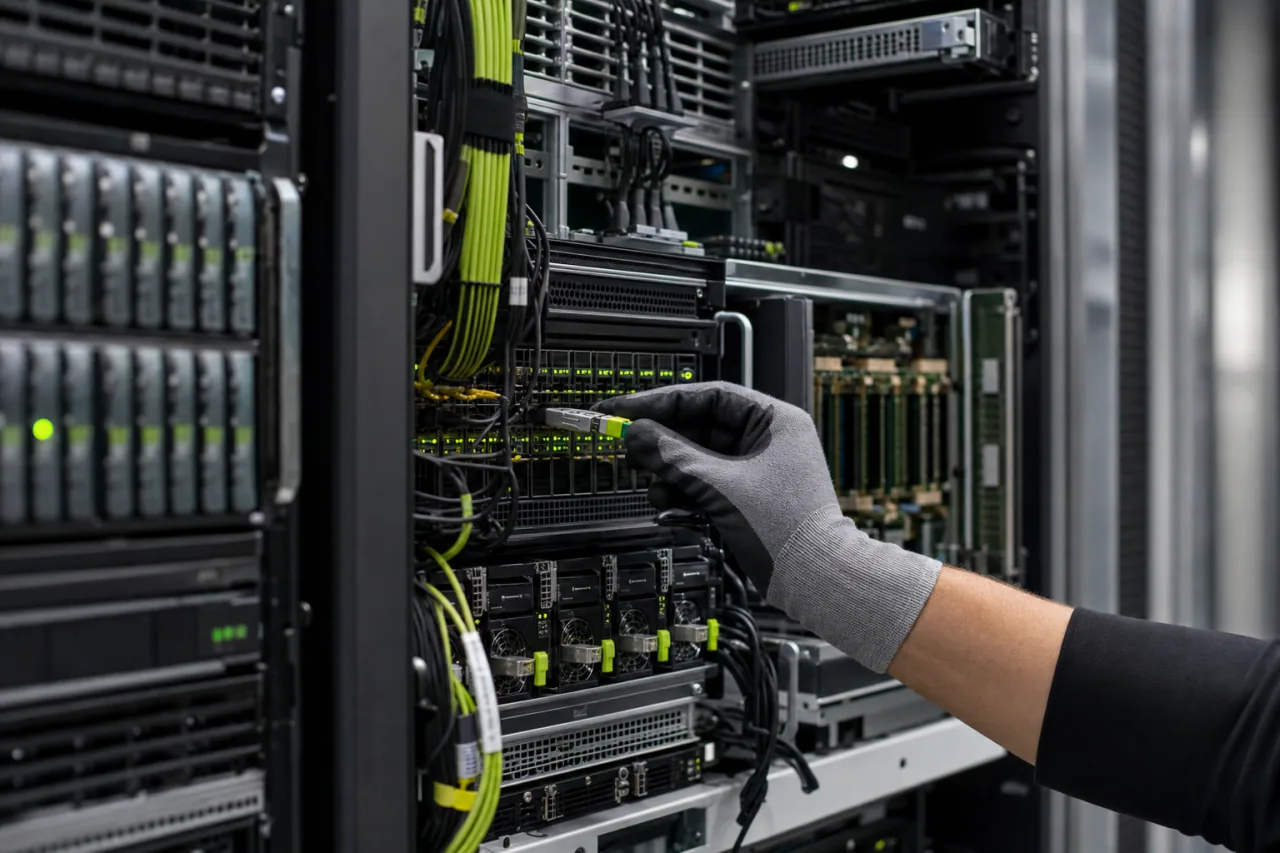
The result is that raw processor performance alone says little about the experience an organization can deliver. A fast accelerator can sit idle waiting for data. High-speed storage can still fall short if network paths or caching policies add delay. A system designed only for peak demand may also carry an unsustainable cost and power burden during ordinary utilization.
As analyst Jim McGregor of Tirias Research argues in MIT Technology Review, infrastructure teams need to optimize compute, memory, storage and networking together around the workloads they intend to run.
Data movement becomes a business constraint
For operators, the practical question is where data resides, how frequently it is accessed and how quickly it can be brought to the model. That includes source-data ingestion, transformation, vector or database retrieval, caching, storage tiers and network connectivity.
The consequences extend beyond engineering metrics. In customer-facing applications, slow or inconsistent responses can erode trust. In time-sensitive environments, latency can affect service quality and operational outcomes. And at scale, unnecessary data movement translates into power consumption and cloud or data-center expense.
That makes balanced system design a competitive issue. The company with the largest compute cluster will not necessarily run the most useful AI service. Advantage may instead go to the company that understands its workload mix and removes the bottleneck currently constraining it.
A more disciplined procurement model
Leaders should resist buying for generic “AI readiness.” That approach can overfund visible components while leaving the data path, power envelope or storage architecture underprovisioned.
A more useful procurement framework starts with workload characterization:
- **Specify service-level needs.** Measure acceptable latency, throughput, availability and data freshness for each AI use case.
- **Map the data path.** Identify where requests stall: retrieval, memory bandwidth, cache misses, storage reads, network transfers or compute queues.
- **Model normal and peak demand separately.** Plan for growth and resilience without permanently sizing every layer for rare spikes.
- **Keep architectures modular.** Build capacity plans that let compute, memory, storage, networking, cooling and power expand at different rates.
- **Review economics continuously.** Hardware capabilities, supply conditions and AI workloads are changing quickly; a fixed multiyear design assumption can become costly.
The supplier strategy matters, too. Enterprises may need deeper coordination among chip vendors, OEMs, cloud providers, storage specialists and systems integrators rather than assuming one provider can solve every capacity or integration issue.
What to watch next
The next phase of AI infrastructure competition will be shaped by efficiency as much as speed. Buyers will increasingly look at performance per watt, sustained utilization, cost per successful task and the ability to adapt infrastructure as models and workloads evolve.
For executives, that means AI data-center architecture is no longer solely an IT concern. It is part of product strategy, customer experience, risk management and capital allocation. The key decision is not simply what hardware to acquire, but what integrated system can deliver measurable business value as inference demand grows.