
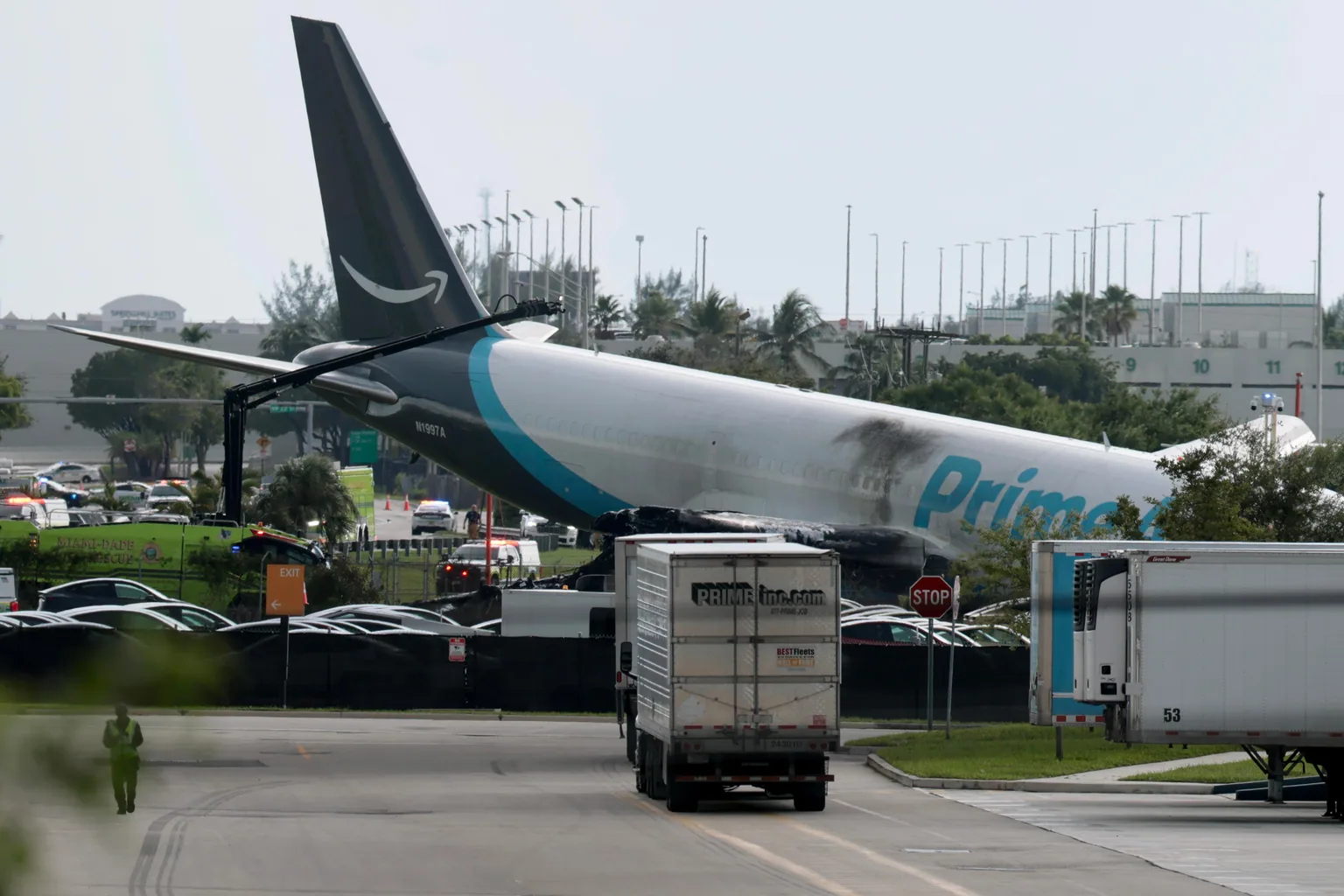
A Boeing 767-300 cargo aircraft bearing Amazon branding overran a runway while landing at Miami International Airport on Sunday, according to the Federal Aviation Administration. The aircraft, operating as 21 Air Flight 7598, had departed Luis Muñoz Marín International Airport in San Juan, Puerto Rico.
The FAA said the incident occurred at about 2 p.m. local time on September 6. The aircraft crashed into vehicles after leaving the runway, according to reporting from *The Verge*, and multiple injuries were reported. The severity of those injuries and the full extent of damage were not clear at publication.
Airport operations were disrupted
Flights at Miami International were grounded in the aftermath. Miami-Dade Fire Rescue deployed more than 60 units to the scene; responders found the plane on fire and producing heavy smoke, according to reports cited by *The Verge*.
The immediate operational issue is broader than one cargo flight. Miami is a major U.S. air-cargo gateway, particularly for routes serving Latin America and the Caribbean. A runway closure, emergency response activity or extended aircraft recovery can affect passenger scheduling as well as time-sensitive freight movements.
For logistics teams, the near-term questions are whether airport restrictions persist, which runways or terminals are affected, and how carriers reroute or defer cargo. Shippers moving goods through Miami may need contingency capacity through alternate gateways or changes to road-feeder and warehouse schedules.
What is known—and what is not
The FAA’s initial statement establishes the aircraft type, flight number, origin and timing of the runway overrun. It does not identify a cause. Investigators will need to examine factors that can contribute to runway-excursion events, including aircraft condition, landing performance, weather, runway conditions, operational procedures and airport infrastructure.
It is also not yet clear how the aircraft was being operated within Amazon’s air network or what volume of Amazon-bound freight, if any, was on board. An Amazon logo on an aircraft does not by itself establish ownership or operating responsibility; the FAA identified the flight as operated by 21 Air.
Why the distinction matters
Large e-commerce delivery networks depend on a mix of owned assets, leased capacity and third-party airline operators. That structure can provide flexibility, but disruptions still cascade through tightly timed networks: freight may miss sort windows, aircraft rotations can be altered, and downstream delivery commitments can be affected.
For executives managing logistics exposure, the event is a reminder that resilience is not only a question of supplier redundancy. It also relies on alternate airport access, visibility into carrier operations, recovery plans for delayed freight and realistic customer-communication protocols when a hub is constrained.
What to watch next
The key next developments will be updates from the FAA and other investigating authorities on the condition of the crew and others involved, the status of airport operations, and the formal inquiry into the runway overrun. Businesses with shipments moving through Miami should monitor carrier advisories and confirm whether promised delivery dates require adjustment.