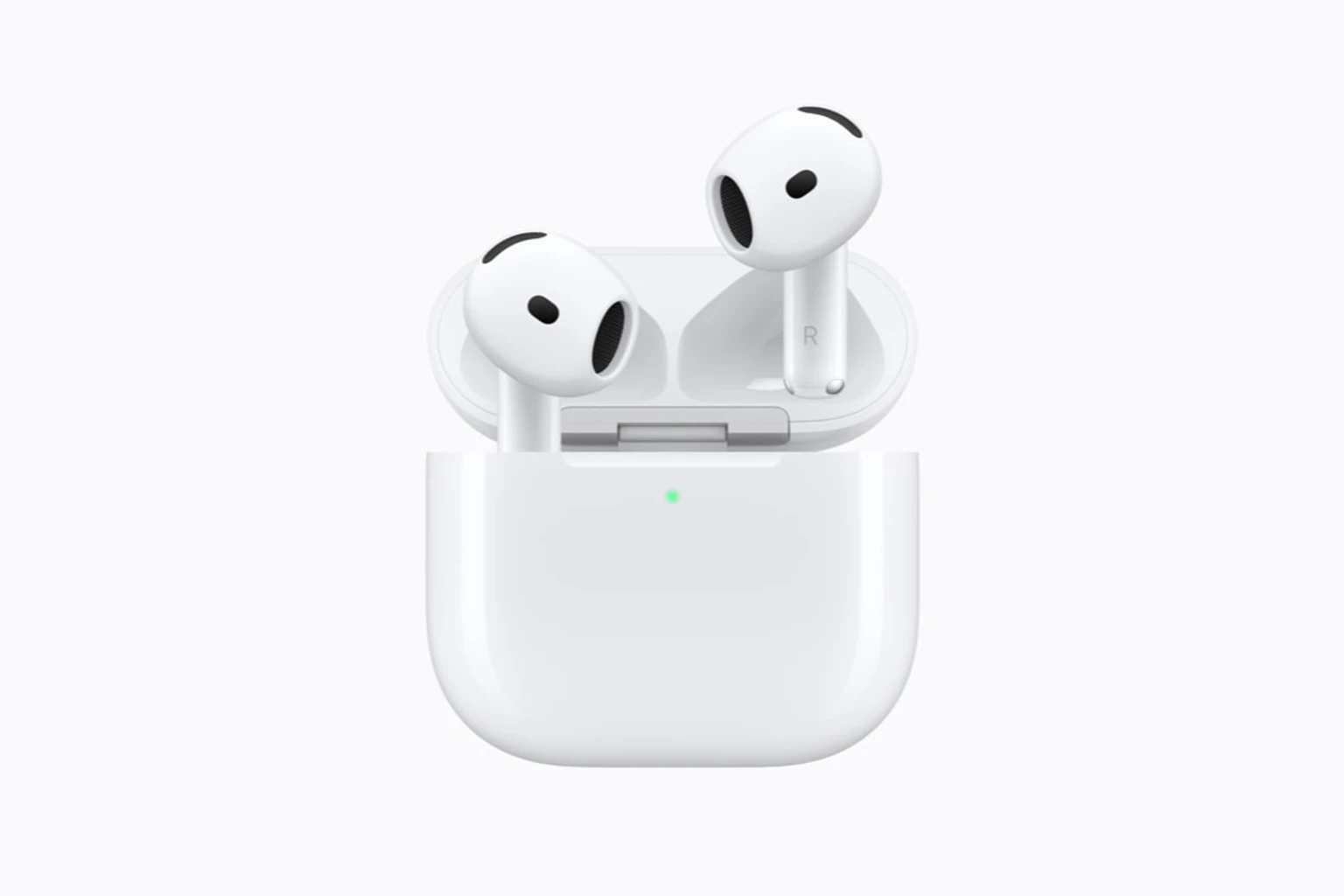
Apple has introduced AirPods 5, a refresh of its open-ear wireless audio line that does more than update sound and noise control. The product is also being positioned as a hands-free interface for Siri AI, Apple’s forthcoming conversational assistant in iOS 27.
That framing matters because it extends Apple Intelligence beyond the screen. Rather than asking customers to open an app or pick up a phone, Apple is tying AI requests to a device already worn during commutes, exercise, travel and work.
What changed
AirPods 5 use a new multiport acoustic architecture and next-generation Adaptive EQ, according to Apple. The company says the model’s open-ear active noise cancellation removes up to 50% more external noise than AirPods 4 with active noise cancellation. That is an Apple test result, and performance will vary by environment and settings.
The more consequential additions are interaction features. When paired with an Apple Intelligence-supported iPhone, users can ask Siri AI to draw on personal context across messages, email and photos, and to take actions in apps. Apple’s examples include playing music recommended in a message and navigating to a reservation found in an email.
Users can also respond to Siri with head gestures. Live Translation is available on compatible Apple devices and compatible AirPods when Apple Intelligence is enabled, although language and regional availability vary.
Apple will sell AirPods 5 in the US for $129, or $149 with a Wireless Charging Case. Preorders begin September 9 in the US and more than 65 other countries and regions, with store availability scheduled for September 18.
Why the AI integration matters
For Apple, the launch is an effort to make an assistant useful at the precise moments when a display is inconvenient. A voice-first interface can reduce friction for simple retrieval and task-routing requests—if recognition, response time and permissions work reliably enough in real-world conditions.
It also creates a tighter link between hardware upgrades and Apple Intelligence eligibility. Full functionality requires current Apple operating system software, while Siri AI requires a supported device and begins as a beta rollout in iOS 27. Apple says hands-free access to Siri AI works across all AirPods, but the broader experience still depends on the paired device, software, language and region.
That distinction is operationally important for product teams building mobile services. If users increasingly invoke an assistant from a wearable interface, services need clear intents, reliable app actions and permission models that make sense without a screen. The interaction is less suited to browsing and more suited to concise tasks: finding a booking, starting navigation, controlling media or retrieving a known detail.
What to watch next
The immediate question is whether Siri AI’s beta can turn context-aware voice requests into a dependable daily behavior. Apple notes that certain server-side Apple Intelligence features are subject to daily usage limits, which may vary by request complexity, demand and policies; it also says expanded access will be available for a fee in the future.
Watch the rollout boundaries as closely as the hardware. Siri AI launches in English first, with French, Japanese, Korean, Portuguese and Spanish planned for October. Apple says it will not initially be available in the EU on iOS, iPadOS and watchOS. Live Translation likewise has regional and language constraints.
AirPods 5 are therefore not just an audio refresh. They are a test of whether Apple can make personal-context AI valuable through a lightweight, always-nearby interface while managing the availability, capacity and trust requirements that come with it.