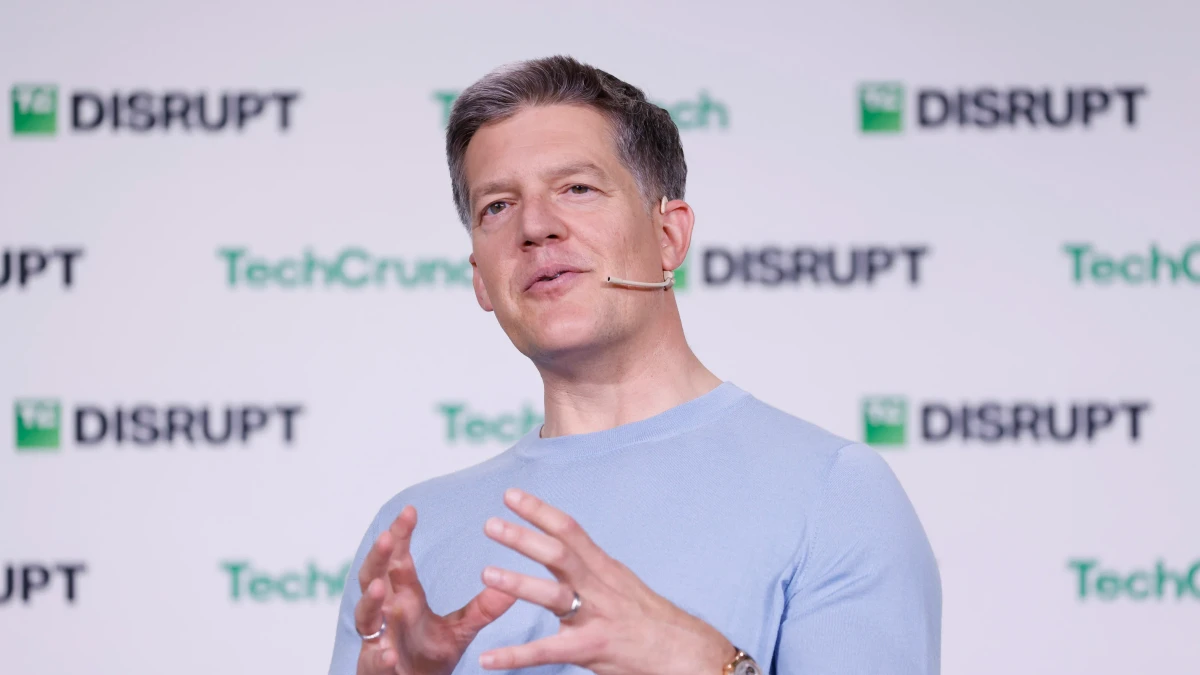

Armadin, the cybersecurity startup founded by Mandiant founder Kevin Mandia, has raised a $255.5 million Series B at a valuation of more than $2.5 billion. The round arrives only six months after its $190 million Series A, bringing the company’s total disclosed funding to more than $445 million.
Andreessen Horowitz and Accel led the new financing. Bain Capital Ventures, Redpoint, 8VC, Ballistic Ventures, Google Ventures, In-Q-Tel, Kleiner Perkins and Menlo Ventures also participated.
What changed
The financing gives Armadin an unusually large capital base for an early-stage security company—and signals investor conviction that AI will reshape both offensive and defensive security work.
Armadin’s stated product approach is not conventional point-in-time penetration testing. Rather than hiring a team to simulate an attack, produce a report and leave remediation to the customer, the company says it operates always-on “agentic swarms” that seek to chain vulnerabilities together and gain access to systems.
The operational premise is straightforward: organizations need to identify exploitable paths before attackers can use increasingly automated tools to find and exploit them at scale.
Why it matters for security leaders
The meaningful shift is from periodic assessment to continuous validation. Many enterprises already run vulnerability scanners, red-team exercises, bug-bounty programs and penetration tests. But those programs often produce disconnected findings, depend on manual specialist work or happen too infrequently to reflect a fast-changing cloud and software environment.
An agent-based system that can continuously test how weaknesses combine could help security teams prioritize the issues that create actual attack paths, not just long lists of individual vulnerabilities. That matters for teams managing sprawling identity systems, cloud configurations, third-party software and rapidly deployed AI-enabled applications.
It also raises the bar for controls around the testing platform itself. A system designed to emulate chained attacks will require carefully defined scope, strong access controls, logging, approval workflows and clear rules for what it can touch. Buyers should treat autonomous testing as a high-privilege security capability, not simply another dashboard.
The business case—and the caveat
Mandia’s track record gives Armadin credibility with enterprise buyers. Mandiant, which he founded, was acquired by Google for $5.4 billion in 2022. The investor lineup and valuation give the new company resources to recruit security researchers and engineers, develop its platform and pursue large enterprise deployments.
Still, the financing does not establish product efficacy. For prospective customers, the central questions are practical: Can the system produce reproducible findings? Does it distinguish material attack chains from noise? How safely can it operate in production-like environments? And can it integrate with existing security operations, ticketing and remediation processes?
Security leaders should also look beyond demonstration attacks. The value will depend on whether Armadin helps teams shorten the interval from discovery to verified remediation, while reducing the manual work required to validate findings.
What to watch next
The next test is execution: customer adoption, deployment boundaries and evidence that autonomous testing improves remediation outcomes. Watch for details on the environments Armadin supports, how enterprises govern agent activity, and whether its findings can feed directly into existing vulnerability-management and security-operations workflows.
More broadly, Armadin’s funding underscores a growing security-market question: as AI makes offensive testing cheaper and more persistent, can defenders operationalize equivalent automation without adding unacceptable risk or complexity?