
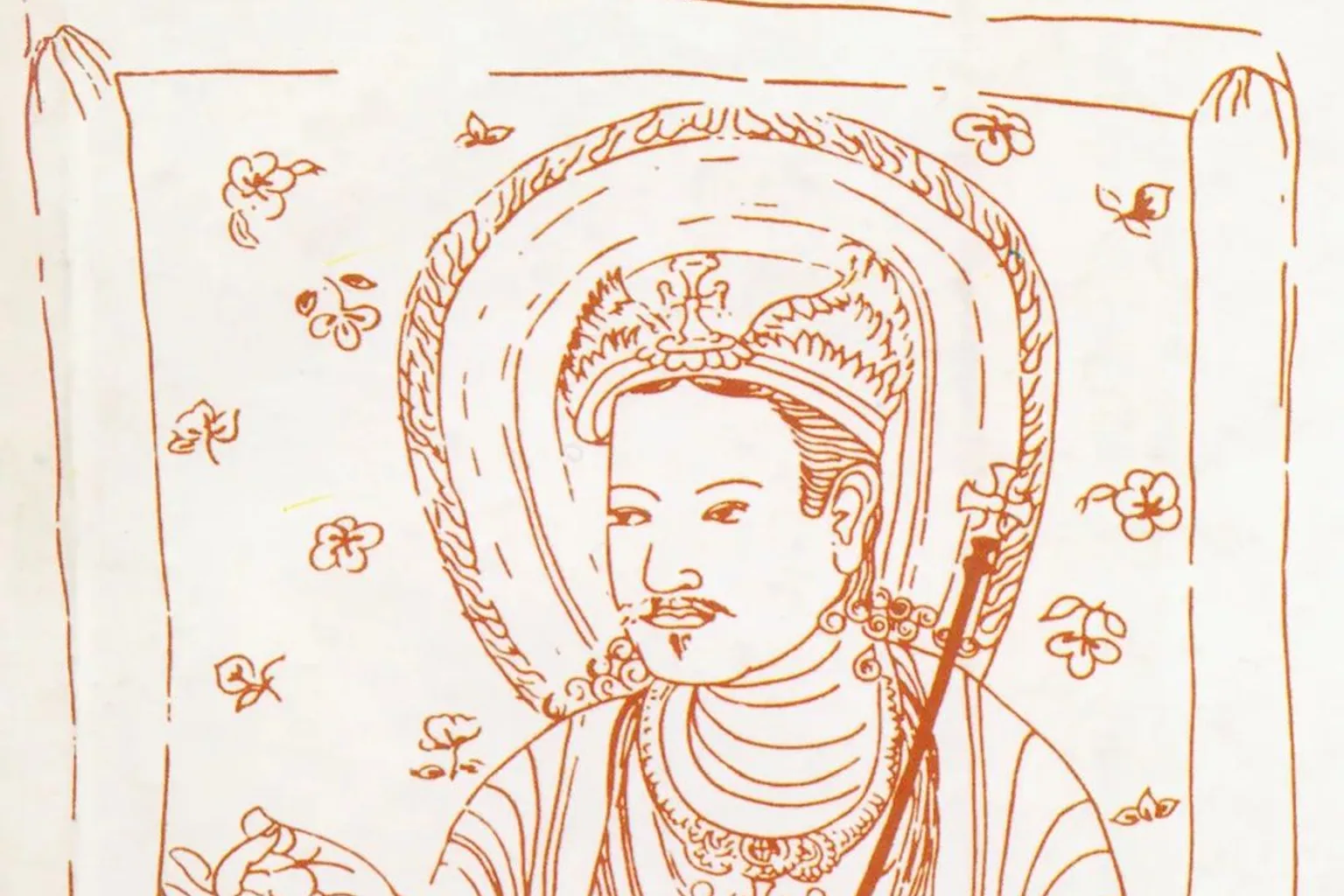
A story now circulating online offers an unusually durable lesson in information transfer: the Christian saints Barlaam and Josaphat appear to be a reworked version of the life of Gautama Buddha.
That is not merely a curiosity of religious history. It is a case study in what happens when an idea crosses networks, languages and institutions over centuries: its core structure can survive, while its names, framing and purpose change dramatically.
The narrative migration
In the Christian version, an Indian king isolates his son, Josaphat, from suffering and the outside world. When the prince eventually encounters illness, old age and death, he experiences a spiritual crisis. A hermit, Barlaam, converts him to Christianity; Josaphat later renounces royal life for asceticism.
The parallels with the traditional biography of the Buddha are conspicuous. The source traces the Christian tale’s earliest known appearance to 10th-century Georgia, as the *Balavariani*, derived from an Arabic work, *The Book of Bilawhar and Budhasaf*. The name “Budhasaf” is presented as descending through Persian from the Sanskrit *Bodhisattva*.
Across that chain of retellings, a Buddhist narrative became a Christian hagiography. Barlaam and Josaphat were subsequently incorporated into older Roman Catholic martyrologies, while Orthodox traditions continue to commemorate them. The story also spread widely through translated versions, including one brought to Japan by Jesuit missionaries in 1591.
What builders should take from it
The useful comparison is not that product localization should overwrite its origins. It is that distribution is inseparable from interpretation.
A message moving through a new community encounters local vocabulary, trusted authorities, established formats and audience expectations. In this instance, the tale apparently gained reach by becoming legible inside Christian literary and devotional traditions: a prince, a hermit, conversion, sainthood and monastic withdrawal. The plot’s underlying questions—suffering, impermanence and the rejection of privilege—remained recognizable, but their explanation changed.
For teams shipping software globally, the modern equivalent is more than translation. It includes onboarding flows, payment assumptions, privacy expectations, customer-support channels and even the metaphors used to describe a product. A feature that makes sense in one market may require a different interface—or may carry a different social meaning—in another.
AI adds another dimension. Generative systems can translate and adapt material at scale, but they can also flatten provenance. The Barlaam and Josaphat story is a reminder that a successful adaptation can become so embedded that its earlier lineage is hard to see. For organizations using AI to create localized content, clear source records, review by people with cultural expertise and explicit labeling of adaptations are practical safeguards.
A caution against simplistic reuse
The story also complicates the idea that cultural exchange is either pure copying or pure invention. Historical transmission often involves both continuity and transformation. That makes attribution, context and consent important operational questions, particularly when companies train models on, summarize or commercialize material from communities outside their own.
The immediate lesson is straightforward: ideas do not travel unchanged, and they rarely travel alone. They move through intermediaries and institutions that reshape them. Leaders building international products should treat localization as a design and governance function—not the final translation pass before launch.
What to watch next
As AI makes cross-language production cheaper, the constraint will increasingly be judgment rather than output volume. The organizations that distinguish translation from genuine cultural adaptation—and can document the difference—will be better placed to earn trust across markets.