
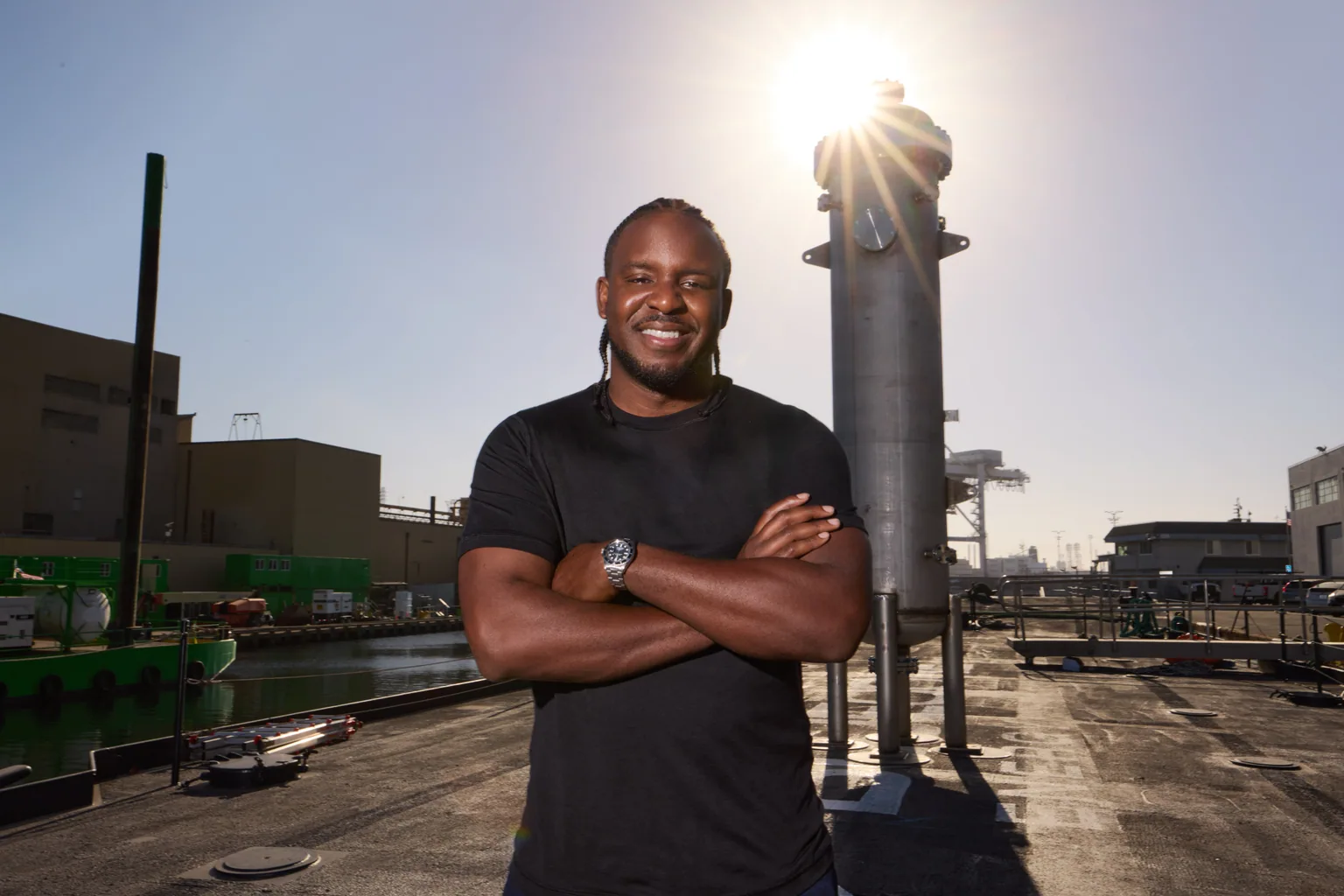
Bluecore Energy has raised an oversubscribed $50 million seed round, only months after a $10 million pre-seed and its emergence from stealth. The speed of the raise is notable, but the more consequential development is what the capital is meant to fund: a mobile nuclear-power concept that will have to clear a demanding path through engineering, fuel procurement and federal review.
The company, founded this year by Kofi Asante and headquartered at the Port of Long Beach, is developing small nuclear reactors on floating barges. Its proposed use case is supplying clean electricity to ports and nearby infrastructure, rather than building a conventional fixed-site power plant. Bluecore argues that barge-based generation could be moved to where capacity is needed without waiting for major new grid or plant infrastructure.
Capital arrives ahead of the hard part
Silverton Partners led the round. Existing backers including Slauson & Co., Harlem Capital and Ripple co-founder Chris Larsen participated again, while Collab Capital, Hartbeat Ventures and angels affiliated with Tesla, Uber, Amazon and Google also joined, according to TechCrunch.
For a company at this stage, the funding is less a signal of commercial deployment than an opportunity to pay for the long lead-time work that precedes it. Bluecore says the proceeds will support product development, regulatory work, nuclear-fuel purchases and hiring. It has launched two floating barges and says it is preparing to order fuel for a partner at a national nuclear lab.
That allocation reflects the unusual economics of nuclear startups. Software-style iteration is not available when a product incorporates reactors, marine operations and nuclear materials. Design decisions must be validated by regulators; physical components can have constrained supplier bases; and fuel procurement carries its own timing and policy considerations.
A regulatory overlap few energy startups face
Bluecore says it formally began engagement with both the U.S. Nuclear Regulatory Commission and the U.S. Coast Guard in August, after discussions dating to its inception. The company also cites a partnership with the Department of Transportation’s Maritime Division. Its product design is under review with the NRC and Coast Guard, a process Bluecore says could lead to certification of its floating nuclear power plant.
For operators considering this kind of generation, that distinction matters. Interest from ports, AI data centers and communities is useful validation, but prospective customers will need clarity on certification, operating requirements, emergency planning, liability and how a barge-based plant connects with local power and water systems. A mobile reactor may avoid some fixed-site construction challenges, yet it introduces questions around maritime operations and jurisdiction that traditional land-based projects do not share.
Bluecore points to the Navy’s decades of nuclear-propulsion experience as evidence that portable nuclear technology can be operated safely. Translating that precedent into a commercial civilian power platform, however, requires its own regulatory and operational framework.
Supply chain is the near-term business risk
Asante identified supply chain capacity as the company’s largest challenge: securing the hardware needed to build portable electricity infrastructure quickly enough to meet demand. Bluecore’s team includes alumni of SpaceX, Rivian and Toyota, and the company says it is applying those organizations’ sourcing approaches to secure critical parts.
That may be a practical advantage, but it does not remove the bottlenecks. Advanced energy projects compete for specialized manufacturing capacity, qualified components and nuclear fuel. The startup’s ability to convert its new balance sheet into contracts, certified designs and an executable deployment plan will matter more than the pace of its fundraising.
What to watch next
The next meaningful milestones are regulatory rather than financial: the scope and outcome of NRC and Coast Guard review, evidence of a workable fuel and component supply chain, and customer arrangements that move beyond inbound interest. Bluecore’s seed round gives it room to pursue those milestones. It does not shorten the timelines that make nuclear infrastructure difficult—or valuable—to build.