Independent wiki communities leaving Fandom face a new problem beyond rebuilding articles and winning readers: getting Google to surface their pages at all.
Weird Gloop, the nonprofit-style wiki host behind sites including RuneScape Wiki and Minecraft Wiki, says it has observed a recurring pattern since Google’s March 2024 core update. Newly launched wiki domains may be crawled and indexed, yet Google search results show little beyond the homepage. The operator calls it “Google Jail.”
For information sites whose value lies in thousands of specific pages—quest walkthroughs, item stats, character guides—that is a severe distribution constraint. Weird Gloop estimates that roughly 85% of video-game wiki traffic comes from Google.
The issue is visibility, not necessarily indexing
The reported failure mode is narrower than a conventional technical indexing problem. Weird Gloop says pages on affected domains often appear in `site:` searches and continue to be crawled, but do not rank or appear normally for relevant queries. It says it has seen the pattern across new domains including GTA Wiki, Hytale Wiki and the Path of Exile 2 Wiki.
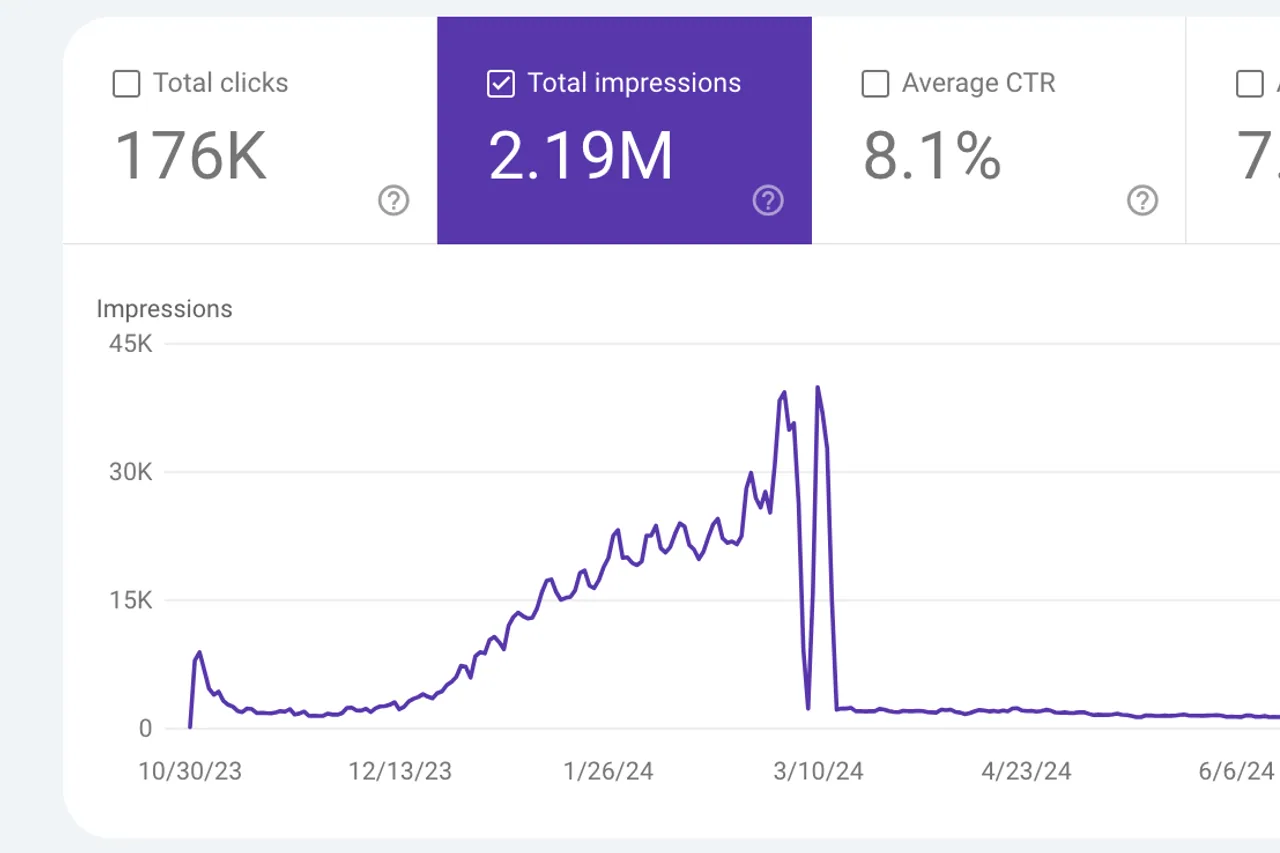
The organization estimates that about 90% of new wiki domains it has tracked since the 2024 update have experienced the problem. That is an operator’s observation, not a confirmed Google policy or diagnostic category. Google has not publicly described a “Google Jail” mechanism.
Still, the distinction matters for builders: a site can look technically healthy in Search Console-style checks while remaining commercially or operationally invisible to the audience it needs.
The workaround: launch under an established domain
Weird Gloop’s practical finding is that subdomains of established sites appear to avoid the issue. Its newly migrated Overwatch and Fortnite wikis launched as `overwatch.weirdgloop.org` and `fortnite.weirdgloop.org`, rather than on new root domains such as `overwatch.wiki`.
The host says other wikis it has operated on established subdomains—including official or partner-owned domains—have gained visibility for article pages quickly. It also reports that the Overwatch wiki showed stronger early page visibility just days after launch than affected standalone domains.
That creates an uncomfortable trade-off. A community-owned wiki usually wants a clean, memorable domain that reflects the game and community, not a subdomain carrying its hosting provider’s brand. But if the new-domain route means months without meaningful search traffic, the branding compromise may be preferable.
For game studios, this may create a further incentive to offer communities a subdomain on an existing official domain. It can provide a recognizable home and potentially reduce the search-discovery risk of an independent launch.
A migration strategy, not a permanent home
Weird Gloop’s tentative plan is to establish search presence on its own domain and later move a wiki to its preferred root domain using 301 redirects and Google’s Change of Address process. The organization believes accumulated visibility may carry over after a migration, but it is still seeking data from others that have made that specific move.
That caveat is important. Domain migrations always involve execution risk: redirects must be comprehensive, canonical signals consistent, and the destination site ready to preserve information architecture. There is no guarantee that a later move will retain the temporary host’s search performance.
What operators should watch
The broader lesson extends beyond wikis. New content businesses dependent on organic search should not treat “indexed” as synonymous with “discoverable.” Measure the share of important URLs appearing for non-branded, high-intent queries; compare that with crawl and indexing reports; and set expectations for a potentially long ramp.
For wiki operators considering a break from ad-heavy platforms, domain selection has become a launch-distribution decision—not just a naming decision. Until Google provides clearer guidance or the pattern changes, an established subdomain may be a useful, if inelegant, bridge to independence.