
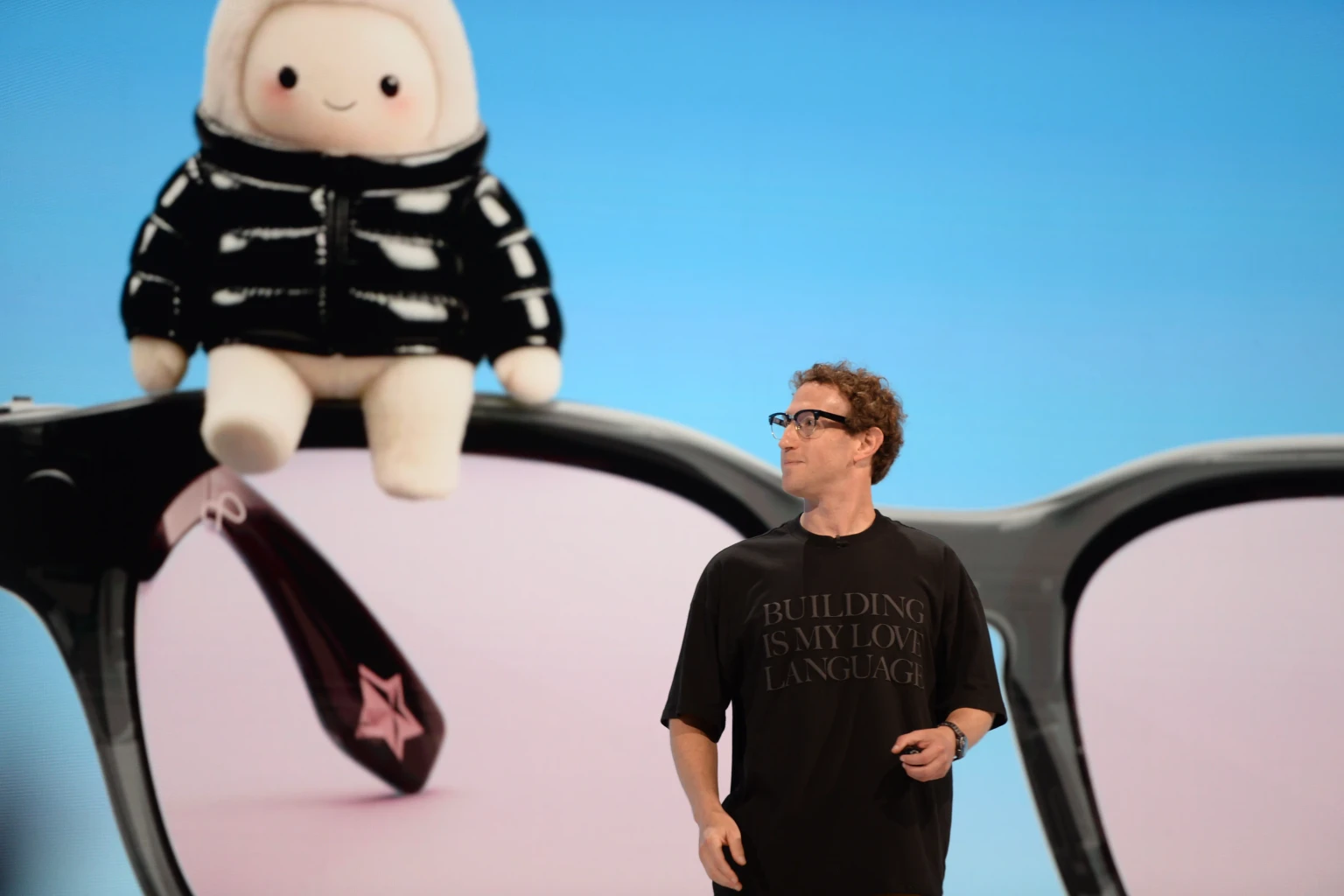
Meta is pushing its personal AI agent, Muse, beyond the familiar chatbot window and into hardware designed for constant proximity. The company’s planned devices include smart glasses and a small Tamagotchi-style wearable, according to TechCrunch’s coverage of Meta’s recent announcements.
That may sound whimsical, but it points to a serious consumer-AI thesis: the winners may be the products that create durable daily routines, not simply those with the strongest benchmark scores.
What changed
Muse is Meta’s personal AI agent, and TechCrunch reports that it is outpacing ChatGPT’s early mobile-launch numbers. Meta is now positioning the agent across several interfaces, including smart glasses and a small companion-like device.
The timing is notable. OpenAI and Anthropic both released major model updates in the same week, intensifying competition at the model layer. Meta’s response is not just another model announcement. It is a distribution and product-design play aimed at making an assistant feel ambient, personal and repeatedly useful.
The “AI Tamagotchi” framing matters because it describes a different interaction pattern from a conventional chatbot. Rather than opening an app only when a question arises, users may build a relationship with a persistent agent through prompts, reminders, memory and a visible presence.
Why the hardware angle matters
For Meta, hardware could provide a route around the crowded mobile-app ecosystem. Smart glasses put an assistant near the user’s camera, microphone and day-to-day context. A smaller companion device could make the interaction more lightweight and emotionally legible than a general-purpose chat interface.
That does not guarantee utility. Consumer AI products face a hard retention problem: novelty can drive downloads, while sustained usefulness determines whether a service becomes habitual. A companion-style device could help establish a routine, but it also raises the bar for trust, privacy controls and clear value.
The strategy fits Meta’s broader advantages. It has global consumer distribution, social platforms that can surface AI features, and an established hardware effort in wearable devices. If Muse can move across Meta’s apps and devices while retaining useful context, the company could make switching costs less about a standalone model and more about an integrated experience.
The business implication: distribution is becoming a product feature
For startups building AI applications, Meta’s push is a reminder that foundation-model access alone is unlikely to be a lasting moat. Major platforms are increasingly packaging models with identity, devices, social graphs and built-in channels for user acquisition.
That does not eliminate startup opportunities. It sharpens them. Smaller companies may need to own a specific workflow, proprietary data relationship or regulated operational environment where a general consumer assistant is less capable or less trusted. They can also build products that are complementary to the large platforms rather than compete directly for generic assistant usage.
For operators, the key distinction is between experimentation and behavior change. An AI feature that is used once a week may improve a workflow; an assistant embedded in a device people carry can influence how they search, capture information, communicate and make routine decisions.
What to watch next
The important signals will be more revealing than early launch comparisons:
- **Retention:** Do users return after the initial novelty fades?
- **Useful persistence:** Does Muse remember enough to reduce repetitive prompting without creating discomfort?
- **Hardware utility:** Are smart glasses and the small device solving frequent tasks, or mainly demonstrating an AI persona?
- **Privacy and controls:** How clearly can users understand what is captured, retained and shared across Meta’s ecosystem?
- **Developer leverage:** Will Meta offer builders a meaningful way to extend Muse, or keep the experience tightly controlled?
Meta’s wager is that the next major consumer AI habit may not look like a better search box. It may look like a companion users keep nearby. Whether that becomes a durable business depends on turning presence into practical value.