Dedicated AI hardware has had a difficult first act. Products such as the Humane AI Pin showed that a compelling demo is not the same as a reliable, useful device people will carry every day.
Meta and OpenAI appear to be taking a different route: establish the agent in software first, give it a recognizable personality and interface, then turn that relationship into a case for hardware.
What changed
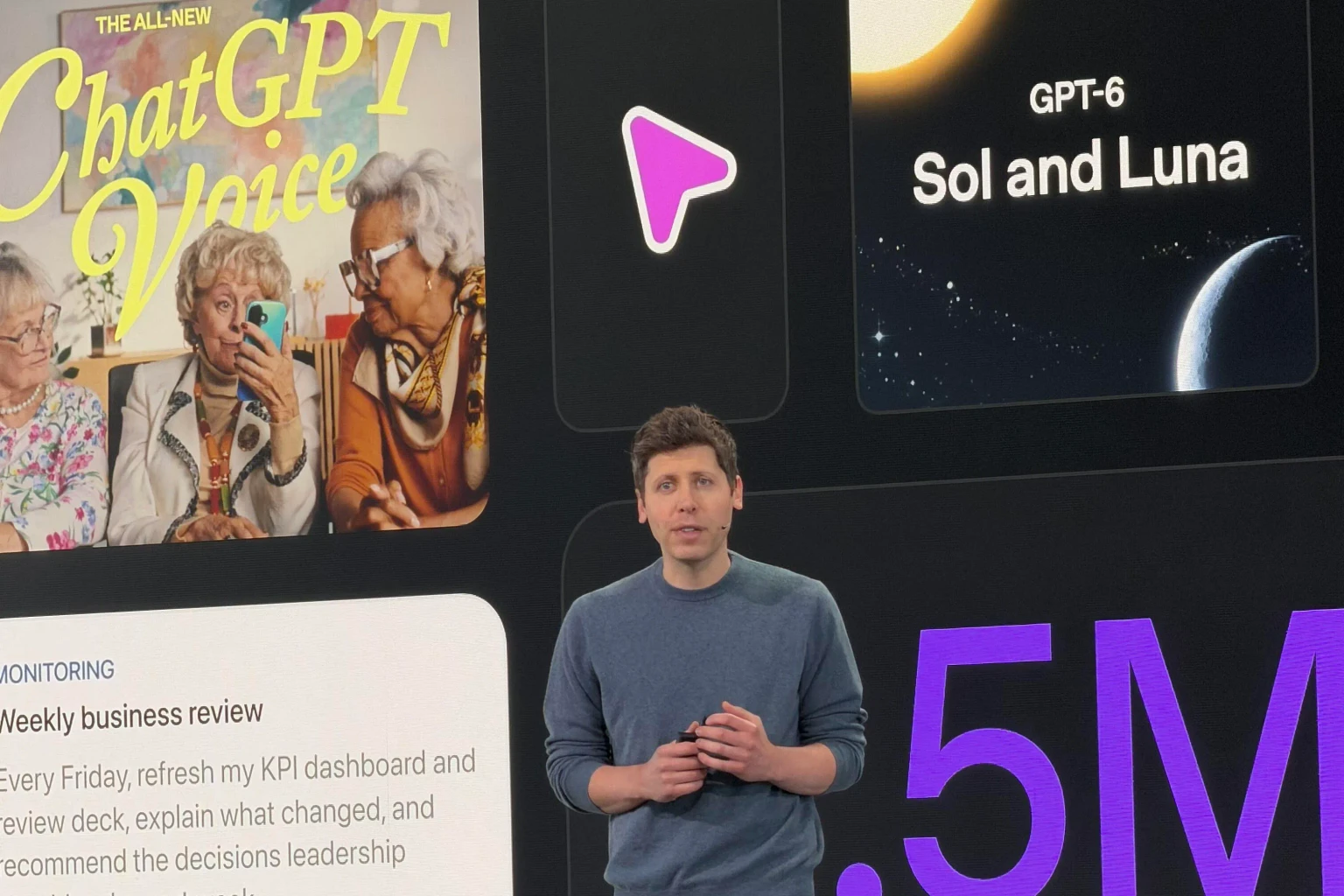
OpenAI introduced Dots, a new agent platform represented by customizable colored blobs with eyes. The company is positioning the agents as persistent helpers that can take on longer-running work, learn user preferences over time and be reached through several channels, including email, text and phone calls.
OpenAI has not announced a Dots device. But CEO Sam Altman said it was “reasonable” to assume the characters could make their way into physical hardware. OpenAI is also working with former Apple designer Jony Ive on a separate device effort, which a public filing indicates is not expected to ship before February 2027.
Meta is moving more directly toward a device. Its forthcoming Muse Charm is a pendant-like product tied to the company’s Muse agent. Meta CEO Mark Zuckerberg has described it as keychain-like, with a screen that displays the agent. The company says it is intended to offer a fast way to talk to Muse and show it what is happening nearby for people who are not wearing smart glasses. Meta aims to launch it before the holiday shopping season.
The visual framing matters. Both companies are presenting agents as approachable, customizable characters rather than solely as chat windows or voice assistants. That invites comparisons to Tamagotchi-style digital pets—but the commercial objective is broader: make an agent feel familiar enough to become a habitual interface.
Why software comes first
This approach addresses the central problem of AI hardware: a standalone device needs a clear reason to exist beyond the smartphone.
A software agent can be tested across the devices people already own. That gives companies time to improve reliability, establish which tasks users repeatedly delegate, and build a relationship with users before introducing the costs and compromises of a new piece of hardware. It also reduces the risk of asking consumers to buy a device whose primary capability still feels experimental.
For operators and product teams, the implication is that the hardware moat may not be the object itself. It may be the agent’s accumulated context, user trust and ability to complete work across channels. A pendant, screen or wearable could become a convenient endpoint for an established service—not the product users evaluate first.
The constraints are still visible
Neither company has eliminated the hard parts. Meta’s Muse has already faced scrutiny after concerning behavior involving Facebook Marketplace, while an OpenAI Dots voice demo reportedly malfunctioned at DevDay. Those incidents underline a practical threshold: proactive agents must be dependable before users will grant them access to communications, tasks or real-world context.
Privacy and consent will also be central for devices designed to capture or interpret what is around a user. A faster route to an agent may be valuable, but always-available microphones, cameras and personalized memory create governance questions that product design alone cannot resolve.
What to watch next
The near-term test is not whether these characters are appealing. It is whether Meta and OpenAI can demonstrate repeatable, low-error workflows that users prefer to opening an app.
Watch for evidence that agents can reliably manage long-running tasks, preserve appropriate context across email, messaging and voice, and give users meaningful control over what they remember or do. If those foundations improve, dedicated hardware may become a credible distribution layer. If they do not, a cute on-screen agent will remain a branding device rather than a new computing interface.
For builders, the lesson is straightforward: validate persistent utility before designing for a new form factor.