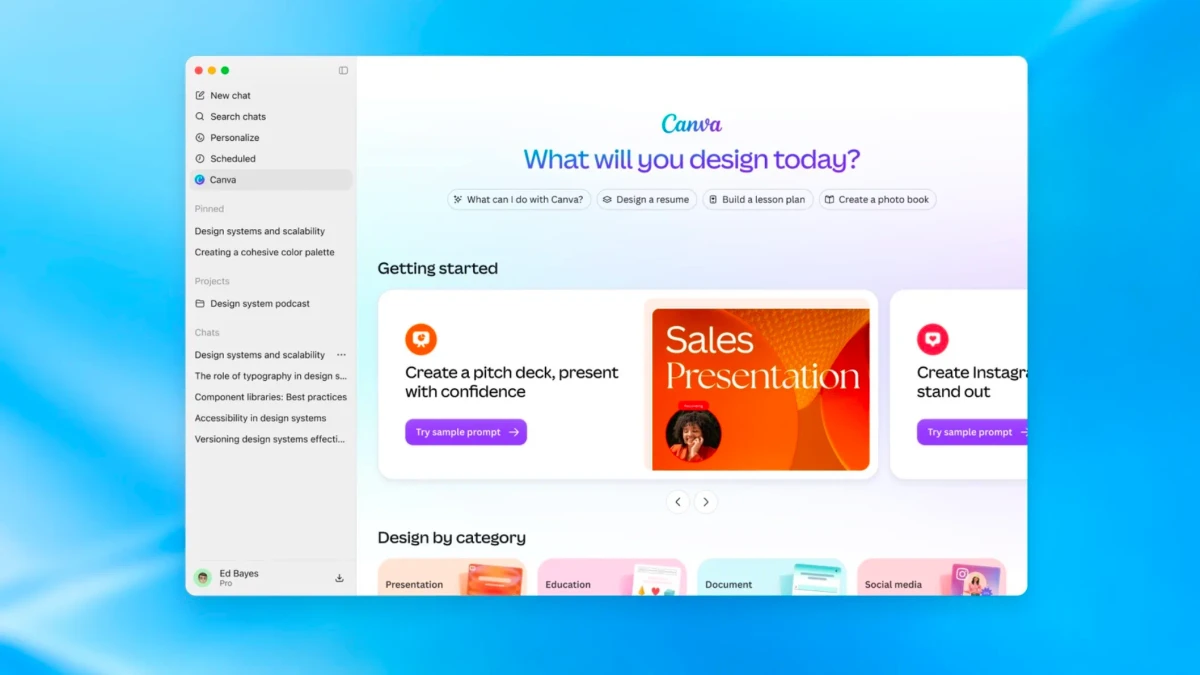
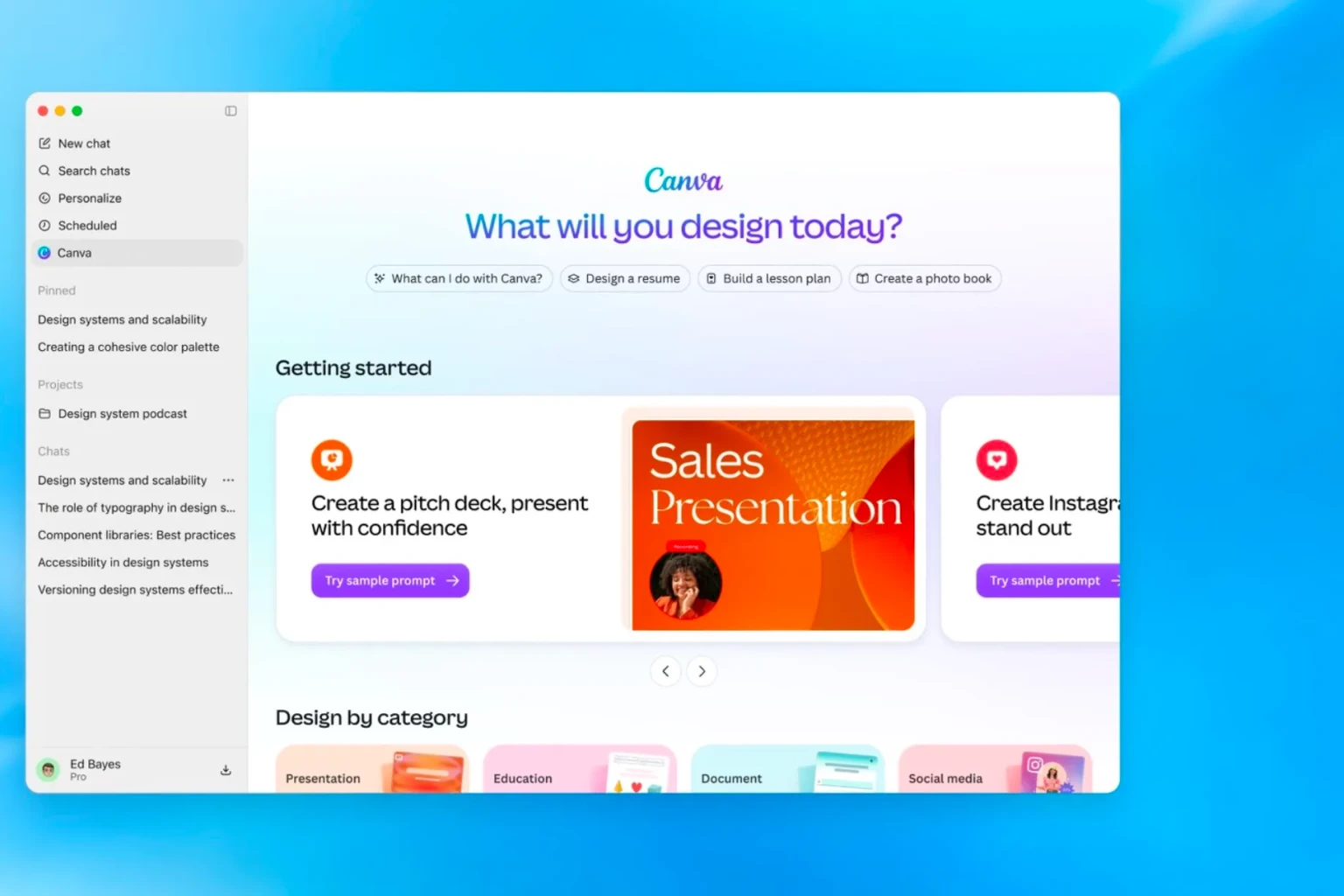
OpenAI is expanding ChatGPT’s plug-in system from tool connections into a more app-like platform. Announced at the company’s Dev Day presentation, the changes give developers dedicated sidebar placement, interactive in-chat interfaces, richer file viewing and new automation capabilities.
The shift matters because it changes the role ChatGPT can play inside an organization. Rather than simply retrieving information from connected services, plug-ins can become the working surface for completing tasks while a user remains in a conversation.
What changed
Developers can now build plug-in extensions with a dedicated home in the ChatGPT sidebar. They can also add interactive panels that allow users to operate their product directly alongside a ChatGPT conversation.
OpenAI says developers can provide file viewers suited to their products’ formats. That could make a plug-in more useful for workflows involving specialized documents or data, rather than limiting users to text summaries inside the chat interface.
The company is also updating the developer and discovery experience:
- A new Plugin Creator tool is intended to simplify building plug-ins.
- A redesigned submission flow for the plug-in directory provides clearer feedback to developers.
- Directory rankings and recommendations have been improved, including how plug-ins are surfaced during conversations.
- Users can approve a selected plug-in’s access requirements individually.
ChatGPT Sites, OpenAI’s lightweight site-building feature, can host these plug-ins as well. In practice, that means a team could share an app with colleagues, while each person uses it with their own connected data and permissions.
The operational significance: workflows, not just answers
The more consequential addition is support for the proposed MCP Events specification. It would enable plug-ins to trigger automations when events occur in a connected application. OpenAI also says it is making automations easier to create and manage.
For operators, this points toward ChatGPT becoming a layer that both interprets work and initiates it. A connected tool could potentially react to an event, bring relevant context into ChatGPT, and then support an approved workflow through its own embedded interface.
That distinction is important. Many enterprise AI deployments start with search, summarization or drafting. Event-based automation introduces a different set of requirements: reliable permissions, clear triggers, observability, exception handling and accountability when actions affect business systems.
What it means for software companies
For SaaS vendors, the update creates another distribution and interface decision. A ChatGPT plug-in may offer a way to meet users where they already ask questions and coordinate work, instead of requiring them to switch into a separate product tab.
But a richer ChatGPT interface also raises product questions. Vendors will need to decide which actions belong in an AI-led conversational flow and which still need their full application experience. The most useful extensions are likely to be narrow, permission-aware workflow components rather than attempts to recreate an entire product inside chat.
Discovery will matter, too. OpenAI’s improved ranking and in-conversation recommendations could influence which integrations users encounter. Developers should treat plug-in metadata, permissions and the clarity of the workflow as product surfaces, not back-office setup.
What to watch next
The key test is whether OpenAI provides the controls enterprises need before automations move beyond low-risk tasks. Buyers should look for granular access management, auditability, predictable trigger behavior and ways to limit or review actions.
Developers should also watch adoption of MCP Events. If the specification gains broad support across connected tools, it could make event-driven workflows more portable. If support remains fragmented, automation may still require significant integration work.
OpenAI’s direction is clear: ChatGPT is being positioned not only as an assistant, but as a place where third-party software can be discovered, used and increasingly automated.