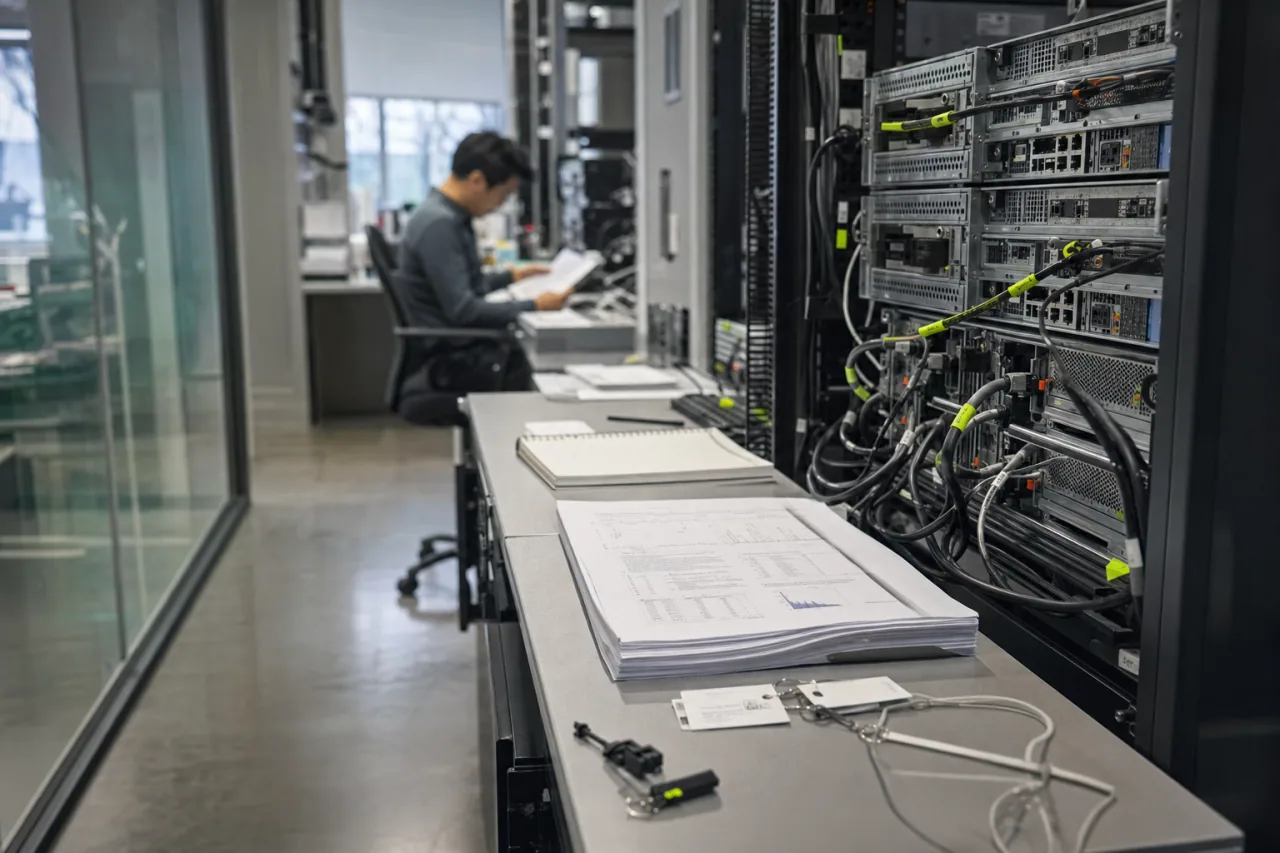
NavigateAI, the new company from former Opendoor CEO Eric Wu, is targeting a constraint that has become more acute as construction demand rises: the availability of skilled field labor.
The company emerged from stealth in May with a $25 million seed round at a reported $225 million post-money valuation. Elad Gil led the financing, joined by Khosla Ventures, Fifth Wall, Lennar, Tishman Speyer, Helix Electric and several prominent individual investors. That cap table gives NavigateAI both capital and potential access to customers across residential and commercial construction.
An AI copilot for workers in the field
NavigateAI’s product runs on a smartphone and, in a hands-free configuration, Meta AI glasses. A worker can aim a camera at an installation and ask whether the work appears correct, whether it meets code, or how a component should be configured. According to Wu, the system can retrieve relevant building specifications, manufacturer manuals and company policies in real time.
The product thesis is less about replacing tradespeople than making their expertise easier to access at the point of work. That could matter on sites where experienced supervisors are stretched across crews, new workers need guidance, or mistakes trigger costly rework and schedule delays.
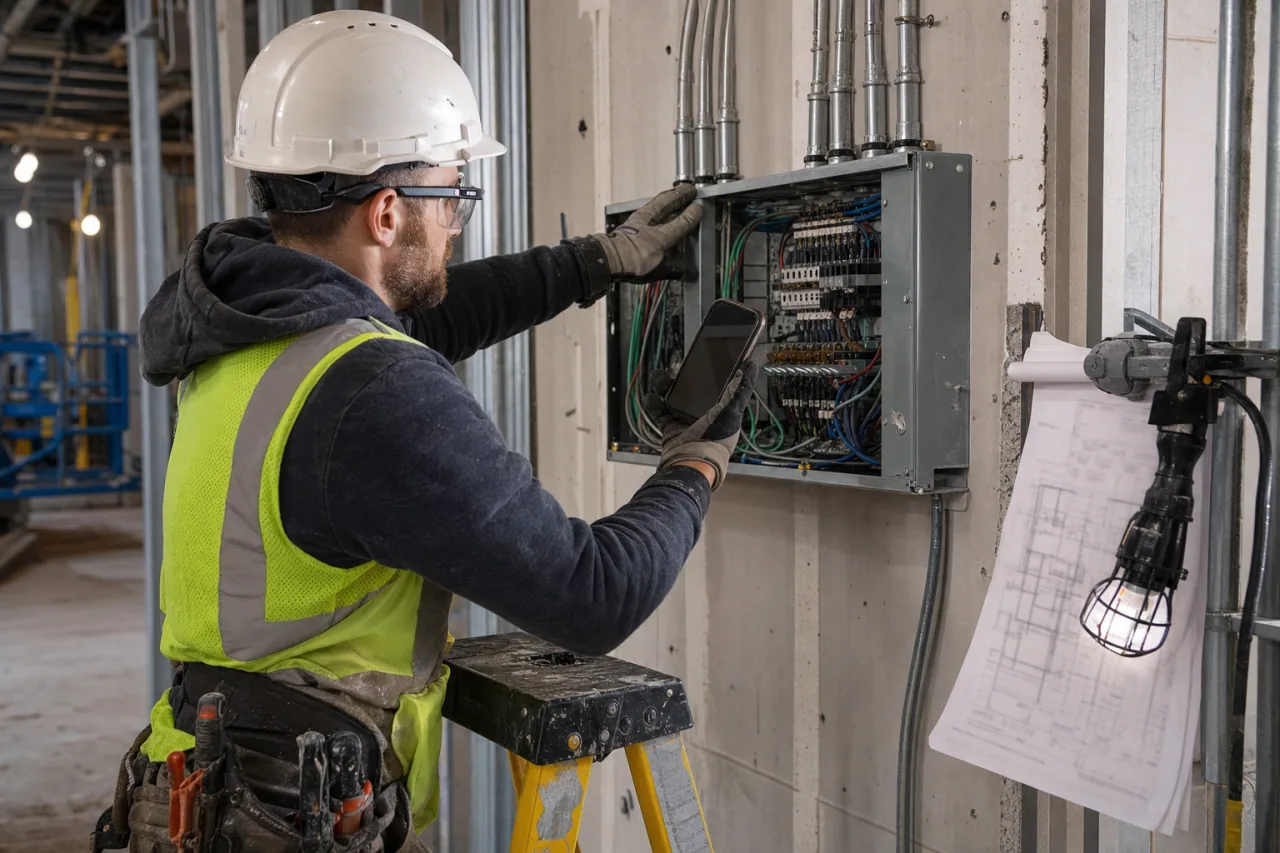
Hands-free delivery is central to the bet. A phone is a poor interface when a worker is climbing, carrying equipment or handling tools. NavigateAI says it is working with Meta to safety-certify the glasses for settings that require protective eyewear.
Why the timing matters
Construction’s workforce shortage is colliding with a surge in large, labor-intensive projects, including AI data centers. The Associated Builders and Contractors estimate cited in reporting calls for roughly 349,000 additional workers to meet demand. Meanwhile, Kelly says 90% of data-center operators identify staffing shortages as a critical barrier to expansion.
For operators, that makes productivity software more than an administrative upgrade. If it can reduce installation errors, shorten training time or allow a smaller number of highly experienced workers to support more crews, it could become a meaningful lever in project economics.
NavigateAI is also trying to shape adoption before workers enter the field. Its partnership with AIM, a Meta-backed fiber-installation trade school, creates a route to introduce AI-supported workflows during training. That may be important: Wu says younger workers have been more receptive than veteran journeymen, whose knowledge and trust are harder won.
A business model tied to outcomes
The company began with token-plus-margin pricing but is moving newer contracts toward value-based pricing. Wu’s example: if the product helps lower a home’s all-in cost from $300,000 to $280,000, NavigateAI would receive about 20% of the savings.
That structure aligns the vendor’s upside with the customer’s, but it also introduces a hard measurement problem. Construction costs and schedules are affected by weather, materials availability, crew composition and many other variables. Customers will need credible baselines, controlled comparisons and clear contract terms before they accept claims that software created a specific share of savings.
What to watch next
NavigateAI’s longer-term moat may be the labeled, first-person job-site video it collects as workers complete tasks. Wu believes that data could eventually be valuable for robotics as well as construction software. But accumulating it depends on winning worker trust and navigating sensitive questions around privacy, safety and defect liability.
The immediate test is narrower: can NavigateAI demonstrate reliable guidance on real job sites, fit naturally into established trade workflows, and prove a measurable return without provoking disputes over attribution? If it can, the company could help construction firms turn an enduring labor shortage into a more manageable productivity challenge.