OpenAI’s latest developer announcements position ChatGPT as more than a chatbot or model endpoint. The company is assembling the components of a software distribution layer: conversational discovery, interactive app interfaces, portable identity, enterprise procurement and agents that can select and use connected services.
That does not yet add up to a replacement for Apple’s or Google’s app stores. OpenAI has not announced a comparable billing or revenue-sharing system. But it does shift an important question for software companies: if users increasingly begin work by asking an AI assistant for an outcome, how will their product be found, authorized and used within that workflow?
What changed
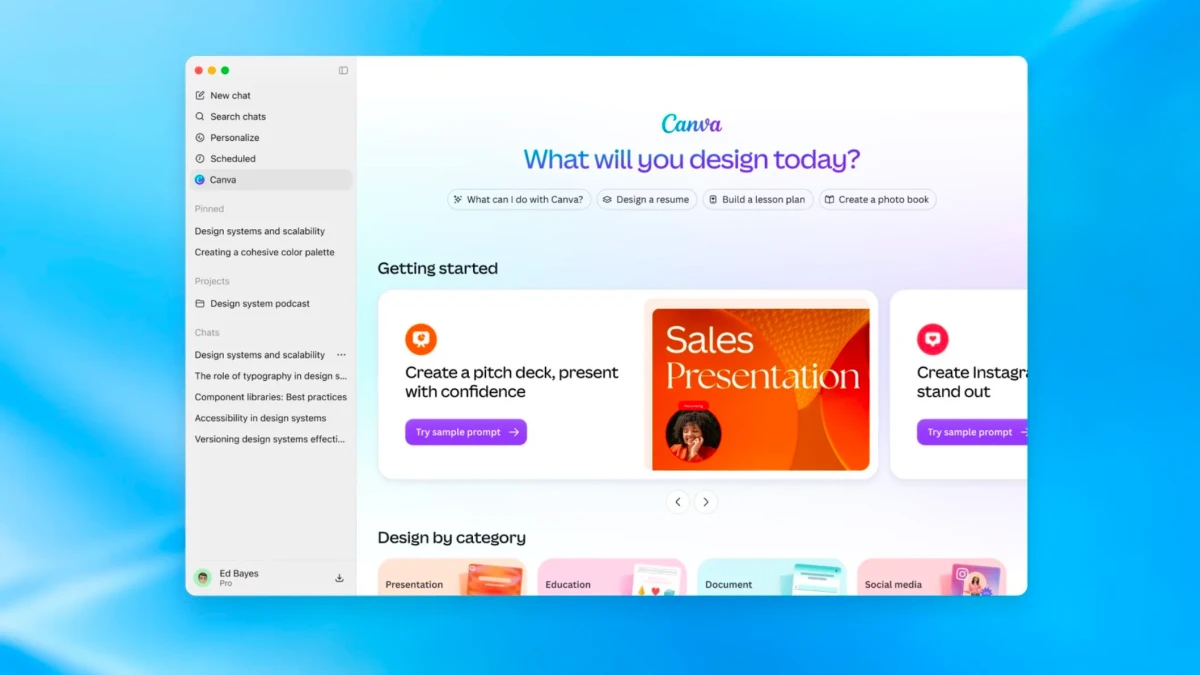
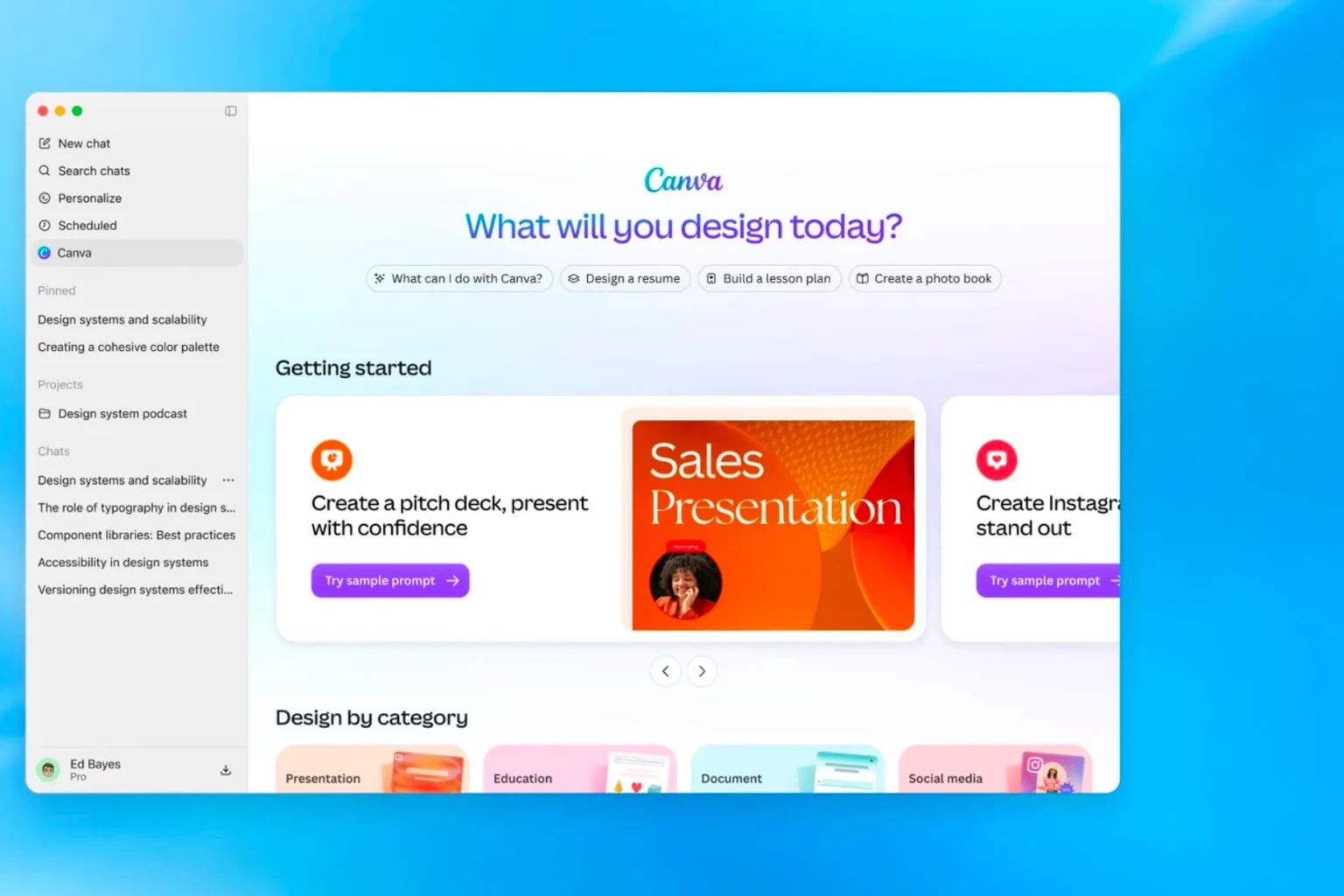
ChatGPT will suggest relevant apps during a conversation, allowing users to connect and use them without leaving the chat interface. An expansion of its plugin architecture adds extensions with interactive panels, giving developers a way to put portions of their products directly inside ChatGPT.
OpenAI also introduced Sign in with ChatGPT, an identity mechanism intended to let users carry their ChatGPT identity and existing AI allowance into third-party apps. The company named 16 launch partners, including Cognition’s Devin, Notion, Vercel, T3, OpenClaw and Dactyl.
For enterprises, OpenAI announced an app marketplace with more than 30 partners at launch, including Adobe, Figma, HubSpot, Salesforce, ServiceNow, CrowdStrike, Palo Alto Networks, Harvey and Legora. Eligible customers can apply part of their OpenAI commitment toward approved partner software.
The company is also improving the developer submission process for plugins, with review-status tracking, requested fixes, human-review requests and the ability to update tools without restarting a submission.
Finally, OpenAI’s new autonomous agents, called Dots, are central to the broader strategy. Each has a cloud computer and browser, and can work with connected applications. OpenAI says Dots can connect to an ecosystem of more than 4,000 apps. They can perform proactive, read-only research with connected services, while actions still require user approval.
Why the interface matters
Traditional software distribution begins with a user finding an app, installing it or visiting a website, creating an account, and learning the product’s interface. OpenAI is proposing a different starting point: state the task, then let ChatGPT surface the relevant service—or let an agent use it.
That potentially turns ChatGPT into both a discovery engine and an execution environment. In OpenAI’s examples, a user could view upcoming meetings, enable AI note-taking and receive follow-up summaries; or work with design tools from Figma and Adobe on a current project. Apps can also be shared through lightweight sites produced by ChatGPT, where collaborators sign in using their own credentials and permissions.
For users, the attraction is reduced context switching. For vendors, it creates a distribution opportunity where product functionality may be encountered at the precise moment a customer needs it.
The operational implications for software companies
Teams should treat this as a new integration and go-to-market channel, not merely another chatbot connector.
First, identify the highest-value actions customers could complete inside a conversational or agent-driven workflow. The relevant unit is unlikely to be an entire desktop application; it is a clear capability such as reviewing a design, opening a support case, preparing a sales update or checking a security finding.
Second, make permissions and auditability first-class product requirements. An agent acting across connected applications changes the risk profile, particularly for enterprise systems. Read-only access, explicit action approval, scoped credentials and understandable activity records will matter as much as a polished in-chat interface.
Third, watch the procurement angle. Letting customers apply OpenAI commitments to approved partner software could make the marketplace meaningful for vendors that sell into the same enterprise accounts. It may also concentrate influence with OpenAI over which services are easiest to discover and buy.
What remains unresolved
OpenAI has built much of the technical and distribution scaffolding, but not the economic layer associated with conventional app stores. It has not said that third-party subscriptions disappear, nor has it introduced a system for payments or revenue sharing.
The near-term test is adoption: whether users prefer ChatGPT-mediated work over opening standalone products, and whether developers can convert integrations into durable customer relationships. The longer-term issue is control. As agents increasingly choose tools on a user’s behalf, software companies will need to compete not only for human attention, but also for inclusion in the assistant’s path from intent to completed work.