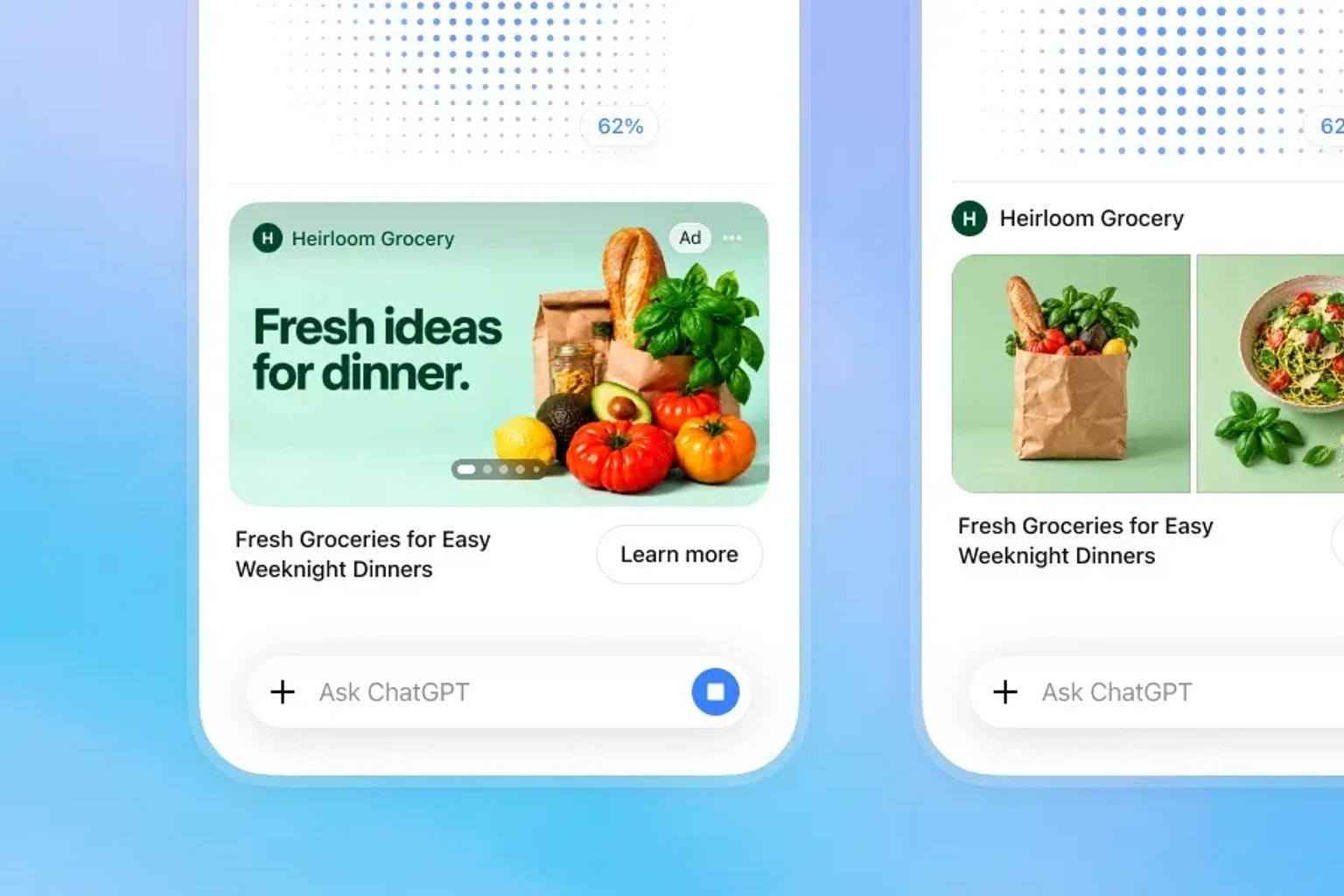
OpenAI is broadening advertising inside ChatGPT, adding visual sponsored placements that will initially appear when users generate images. The company says it will begin testing the format in the US later this month with an initial group of advertisers.
The move extends ChatGPT’s advertising effort beyond the sponsored product blocks introduced in February. Those earlier placements showed a company name, logo and product link beneath a chat. The new format puts images for sponsored products or services on screen, while remaining separate from the image a user generates.
What changed
The important shift is from a largely link-based shopping unit to a more prominent visual format tied to a high-engagement workflow. Image generation is both a consumer feature and a potentially commercial moment: users may be exploring styles, products, travel concepts or creative briefs. A visual ad can be more immediately legible than a text link in those contexts.
OpenAI says ads will not influence ChatGPT’s answers. It also says paid plans—ChatGPT Plus, Pro and Enterprise—will not show ads. That creates a clearer divide between a free, advertising-supported experience and subscription tiers designed to be ad-free.
The company says it uses guardrails to decide whether a conversation is appropriate for advertising, with the stated goal of excluding emotionally vulnerable, sensitive or otherwise unsuitable contexts.
Why it matters for operators and advertisers
For OpenAI, the test is a practical monetization expansion. Consumer AI products carry substantial compute costs, particularly for image generation, and advertising offers a route to monetize free usage alongside subscriptions. The format also gives OpenAI a new inventory type that may appeal to brands whose products benefit from visuals rather than search-style links.
For advertisers, the test is notable because it places commercial messaging inside an AI interface rather than a conventional feed or search-results page. But the early details leave major operational questions unanswered: how ads are targeted, what measurement advertisers will receive, what categories are eligible, and whether users can distinguish clearly between recommendations and paid placements.
Brand teams should also treat the initial test as an experiment, not a mature channel. The available description does not establish scale, pricing, conversion reporting or broad advertiser access. Any early participation will require close review of placement controls, suitability standards and attribution methodology.
What to watch next
The next signals will be the scope of the advertiser rollout and the metrics OpenAI makes available. Measurement will determine whether this becomes a performance channel, a brand-format experiment, or both.
Equally important is how OpenAI applies its suitability rules in practice. The company has committed to keeping ads out of sensitive conversations, but users and advertisers will judge the product by whether those boundaries are understandable and consistently enforced.
Finally, OpenAI says it plans to test additional formats. If visual placements prove workable, ChatGPT could become a more meaningful commercial surface—while increasing pressure on the company to preserve the trust that makes users willing to ask it questions in the first place.