A vacation does not have to be an escape from work alone. It can also be an escape from the attention patterns that make focused work harder when you return.
That is the premise behind a software engineer’s account of a two-week “de-brainrot” break: less scrolling and on-demand entertainment, more time outdoors, with family, reading, and working through mathematics and physics exercises. It is one person’s experiment, not evidence of a general cure for distraction. But it surfaces a practical question for technology leaders and builders: what happens when professionals deliberately make room for cognitively demanding activity with no immediate business payoff?
From novelty to low-friction consumption
The author describes a familiar career arc. Early software work brought novelty, steep learning curves and exhaustion. Years later, routine problem-solving required less discovery, while AI tools increased productivity. At the same time, short-form video, games, shows and other instantly available entertainment made boredom easier to avoid.
The concern was not a lack of output. It was a perceived loss of depth: slower, less patient thinking and less reading outside work. That distinction matters for organizations adopting AI. A team can ship faster while still losing the habits that support judgment, first-principles reasoning and independent learning.
Those capabilities become more—not less—important when tools can generate plausible code, summaries and recommendations quickly. AI can remove mechanical effort, but it cannot automatically set a worthwhile problem, recognize a faulty premise, or supply the curiosity to investigate something difficult.
A vacation designed around difficulty
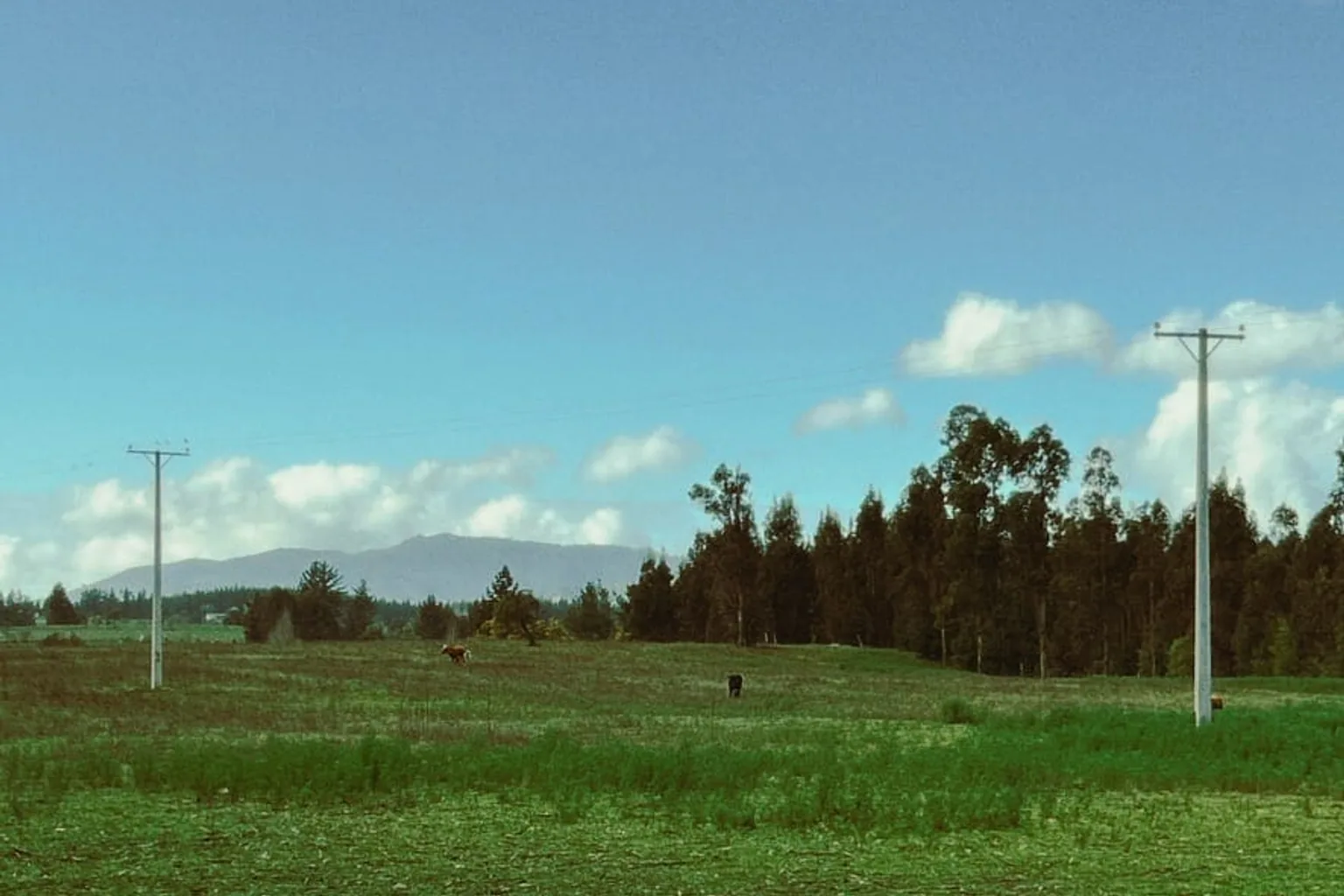
The experiment was modest. The author spent time in the countryside with family, played games and football, read four books, and then followed an unexpected interest in mathematical proofs into calculus, algebra, trigonometry and physics.
The important feature was not rigid optimization. It was the substitution of activities that require sustained engagement for activities engineered to minimize it. Reading led to questions; questions led to exercises; exercises led to a new hobby.
For builders, this is a useful reminder that learning systems work best when they preserve that chain. Passive content can create awareness, but active practice creates feedback. The author found conventional textbooks awkward on a laptop or phone and turned to web-native materials including [Paul’s Online Math Notes](https://tutorial.math.lamar.edu/) and [Active Calculus](https://activecalculus.org/). The tools mattered because they reduced friction at the point where interest became practice.
What companies can take from it
Employers should resist turning this into another wellness KPI. A “focus retreat” packed with mandatory workshops is likely to reproduce the same overloaded environment it aims to solve. The more relevant lesson is structural.
Managers can protect uninterrupted time for hard problems. Learning budgets can cover foundational subjects, not only vendor certifications tied to the current roadmap. Internal career paths can reward people who develop durable analytical range, even when the connection to a quarterly deliverable is indirect.
Individuals can run smaller versions of the experiment: keep the phone away from a reading session, choose one demanding subject, use a resource that includes exercises, and follow genuine interest rather than a productivity script. A week away may not be necessary; consistency and lower friction are more actionable variables.
What to watch next
The author does not claim a transformation, only that day-to-day intellectual laziness feels lower and the work is enjoyable. That restraint is appropriate. Attention, motivation and skill development are not solved by a single vacation.
Still, as AI makes execution cheaper, the scarce inputs may increasingly be concentration, taste and the willingness to stay with a hard question. The next generation of productivity practices should not only ask how people can produce more. It should ask whether their work and tools leave enough room to think deeply enough to choose what is worth producing.