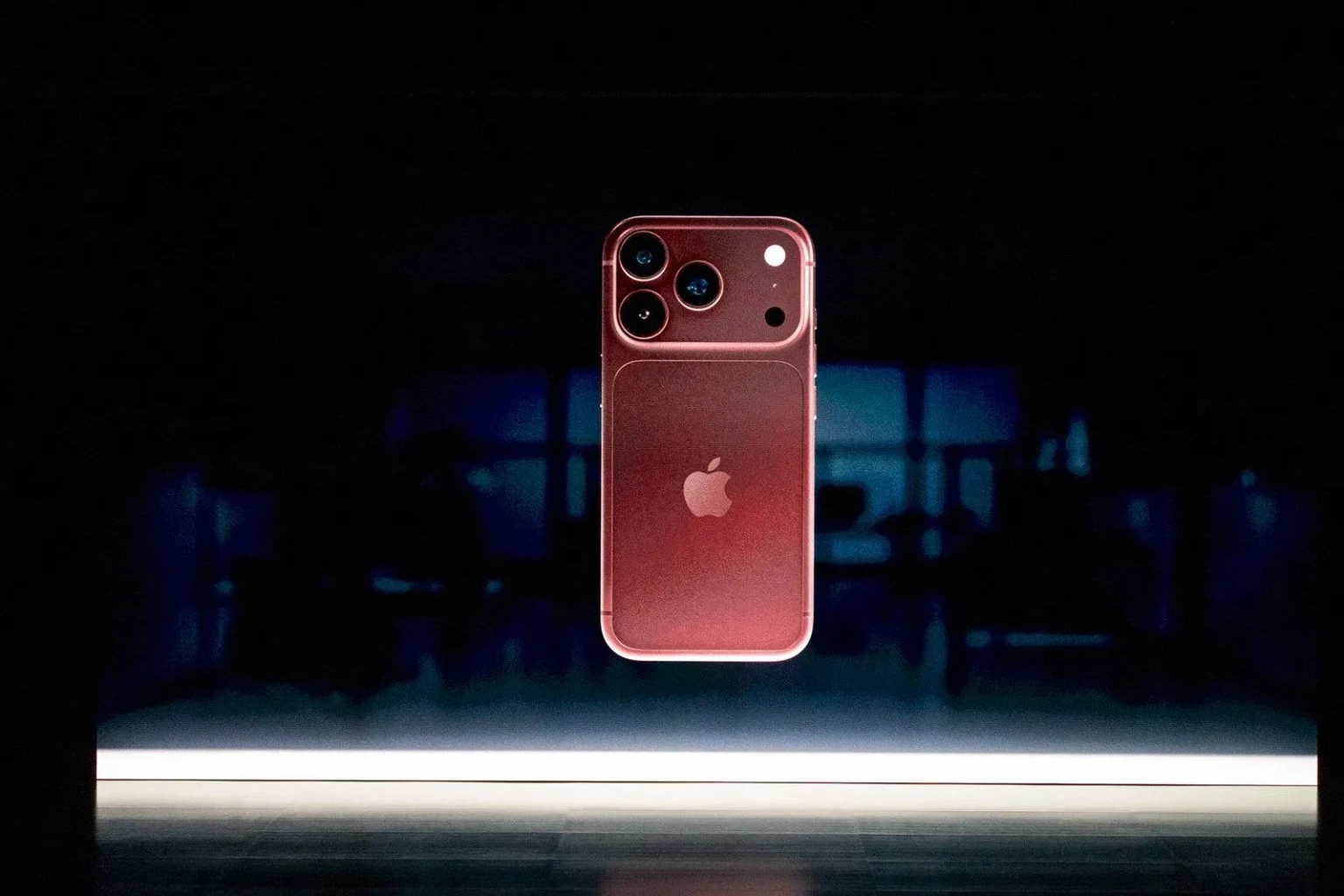
Apple has opened preorders for the iPhone 18 Pro and iPhone 18 Pro Max, with retail availability beginning September 18. The launch is a familiar premium-hardware moment, but the practical decision for buyers—and for companies managing mobile fleets—is less about color than about procurement structure: buy unlocked through Apple, finance through Apple, or accept carrier credits that require a longer relationship.
What changed
The 6.3-inch iPhone 18 Pro starts at $1,199 for 256GB, while the 6.9-inch iPhone 18 Pro Max starts at $1,299 for 256GB. Both are offered in 256GB, 512GB, 1TB and 2TB configurations; the top 2TB models cost $2,399 and $2,499, respectively.
Apple says the new Pro line uses its A20 Pro chip and adds more neural processing capacity for AI-related work. Other headline changes include a 48MP main camera with variable aperture, a smaller Dynamic Island, and a next-generation vapor chamber intended to sustain performance. The phones ship with iOS 27, whose Apple Intelligence features use a combination of on-device processing and Apple’s Private Cloud Compute, according to the company.
For U.S. purchasers seeking an unlocked handset at launch, Apple is the available preorder channel. Best Buy and Walmart are listing carrier-tied variants, with availability across AT&T, T-Mobile and Verizon varying by retailer and model.
The real price is the commitment
The sticker price is only one part of the purchase calculation. Apple says Trade In can provide $175 to $885 in immediate credit for an iPhone 13 or later, depending on the device. It also advertises up to $1,200 in carrier credits for qualifying iPhone 14-or-newer trade-ins, but those credits are subject to carrier eligibility requirements.
Those carrier offers can make the effective hardware cost appear low, yet the structure matters. AT&T’s offer can cover the iPhone 18 Pro through bill credits over 36 months for customers trading in an iPhone 14 or newer and selecting an eligible plan. T-Mobile similarly uses bill credits and ties its strongest offer to number transfers or qualifying trade-ins on its Experience Beyond plan. Verizon’s offer also relies on monthly credits, with a three-year period needed to receive the full value.
In other words, a “free” phone is generally a service-retention arrangement rather than an upfront price reduction. A customer that changes carriers, alters an eligible plan, or ends service before the credits finish may lose remaining credits while still owing a device balance.
Apple offers two alternatives. Its standard financing is available over 36 monthly payments at zero percent APR, according to The Verge. Separately, Apple Upgrade, a U.S. leasing program provided by Klarna, offers eligible buyers 12- or 24-month terms starting at $34.99 per month for 24 months.
Why it matters to operators
For IT teams and founders, unlocked purchasing has a clear operational advantage: it preserves flexibility to change carriers, assign devices across employees, and avoid reconciling individual plan eligibility with device subsidies. That flexibility may justify a higher immediate outlay.
Carrier credits can work for a stable, standardized fleet with predictable tenure and a single preferred network. But finance and IT leaders should model the full cost over the commitment period, including required service plans, trade-in assumptions, early-departure risk and the administrative cost of tracking credits.
The AI positioning is also worth separating from procurement claims. Apple says Apple Intelligence and Siri AI will be available through iOS 27, though some features, languages and regions have staggered availability; Siri AI begins as an English beta on September 14, with additional languages planned for October.
What to watch next
The initial preorder window will show whether high-capacity configurations and specific colors face supply constraints. More importantly, buyers should watch the final carrier terms at checkout—not just advertised monthly credits—and confirm whether the device is unlocked, the trade-in value is immediate or deferred, and what happens if a line changes before the agreement ends.