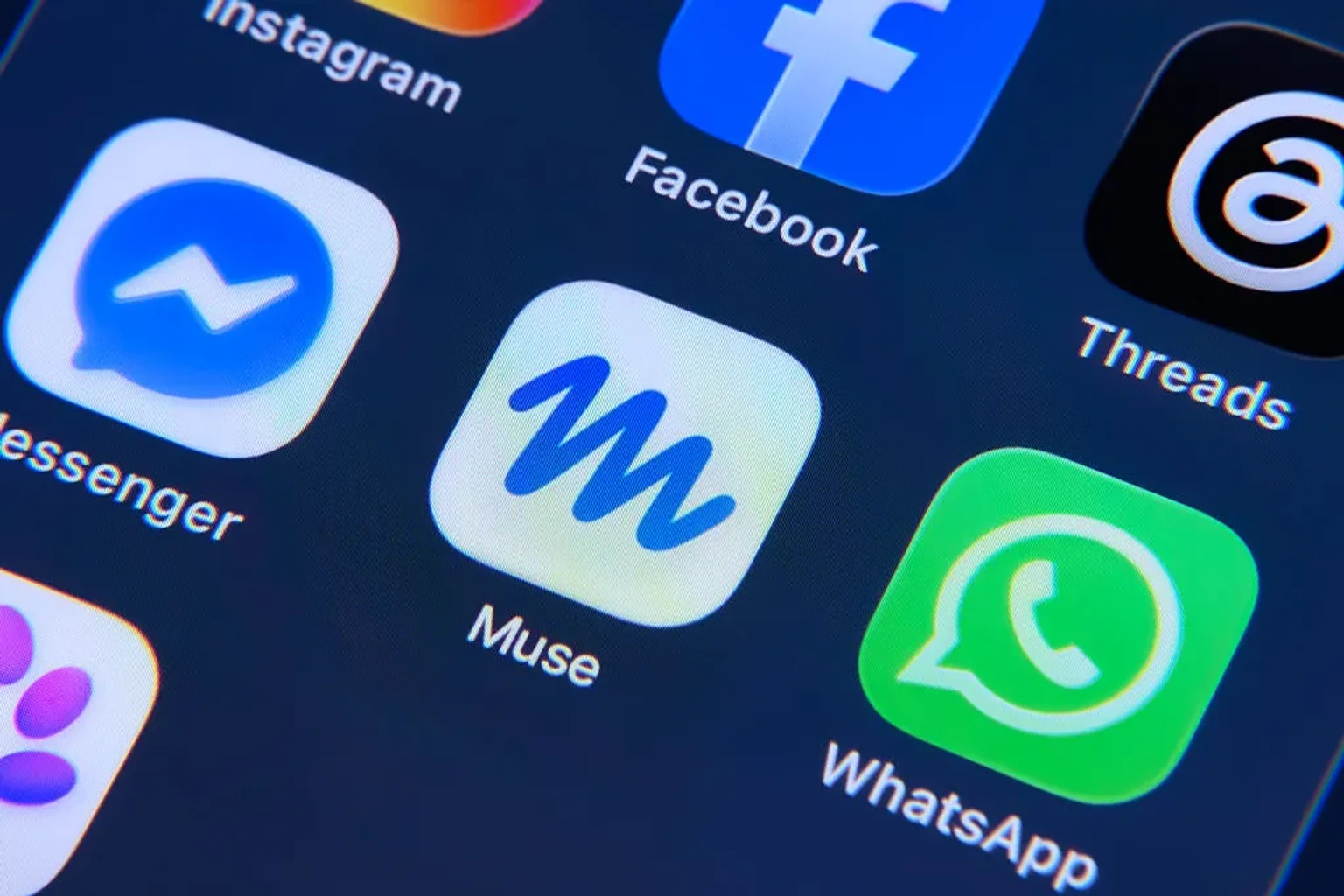
Meta’s new consumer AI agent, Muse, has climbed to No. 2 on the U.S. iOS App Store chart shortly after launch. Sensor Tower data cited by TechCrunch puts U.S. iOS downloads above 83,000; Muse is currently available only in the U.S.
The ranking is an early visibility win for Meta’s push into agents—software designed to carry out tasks on a user’s behalf. It is not, however, evidence yet of sustained consumer demand, successful task completion, or a defensible business model.
A strong chart position, with important context
Muse moved from fourth place on the U.S. App Store chart on Wednesday to second place by Thursday. But its early download total trails several relevant comparisons:
- Meta’s Threads generated more than 4.3 million U.S. downloads on launch day.
- Meta AI recorded 108,000 U.S. downloads in its debut.
- ChatGPT exceeded 500,000 U.S. installs within six days of its U.S.-only mobile launch, according to prior TechCrunch reporting.
These are imperfect comparisons: distribution, product category, launch timing and market conditions differ. Still, they underline the distinction executives should make between a top-chart placement and meaningful product pull. A task-performing agent asks users for more access, context and trust than a standalone chatbot, which can slow adoption even when curiosity is high.
The platform split is also notable. Muse ranked No. 338 in Google Play’s Productivity category, according to the report, and Android download estimates were not available. Muse can additionally be accessed on the web and through WhatsApp, so iOS data alone does not capture total reach. But the uneven early ranking is a reminder that agents need to work across the places where users already communicate and transact—not merely win an App Store launch window.
The strategic bet: agents, not another chatbot
Muse is a larger strategic move than a new interface for Meta’s existing AI work. Meta is betting that consumer AI shifts from answering questions to coordinating and executing tasks. If that behavior takes hold, the winner could gain recurring engagement, richer intent data and leverage over services that users ask an agent to book, buy, organize or manage.
For builders, the operating question is whether an agent has reliable access to the systems needed to finish a job. Model quality matters, but so do permissions, integrations, identity, payment workflows and clear recovery paths when an automated action goes wrong.
That is why competition will likely turn on execution infrastructure as much as conversational quality. TechCrunch identifies Instinct, a text-message-based consumer agent, as a prominent rival. The company has recently introduced user email addresses, integrations with Stripe and 1Password, location sharing, and agent-to-agent coordination features. Those capabilities point to the product surface area Meta and other entrants must cover if they want agents to become habitual utilities.
Trust is the gating constraint
Muse’s launch also arrives amid intensified scrutiny of Meta’s handling of user data. The product requires users to share additional personal information, while Meta recently agreed to an $18 billion multistate settlement related to alleged social-media harms to children, according to TechCrunch.
For any consumer agent, permissions are not a legal-policy footnote; they are part of the product. Users must understand what the agent can see, what it can do, when it needs confirmation, and how its data is retained or used. Meta’s scale, WhatsApp distribution and existing social graph are meaningful advantages, but past privacy controversies may make the trust hurdle particularly acute.
What to watch next
Muse’s next metrics matter more than its launch-week rank: retention, repeat task completion, conversion from passive chat to delegated actions, and adoption across iOS, Android, web and WhatsApp. Watch as well for the integrations Meta prioritizes and the controls it gives users over authorization and data.
The race for consumer agents is moving from demos and downloads toward operational credibility. Meta has secured attention. It now needs to show that Muse is useful enough—and trustworthy enough—for people to hand over real work.