
A Financial Times report, shared on Hacker News under the headline “People are going to get screwed,” says Pennsylvania voters are uniting against data centres. The available source material does not provide details on the communities involved, specific projects, policy demands or developers.
Even so, the signal matters. Data-centre development is increasingly a local political and operational issue, not merely a real-estate or cloud-capacity decision. As demand for AI and other compute-intensive services grows, companies are seeking sites with large, dependable power supplies and room to expand. Those requirements can put projects directly into debates over electricity costs, grid reliability, land use and who benefits from development.
The infrastructure constraint is public trust
For operators and investors, securing a site and an interconnection path does not guarantee a durable project. Community opposition can slow approvals, alter project terms or increase uncertainty around expansion plans. In a sector built around long-lived assets, that uncertainty has financial consequences: delayed capacity can affect customer commitments, financing assumptions and the timing of equipment purchases.
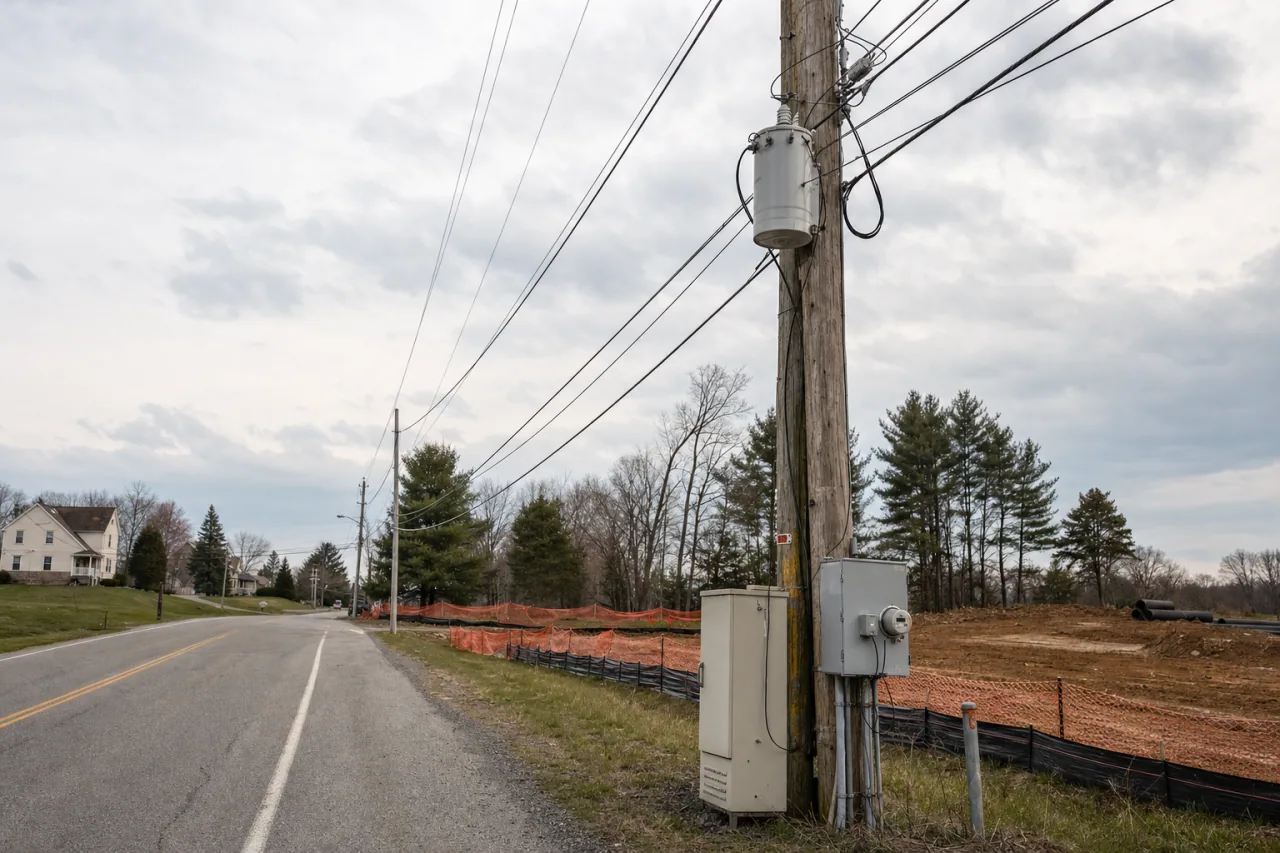
The phrase in the report’s headline also points to the distributional question that often defines infrastructure politics. Residents may judge a project less by the aggregate economic activity it promises than by its visible local effects: construction disruption, changes to land use, pressure on public infrastructure, or concerns about household utility bills. A project’s technical efficiency does not automatically answer those concerns.
What builders should do differently
Data-centre developers, utilities and their major customers should treat community engagement as a core workstream from the earliest site-selection phase. That means explaining, in concrete terms, what a project requires from local infrastructure and what commitments the developer is making in return.
Useful questions include:
- What power and grid investments are needed, and how will their costs be allocated?
- What are the project’s expected construction and permanent employment effects?
- How will the site affect nearby land, roads and other public services?
- What information will be disclosed as the project’s capacity requirements change?
- Which local stakeholders have a meaningful role before major decisions are locked in?
The answers will differ by site. But the principle is consistent: public claims should be specific enough for communities and decision-makers to evaluate them.
Why this matters beyond Pennsylvania
Pennsylvania is not an isolated market question. The industry’s capacity build-out depends on thousands of local decisions made by municipalities, regulators, utilities and residents. Opposition in any one region can redirect investment, tighten permitting expectations or prompt more scrutiny of how power-intensive projects are planned.
For cloud providers and AI companies, this makes geographic diversification and realistic delivery schedules more important. For utilities, it raises the value of transparent planning that distinguishes firm commitments from speculative load. And for public officials, it underscores the challenge of attracting investment while maintaining confidence that existing residents are not carrying disproportionate costs.
What to watch next
The key developments will be whether Pennsylvania’s voter activity translates into formal permitting fights, local ordinances, utility-regulatory proceedings or changes in project design. Also watch for commitments that make the benefits-and-costs debate more measurable, particularly around grid upgrades, pricing and local infrastructure impacts.
The larger lesson is straightforward: the race for compute capacity is also a race to earn permission to build. Companies that regard local acceptance as an afterthought may find that their most important constraint is not chips, land or electricity—it is legitimacy.