Microsoft’s latest Surface and Windows event was a coordinated bet on two layers of the AI PC market: expensive local compute for demanding users and more autonomous software for the wider Windows base.
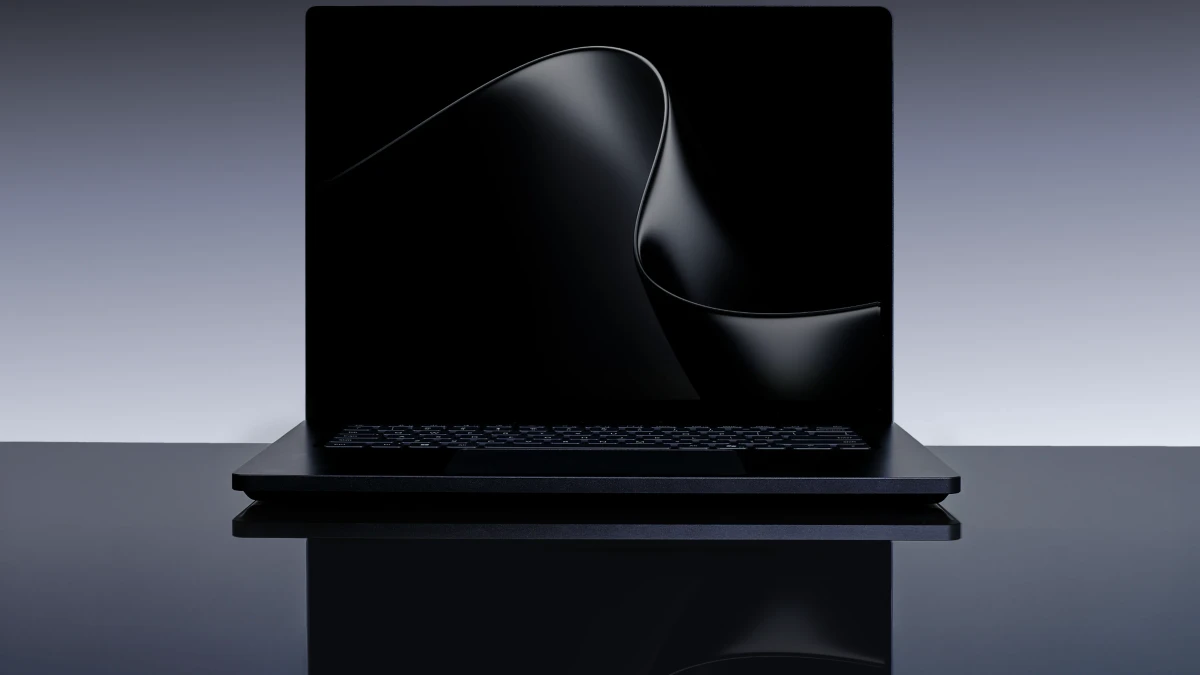
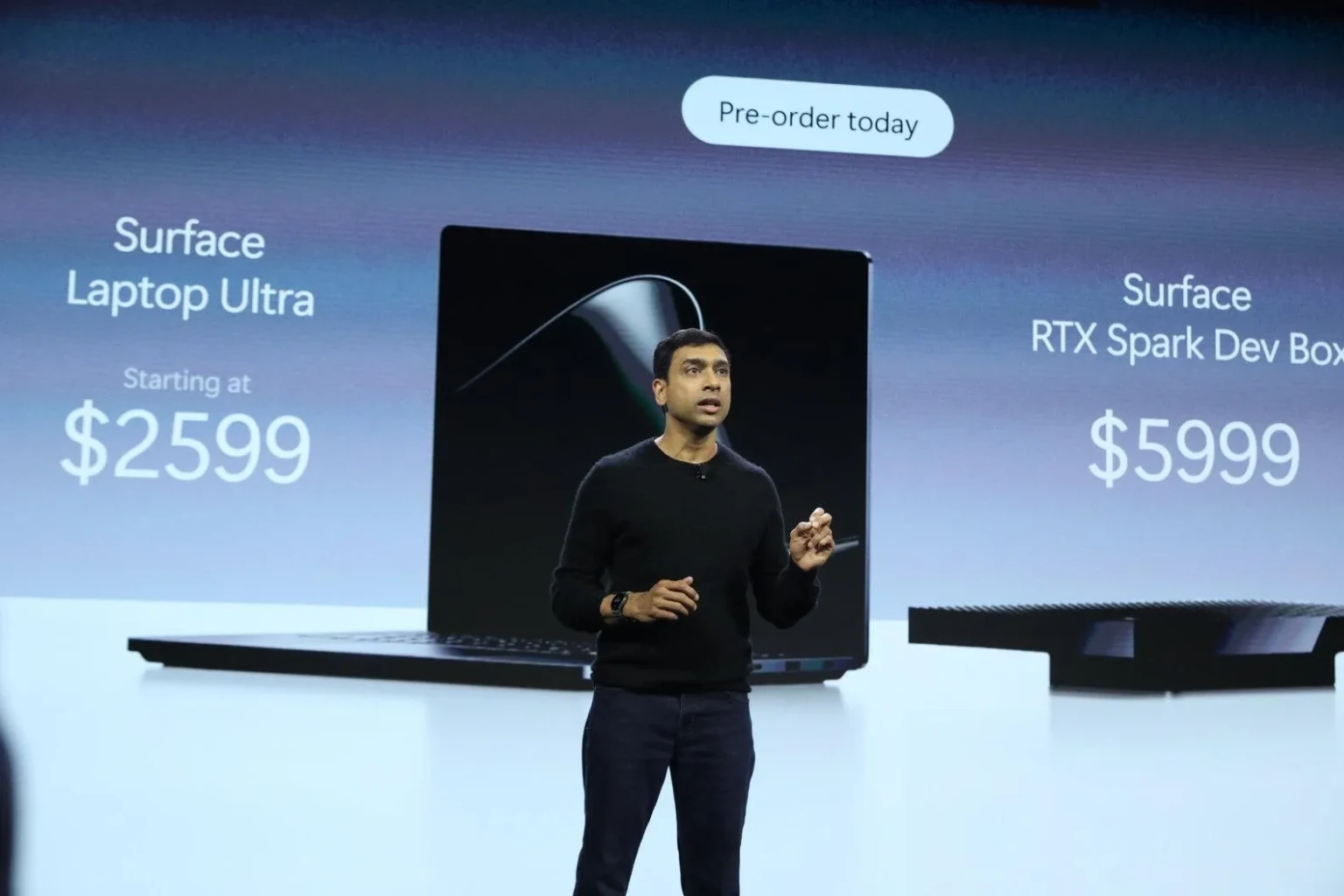
The hardware centerpiece is the Surface Laptop Ultra, a 15-inch Windows laptop using Nvidia’s Arm-based RTX Spark platform. Microsoft says it will ship October 16, starting at $2,599 with 24GB of RAM and 512GB of storage. Separately, the company opened preorders for the Surface RTX Spark Dev Box, a compact developer system due in November for $5,999.
But the bigger operational shift may be in Windows itself. Microsoft demonstrated new Copilot capabilities under the name Hybrid Intelligence, which combines local and cloud AI models and is intended to let the assistant work with files on a PC and take actions across the operating system.
What changed
The Surface Laptop Ultra is Microsoft’s opening platform for Nvidia RTX Spark in a Windows laptop. Microsoft and Nvidia are placing it at the high end of the market for creative work, local AI tasks and other performance-intensive workloads. The device supports up to 128GB of unified memory, according to the event coverage, and Microsoft is also replacing the proprietary Surface Connect approach with a magnetic USB-C charging solution.
The Dev Box makes the same platform available in a desktop-oriented form factor. It includes 128GB of unified memory and is positioned for developers working locally with AI models, AI-agent prototypes and coding tools. Microsoft says it is optimized for models exceeding 120 billion parameters.
On software, Microsoft showed Copilot’s Autopilot feature handling a multi-step example: locating files in folders, renaming and compressing them, then drafting an email with the files attached. This is the direction of travel: from an AI that answers questions to one that completes bounded desktop workflows.
Why it matters for operators
Microsoft is trying to make local AI compute and AI-assisted action part of the same Windows proposition. That matters to teams whose work involves large local datasets, sensitive documents, engineering workloads or workflows where cloud-only processing may be impractical.
For developers, the Dev Box is a signal that Microsoft sees a market for on-premises or desk-side experimentation with larger models—not only cloud-hosted inference. The price, however, puts it firmly in specialist territory. At roughly $6,000, it will need to justify itself through faster iteration, privacy needs, offline use or the ability to consolidate workloads otherwise run in the cloud.
The Surface Laptop Ultra carries a similar qualification. Its starting price places it well above mainstream corporate refresh budgets. It is more likely to be evaluated by AI builders, creative teams, technical leaders and executives with high-performance needs than deployed broadly across an organization.
The governance question gets more urgent
Giving Copilot access to local files and the ability to act across Windows creates a more consequential security and controls problem than a conventional chat interface. The tax-filing demonstration is useful precisely because it involves routine but sensitive work: finding documents, packaging them and preparing an external communication.
Before enabling such capabilities widely, IT and security leaders should ask: which folders and applications can an agent access; what actions require confirmation; how are permissions inherited; what audit trail is available; and how can employees correct or halt an incorrect action? A model that can organize files and draft an email can also mishandle data if its access or instructions are poorly scoped.
What to watch next
The near-term test is software compatibility and real-world performance for Nvidia’s Arm-based Windows platform. Premium hardware specifications matter less if key enterprise, developer and creative applications do not run reliably or efficiently.
Microsoft also needs to turn Hybrid Intelligence from a polished stage demo into manageable enterprise tooling. The company’s opportunity is to make AI actions feel native to Windows; its challenge is to provide the permissions, transparency and controls needed for organizations to trust them.